
 E-Paper



Delhi-Haryana govts trade blame over ammonia levels
The rising ammonia levels in the river have affected the production of clean water at the Wazirabad and Chandrawal water treatment plants


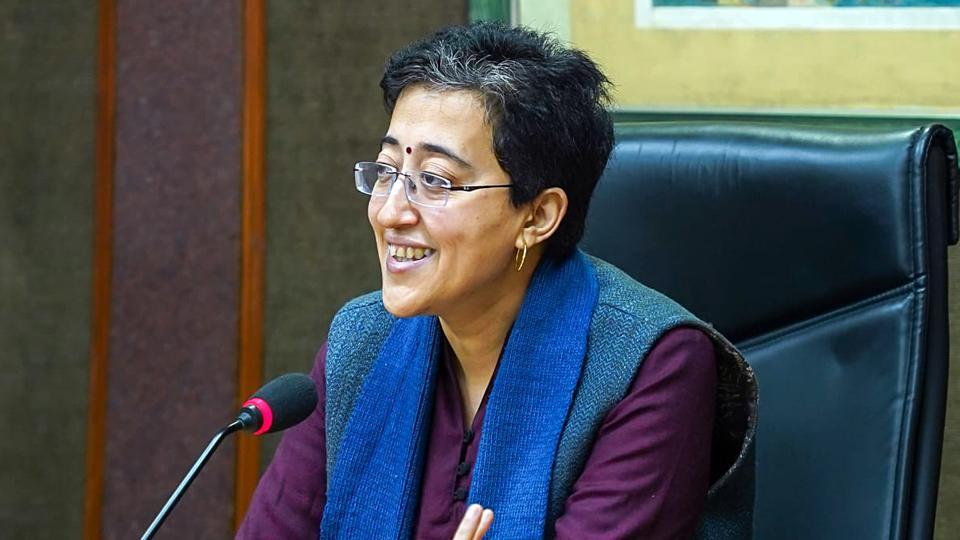
Water minister Atishi on Friday said that neighbouring Haryana was responsible for the rising level of ammonia in the Yamuna as the state has allowed “unrestricted discharge in the river”, and flagged that the ammonia treatment plant project proposed by the Delhi government in March at Wazirabad has not taken off despite repeated follow-ups.
However, officials from the Haryana chief minister’s office refuted the allegations yet again and said that Delhi was solely responsible for the problem, adding that no pollution has reached the river from the state.
The rising ammonia levels in the river have affected the production of clean water at the Wazirabad and Chandrawal water treatment plants (WTPs) and caused supply problems in many areas of the city on December 25 and 26. According to the water minister’s officer, the crisis caused supply issues in nearly one-fourth of the national capital, impacting areas such as Sadar Bazar, Civil Lines, and Karol Bagh, among others.
In a letter on Thursday, Atishi asked chief secretary Naresh Kumar to submit a timeline by January 1 as to when the in-situ ammonia treatment plant at Wazirabad would be functional and to personally monitor the project’s swift implementation. She also expressed severe displeasure over the delay.
The minister said that chief minister Arvind Kejriwal had directed the Delhi Jal Board (DJB) to set up the plant in Wazirabad pond in March but DJB has not even begun the project after nine months. It was to be completed within four to six months.
“Industrial effluents and organic waste released by Haryana coupled with non-maintenance of ecological flow of the river by Haryana are the major cause behind the rise in ammonia in Delhi. However, no effective steps have been taken to resolve this persistent crisis,” the minister said in a statement.
The minister has directed the chief secretary to ensure that the tender for the in-situ ammonia treatment plant gets floated by January 15. HT reached out to Naresh Kumar who did not respond to queries seeking comments.
Atishi’s office said that the production capacities at the two key plants were curtailed due to the problem. “On Wednesday, the ammonia levels in the Yamuna touched 2.8 ppm (parts per million). The increased levels of ammonia impacted the production capacity of water treatment plants at Chandrawal and Wazirabad. As a result, the production capacity... dipped by up to 50%... and the average production loss was around 35-40%... affecting densely populated areas such as Sadar Bazar, Civil Lines, Old Delhi, Mukherjee Nagar, Burari, Patel Nagar, Rajinder Nagar, Karol Bagh, Majnu Ka Tilla, ISBT, Barafkhana, Bara Hindu Rao, Kamala Nagar, Roop Nagar, etc.,” the minister’s office said.
Meanwhile, the officer on special duty to Haryana chief minister Manohar Lal Khattar, Jawahar Yadav, said: “The ammonia generation in Wazirabad is purely due to Delhi. Yamuna parameters are monitored at Palla by the Central Pollution Control Board and they are perfectly under control. No pollution has travelled to the river as Haryana supplies water through a canal to Haiderpur and then through a twin pipeline to Wazirabad. Where is pollution from Haryana?”
The Wazirabad and Chandrawal plants are crucial for meeting Delhi’s water needs.
To be sure, DJB faces the problem of high ammonia levels in Yamuna water throughout the year, but it is relatively acute between January and March. Earlier in December, DJB officials said that the plant would be delayed as the funds for the project were yet to be cleared. A finance department official, however, had said that the proposal had not been sent to them.
Delhi has time and again alleged that untreated water from industries in Haryana predominantly causes high levels of ammonia in the river water, a charge repeatedly denied by the Haryana government. The Wazirabad pond is approximately 600 meters by 300 meters in size, with a depth of around 2.5 metres. It is located near the Wazirabad WTP, which allows for the treatment of ammonia in the water before further processing at the treatment plant.

Stay updated with all top Cities including, Bengaluru, Delhi, Mumbai and more across India. Stay informed on the latest happenings in World News along with Delhi Election 2025 and Delhi Election Result 2025 Live, New Delhi Election Result Live, Kalkaji Election Result Live at Hindustan Times.


