E-Paper



Delhi’s Green Park automatic parking has just 30% utilisation rate
Despite being located in a high parking demand area, opposite the zonal MCD office and next to the busy Yusuf Sarai market, the users prefer to park their vehicles on surface level adding to congestion in the area

 Prefer HTon Google


The utilisation of the first automated tower car parking in Delhi that was developed at south Delhi’s Green Park in 2021, continues to be abysmally low, municipal officials aware of the matter said on Thursday.
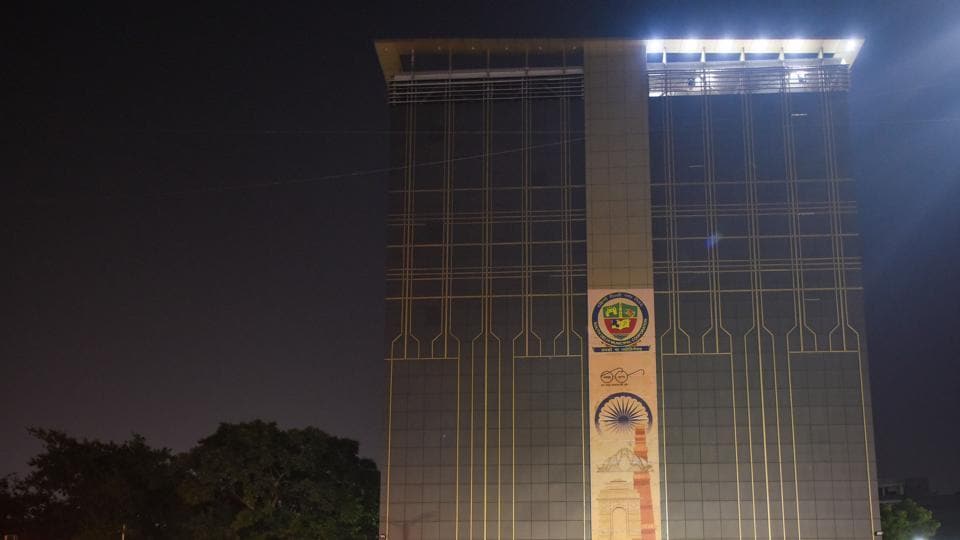
Built in November 2020 at a cost of ₹18.2 crore, the 17-storey lot is the tallest parking structure in Delhi. It can accommodate 136 four-wheelers --32 SUVs and 104 sedans. However, the average utilisation remains 30% of the total capacity with 40-42 cars on an average using the space daily, a Municipal Corporation of Delhi (MCD) official said asking not to be named.
Despite being located in a high parking demand area, opposite the zonal MCD office and next to the busy Yusuf Sarai market, the users prefer to park their vehicles on surface level adding to congestion in the area.
The civic body had also operates such multi-level parking lots at Adchini, Lajpat Nagar and Nizamuddin. Many other such facilities at Punjabi Bagh, Amar Colony, Karol Bagh, Fatehpuri and Nigambodh Ghat are in several states of implementation, the MCD official added.
The Adchini automated parking facility that came up in October 2021 has a 60% occupancy rate, and the Nizamuddin parking has an almost 100% utilisation rate, according to a municipal report, a copy of which HT has seen.
Neha Puri, a member of Green Park extension Resident Welfare Association, said that the erstwhile South MCD had increased the surface parking rate near the facility from ₹20 per hour to ₹40 per hour, but that too failed to push use of the multi-level facility. “This plot was earlier used as a surface parking lot by people using the Metro. The pedestrian access to this lot is so poor that to reach the parking, you either need to take a detour and use Green Park Metro station as subway or cross the road at surface via a broken railing. The market is far away and even MCD employees and people coming to zonal headquarters building park their cars on footpath or service lane,” Puri said.
She added that a foot overbridge should be constructed at the spot. People in the region continue to park their cars either behind Indian Oil building or streets.
Chirag Vaid, another resident said that while travelling from AIIMS towards Green Park, covering a 1.5km of stretch sometimes takes 20-25 min due to haphazard parking on road causing road congestion.
An MCD spokesperson said that in order to deal with the low occupancy rates, the surface parking rates around the tower have been increased so that people are encouraged to use the parking facility.
Sonal Shah, the director of Center for Sustainable and Equitable Cities (C-SEC), which had carried out case study on the parking around Green Park Metro station in August last year, said that the on-street parking prices need to be substantially higher on Balbir Saxena Marg and Nala Road to encourage long-term users to shift to the tower parking. “Balbir Saxena Marg, which is actually a no-parking zone has numerous cars parked, most likely for free, as there is limited enforcement. Also, if pedestrian infrastructure on Aurobindo Marg is improved the users at Yusuf Sarai market could walk comfortably to and from the parking lot.”