
 E-Paper



Delhiwale | Sufi shrines that dot the national Capital offer solitude, tranquillity, and faith to residents
Recent demolition of a 12th century Sufi shrine points to the dilemma of history — in Delhi, does the present encroach upon the past, or the other way around?

 Prefer HTon Google


Built, destroyed, rebuilt —in cycles—Delhi is both a bustling metropolis and a vigorous necropolis. The hold of the numberless dead on the city is as strong as that of us living. Many houses in Old Delhi, for instance, are built over historic graves whose past lies forgotten; one locality is simply called Mohalla Qabristan. Who then can determine if it is the past that is encroaching on the present or the other way around? The recent demolition of the 12th century Baba Haji Rozbih’s Sufi shrine inside Sanjay Van forest reserve in Mehrauli by the Delhi Development Authority (DDA) points to the dilemma of history with urgency.
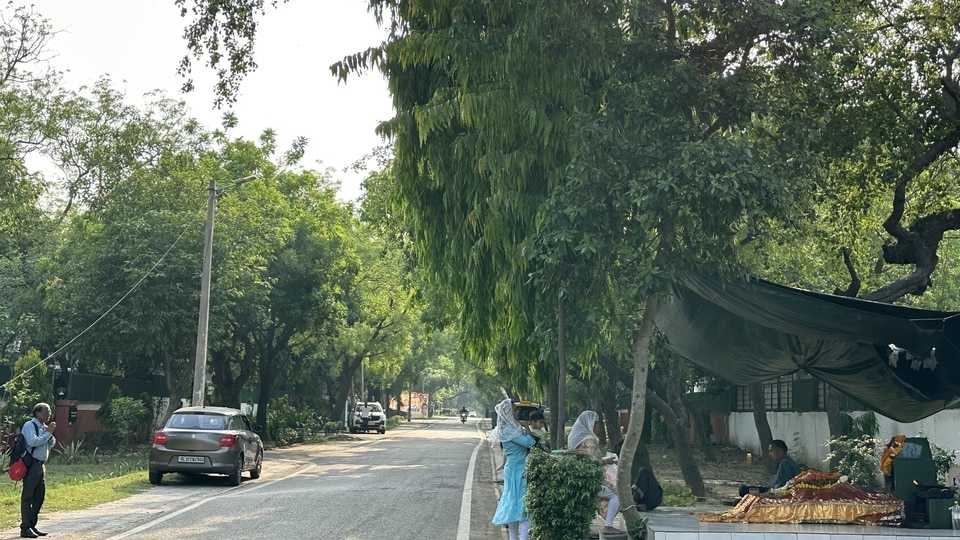
Littered across the landscape of modern-day Delhi, there are many secluded graves—believed to be dating from the 14th and 15th centuries onwards—that find themselves stranded in smoggy 21st century avenues. They lie in the shrubs of municipality gardens or rest beside chai stalls. A few can even be found on less travelled footpaths. Only a handful of them receive the attention of the living and are venerated as shrines of anonymous mystics to whom generations have turned to with prayers, and for solace and wish-fulfilment. This, too, is how centuries of history are linked firmly to today.
We show you a few places in the city where past and present intersect in interesting ways — at least two of these places have already been demolished. Nothing much is known of these sites, neither precise datelines nor their exact history.
The wayside grave
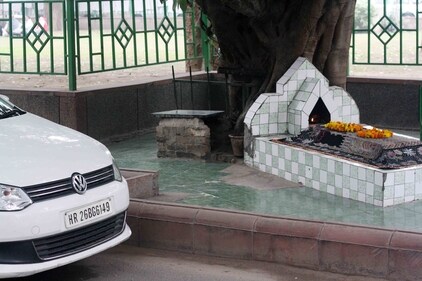
Most of central Delhi used to be a jungle at one point, and dacoits roamed the land between Mehrauli in the south and Shahjahanabad in the north. The forests were also home to Muslim ascetics who lived there to avoid the crowds. When such a holy man died, he was usually buried in the same place where he had lived and meditated all his spiritual life. Some of these memorials became famous Sufi shrines. A few of these graves have miraculously survived, though the identity of the ascetic lies forgotten. One such tombstone can be found along Zakir Hussain Marg, which must have been built past it.
The grave finds itself on a leaf-strewn footpath. The gleaming green and white tiles indicate that the structure was relatively recently built over the grave that may have been falling apart. Every Thursday evening, when dargahs across the Capital teem with pilgrims, this roadside tomb too is lit up with candles. In fact, there are many Sufi shrines in the area — the dargah of Hazrat Bibi Fatima in Kaka Nagar is a 10-minute walk. Kaka Nagar itself is said to be built on a vast graveyard.
The shrine remains unnoticed by the moving traffic as if it is still in the jungle of the old days. One afternoon, there is no one around the shrine, but someone has left behind a garland of marigolds on the grave. An earthen lamp flickers weakly in the strong dust-laden breeze. Later that night, a scooterist stops by, places his helmet by the grave and lights a diya.
A shrine gone
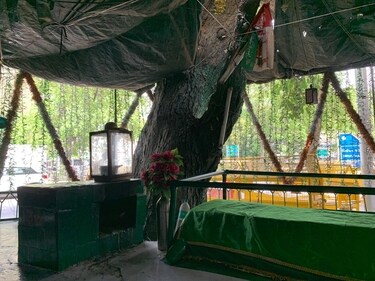
The little Sufi shrine to Hazrat Baba Khwaja Qutub Shah Chishti was situated just beside the headquarters of the Election Commission of India on Ashoka Road. It was demolished last year.
The shrine was cocooned by a leafy neem tree and shielded from the glaring sun by a roof of black cloth. A vase of plastic flowers was its only extravagant decoration. An earthen lamp remained lit at all times. Virtually nothing is known about the saint buried there. Not when he lived, nor why he was sainted, except that his grave was there long before the building of the Election Commission came up. Despite the traffic on the adjacent road, it was possible to cherish the solitude of this old shrine, its serenity miraculously untouched by the constantly expanding metropolis.
A Millennium City shrine
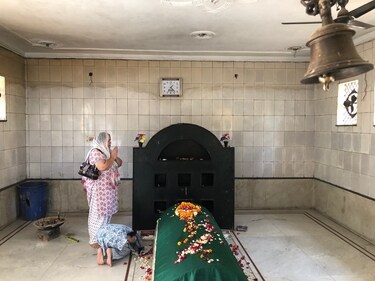
The buried saint in Gurugram’s Mahavirpura is called Peer Baba by locals. Little else is known about him. His shrine though is full of character. The building is modern. The chamber is spacious. The walls are of ceramic tiles. The floor is of white marble. The decorative arrangements include plastic flowers.
The dargah lies close to a residential complex. One afternoon most visitors happen to be women. Two entrants kneel at the tomb, placing sweet batashas on the floor as offerings. The place has something no other Sufi shrine has—a temple-like bell. Additionally, ‘Jai Peer Baba’ is painted on the wall, in Hindi, along with a likeness of Lord Shiva and Shridi’s Sai Baba. The grave probably dates to a time when the area was sparsely populated. Traditionally, Sufi mystics lived in uninhabited spaces to avoid the crowds. It is however impossible to envisage the earlier look of this dargah.
The Mandi House memory
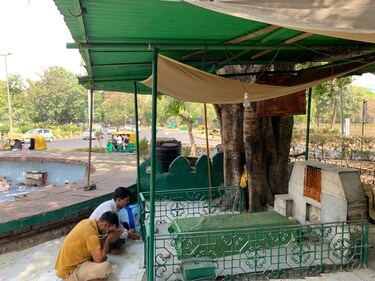
This central Delhi sufi shrine made it easy to experience peace in the midst of urban chaos. Many hurried pedestrians at the busy Mandi House traffic circle were stopped in their tracks to contemplate the grave of Sufi saint Syyed Nanhe Mian Chishti or “Little Gentleman”. As many other mandirs and dargahs spread along the city lanes, the disarming beauty of this grave, lying in a corner under a lush peepal tree, conveyed a simple sacredness that pulled people from across faiths.
Covered by a green tin roof, the grave was always draped in a green cloth. Not much is known about this popular patron saint. In his book, anthropologist Anand Vivek Taneja linked Nanhe Mian to a djinn-saint revered by worshipers in the ruins of Feroze Shah Kotla. The most interesting time to visit the shrine would be at the peak of the evening rush hour when the circle was clogged with cars and autos, but the shrine remained tranquil.
The shrine was demolished a year ago by the civic authorities.


