
 E-Paper



Delhiwale: The secret portal of Hauz Qazi
A garden of silence and serenity amid chaos


The courtyard springs up without a warning.
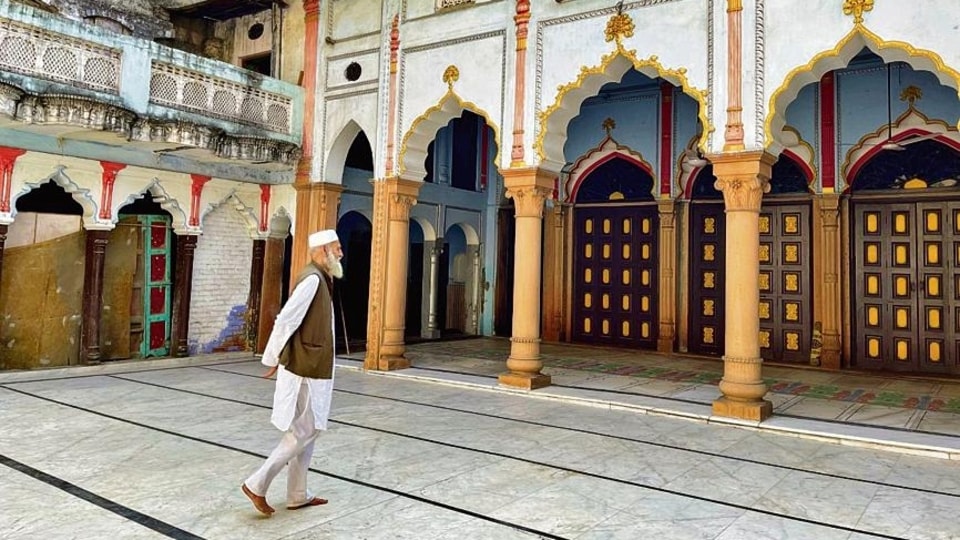
Outside — a dense blab of people, sounds, streets and multifarious sensations. Inside — this airy courtyard, utmost silence, and barely anyone.
Bagh-e-Nabiullah sits in the heart of Old Delhi’s Hauz Qazi Chowk. The mosque is a few steps away from the super-busy Chawri Bazar metro station. Lesser known but immensely beautiful, the monument is impossible to spot from the street. Sandwiched between two shops, the doorway is rarely flapped open to reveal the spacious interiors.
A curious visitor just needs to open the door softly to be instantly transported into an altogether different world. The effect is pleasantly unsettling. It’s like walking exhaustedly in a crowded locality, and suddenly being pushed through a disguised portal into a cool cloister of air, space and quietude.
This afternoon, the mosque is filled with an ambiance of secrecy as though the milling masses outside have been actively denied the awareness of this extraordinary stillness existing in such close vicinity. A pink bougainvillaea shrub is the only noisy distraction in the courtyard. The pool for ablution is of marble. The facing wall has a corroded door of weather-beaten green. Touching it is like getting close to the many cycles of seasons that have given the door its current texture.
In one of the small side chambers, a man is eating his meal. And now the mosque’s imam (Muslim cleric) appears (see photo). He is dressed in white. Pacing across the courtyard, the venerable Abul Misbah, 67, informs that the mosque dates back 400 years, and was commissioned by Maulvi Qazi Nabiullah in what was originally his bagh (garden).
“He built the mosque for his private use… It was never meant for the public. That is the reason of its quietness.”
The prayer hall inside is even more silent. It lies withdrawn into a cooling darkness, like a refuge to hibernate, burrowed out from a cave where the warm daylight never permeates. Carved wooden windows adorn the upper portions of the wall. They are closed.
On exiting, the brightly lit world welcomes back the dazed visitor with a renewed vigour. Bagh-e-Nabiullah continues to linger in the memory, but as a place more imagined than actually experienced.


