
 E-Paper



DJB begins upgrade of Yamuna Vihar STP to boost treated water flow into river
The project will be implemented in two components -- upgrading the existing plant from 25 MGD to 40 MGD, and constructing a new 15 MGD treatment unit within the same complex


The Delhi Jal Board (DJB) has launched a project to upgrade and expand the wastewater treatment capacity of the Yamuna Vihar Sewage Treatment Plant (STP) in northeast Delhi—part of the government’s broader effort to improve the ecological flow in the heavily polluted Yamuna stretch between Wazirabad and Okhla.
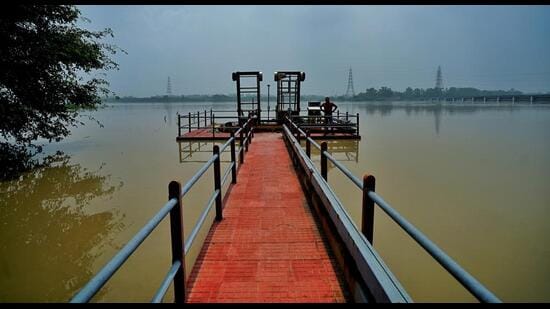
A DJB official said the highly treated water from the Yamuna Vihar and Coronation Pillar STPs will be carried via a closed conduit and released into the river downstream of the Wazirabad barrage. “In the first phase, we are expanding the treatment capacity of the Yamuna Vihar plant from 25 MGD (million gallons per day) to 55 MGD, thereby adding 30 MGD of treated water into the system,” the official said.
The project will be implemented in two components -- upgrading the existing plant from 25 MGD to 40 MGD, and constructing a new 15 MGD treatment unit within the same complex. DJB has invited bids for the project, and the contractor selection process is expected to conclude by the end of August. The development work is scheduled for completion within two years, the official added.
According to a study commissioned by DJB, wastewater in the area currently has high pollutant loads, with biochemical oxygen demand (BOD) at 350mg/L, chemical oxygen demand (COD) at 1,000mg/L, total suspended solids (TSS) at 650mg/L, and faecal coliform levels at 100 million MPN/100 ml.
As reported by HT on June 24, the central government-monitored Yamuna rejuvenation plan has identified enhanced ecological flow (e-flow) as a critical intervention, with the Yamuna Vihar and Coronation Pillar STPs playing a key role. A monitoring committee report earlier noted that the 22km river stretch within Delhi—from Wazirabad to Okhla—accounts for nearly 76% of the Yamuna’s total pollution load, despite comprising less than 2% of the river’s overall length.
E-flow, or environmental flow, refers to the minimum volume of water required to sustain a river’s ecological balance. While agencies such as the Delhi Pollution Control Committee (DPCC) and the environment department recommend a minimum e-flow of 23 cubic metres per second (cumecs), current flow levels are often just 10 cumecs. A 2023 parliamentary panel also flagged the issue, calling for urgent steps to improve e-flow to curb visible signs of pollution, such as frothing and foul odour—particularly around Kalindi Kunj and Okhla.
Once complete, the expanded Yamuna Vihar STP is expected to contribute an additional 227 MLD of treated water, while the Coronation Pillar plant will add another 454 MLD. The combined treated flow is expected to dilute the organic and chemical pollutants in the river and aid efforts to restore the health of the Yamuna. The project deadline is July 2026.
(Independent comment)

Stay updated with all top Cities including, Bengaluru, Delhi, Mumbai and more across India. Stay informed on the latest happenings in World News along with Delhi Election 2025 and Delhi Election Result 2025 Live, New Delhi Election Result Live, Kalkaji Election Result Live at Hindustan Times.


