
 E-Paper



DJB begins work on tube wells along Munak canal to augment water supply in N Delhi
The Delhi Jal Board (DJB) has begun work on a medium-term project to augment Delhi’s water supply by developing a series of water extraction points along the Munak canal in north Delhi, officials said on Tuesday

 Prefer HTon Google


The Delhi Jal Board (DJB) has begun work on a medium-term project to augment Delhi’s water supply by developing a series of water extraction points along the Munak canal in north Delhi, officials said on Tuesday.
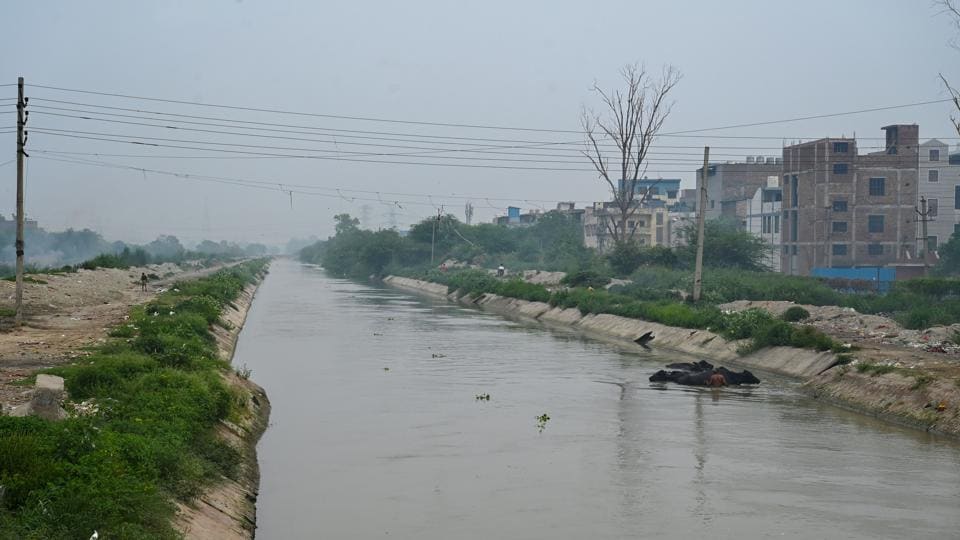
The move comes amid a demand-supply gap of 250 million gallons per day (MGD), as per the 2025-26 economic survey, and with three upstream dam projects unlikely to be completed anytime soon.
The utility has initiated work on a tube well interlinking and conveyance system that will carry the extracted water to an underground reservoir in Bawana Sector 36. The conveyance system will cost ₹9.3 crore and will be developed over the next five months, a senior government official said.
“The water table in areas adjoining the Munak Canal (part of the Western Yamuna Canal system) is very high and groundwater can be sustainably extracted from the periphery of the canal. All these wells will be interlinked with a common conveyance system which will carry the raw water to Bawana. It will help reduce the burden on existing raw water sources. We are working with Haryana to execute this project,” the official explained.
Officials said IIT Roorkee has been hired to assess the water potential. “Water from these tube wells can be supplied to the Haiderpur water treatment plant. The canal already exists as a water-carrying channel. Hundreds of tube wells can be set up along its length. Haryana has argued that water seeps naturally from the canals and large-scale extraction and deep boring activity may alter the flow. They have suggested that the tube wells should be at least 100m away from the canal,” the official said.
According to the 2025-26 economic survey tabled in the Delhi assembly, DJB estimates the city’s water demand at 1,250 MGD, leaving a gap of 250 MGD. Daily water supply in Delhi has remained constant at around 1,000 MGD in 2024, 2025 and 2026. This includes 1,133 cusecs (612.5 MGD) from the Yamuna, DSB and CLC canals; 470 cusecs (254.08 MGD) from the Ganga; and around 135 MGD from groundwater sources -- tube wells and ranney wells.
DJB operates more than 6,000 tube wells in high water table areas to augment supply.
A second DJB official said the issue has been discussed with the irrigation department of Haryana. DJB currently operates hundreds of tube wells in the Yamuna floodplains for water extraction as sub-surface aquifers get replenished. “To meet the additional water demand in summers, we are also planning to develop tube wells along the Najafgarh drain and Sanjay lake area where the water table is also very high,” the official added.
Haryana’s irrigation department had earlier raised an in-principle objection to additional tube wells being installed along the Yamuna and Munak canal system, arguing that it alters water sharing via the canal.

Stay updated with all top Cities including, Bengaluru, Delhi, Mumbai and more across India. Stay informed on the latest happenings in World News along with Delhi Election 2025 and Delhi Election Result 2025 Live, New Delhi Election Result Live, Kalkaji Election Result Live at Hindustan Times.


