
 E-Paper



Delhi court extends Manish Sisodia’s judicial custody till June 1
Special judge MK Nagpal extended the judicial custody of AAP leader Manish Sisodia after he was produced in person before the judge in a money laundering probe by ED


NEW DELHI: A Delhi court on Tuesday extended the judicial custody of former Delhi deputy chief minister Manish Sisodia till June 1 in a money laundering case registered by the Enforcement Directorate (ED) in connection with the alleged irregularities in the now-scrapped Delhi excise policy.
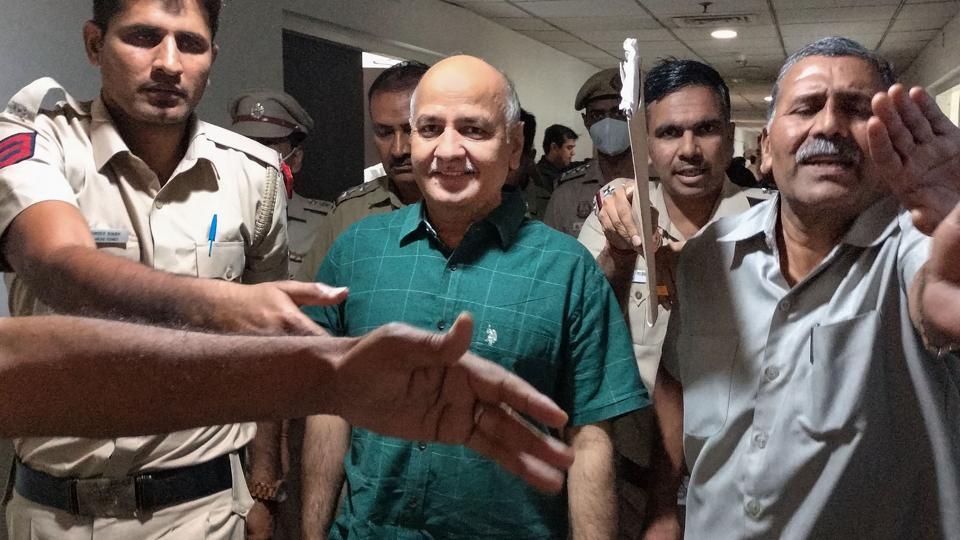
Special judge MK Nagpal extended the judicial custody of the Aam Aadmi Party (AAP) leader after Sisodia was produced in person before the court.
During the brief proceedings on Tuesday, the court directed the jail superintendent to consider Manish Sisodia’s application that sought to exchange the books that he had completed reading during his period in custody with a new set of books approved by the court.
The jail superintendent was also told by the special judge to consider Sisodia’s request for a table and chair in the prison cell.
Manish Sisodia was first arrested by the Central Bureau of Investigation (CBI) in a case related to the excise policy on February 26 and later by ED on March 9 after grilling him for eight hours in Tihar jail. Sisodia is currently in judicial custody. His bail applications in the two cases investigated by CBI and ED have been dismissed by the trial court and his appeals are pending in the high court.
On May 4, ED filed its fifth charge sheet in the case in which the agency named Sisodia as the “main accused”. On May 19, the court reserved its orders on taking cognizance of the ED chargesheet.
The federal agency has previously said that the excise policy, specifically brought by Sisodia, promoted cartel formations through the back door, awarded exorbitant wholesale profit margins of 12% and “incentivised” other illegal activities as part of a criminal conspiracy by Sisodia and other AAP leaders to extract kickbacks from liquor businesses.
Sisodia has denied all charges and AAP has termed the case a politically motivated witch hunt.
The Delhi government’s 2021-22 excise policy aimed to revitalise the city’s flagging liquor business. It aimed to replace a sales-volume-based regime with a license fee-based one for traders and promised swankier stores, free of the infamous metal grilles, ultimately giving customers a better buying experience. The policy also introduced discounts and offers on the purchase of liquor, a first for Delhi.
The plan, however, came to an abrupt end, with Delhi’s lieutenant governor VK Saxena recommending a probe into alleged irregularities in the regime. This ultimately resulted in the policy being scrapped prematurely and being replaced by the 2020-21 regime.


