E-Paper



Kushak drain to be sewage free by June 2025, says Delhi Jal Board
The process will involve trapping and connecting the sewage entering the drain at 11 points with sewage treatment plants (STPs) nearby

 Prefer HTon Google


The Delhi Jal Board (DJB) has said it will make the 6.5km-long Kushak drain — flowing through several south Delhi neighbourhoods — completely sewage-free by June 2025.
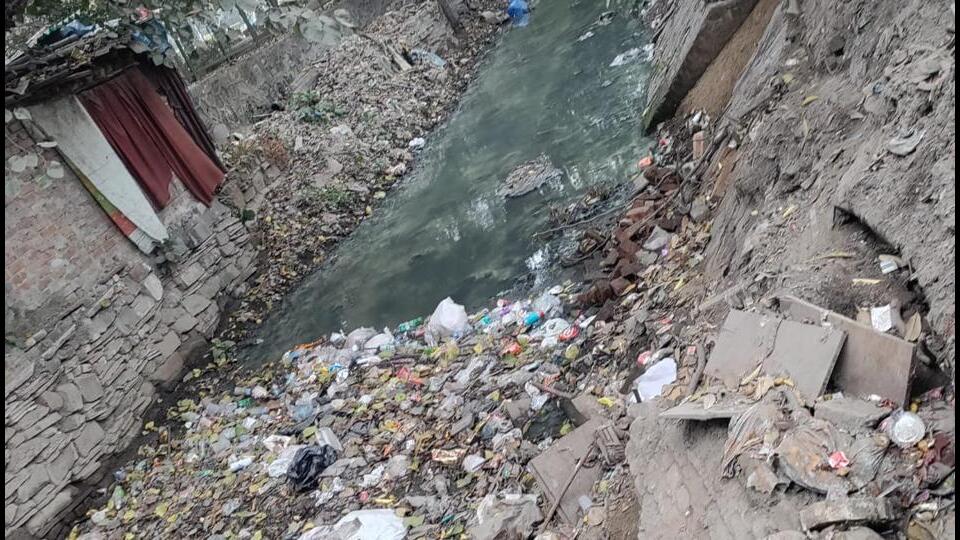
The process will involve trapping and connecting the sewage entering the drain at 11 points with sewage treatment plants (STPs) nearby. DJB, in a submission to the National Green Tribunal (NGT) said that six such points have already been connected to STPs, with five others to be connected by mid-June next year, as the drain is meant only to carry stormwater.
In its latest submission, dated January 6, DJB said the remaining entry points will be trapped after the completion of new STPs, which includes the new Okhla STP. The Mehrauli STP has been functioning beyond its operational capacity and needs to be augmented further.
“DJB is undertaking the commissioning of an additional 124 MGD STP at Okhla, which will be ready by March 31, 2024. Trapping some drains will be completed after this is completed,” said the DJB in its submission, adding that the five MGD capacity of the Mehrauli STP will likely be increased by June 2025, by which time the trapping of sewage from Mehrauli will also be completed.
DJB said the trapping of sewage was complete at Chirag Dilli, Khirki Extension, Sheikh Sarai and Panchsheel Vihar. Meanwhile, sewage was still entering the drain from five other points which included Jagdamba camp in Sheikh Sarai, Krishi Vihar in Chirag Dilli, Press Enclave road, Tigri, Sangam Vihar and sewage from Mehrauli. It eventually meets the Barapullah drain and this sewage flows into the Yamuna.
NGT, in May, formed a joint committee to look into grievances raised by residents living in different parts of south Delhi along the drain, including GK1, asking the committee to ensure no toxic gases were getting trapped inside it, as 85% of the drain was covered. The move came after residents alleged that a foul smell emerged from the drain.
The tribunal said it was a stormwater drain, meaning no sewage should flow into it in the first place and asked the committee to treat the sewage and submit a compliance report within four months. In a submission made in September, the committee comprising the Municipal Corporation of Delhi, DJB and Delhi Pollution Control Board (DPCC) sought an additional six months to complete the work.
In another submission, made by the MCD, dated January 5, apprising the NGT on the progress made in the same case, the corporation said it was continuously desilting the stormwater drain. However, the problem of foul smell would only be solved once sewage stopped flowing through the drain.
“...Desilting of drains is a continuous process. The foul smell and gases emitted from the flowing water is likely to continue till the time sewage is intercepted at the source by DJB,” MCD said.
Sunil Kumar Aledia, a Shahjpur Jat resident and petitioner in the case, said though drains were being trapped by agencies, there has been no relief for the residents. “The drains trapped may be smaller ones because the foul smell continues to trouble locals. We can still see the water is dirty as ever and that sewage is still flowing the same way,” Aledia said.