
 E-Paper



Low temperature, slow winds, stubble burning to worsen Delhi's air quality
At least seven of 34 localities in Delhi where air quality is monitored by the Central Pollution Control Board recorded ‘very poor’ air quality on Thursday.


Weather forecasters have said that the city is headed for a further deterioration in pollution levels in the coming days under the impact of low temperatures, slow winds and an increase in stubble burning instances in Punjab and Haryana.
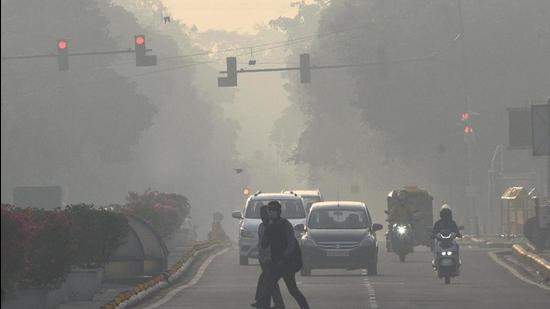
At least seven of 34 localities in Delhi where air quality is monitored by the Central Pollution Control Board (CPCB) recorded ‘very poor’ air quality on Thursday.
CPCB recordings show that the overall air quality index (AQI) of Delhi on Thursday was 268, in the ‘poor’ category. This was a dip from Wednesday’s 232, which was also categorised as ‘poor’ in the AQI scale.
On Thursday, pollution monitoring stations at Shadipur, NSIT Dwarka, Bawana, Pusa, Mundka, Anand Vihar and Dilshad Garden showed ‘very poor’ AQI levels.
Scientists at the India Meteorological Department (IMD) said that pollution levels are likely to rise further in the coming days and reach the ‘very poor’ zone.
“The temperatures are dropping and the local wind speeds are also low, which is not conducive for pollution dispersion. Currently, Delhi is also receiving winds from the northwest direction, where states such as Punjab and Haryana are reporting a rise in stubble fires. All this combined together will adversely impact Delhi’s air,” said a senior Met official.
Air quality forecasting systems have also predicted bad air days for Delhi. Union ministry of earth science’ air quality monitoring centre, System of Air Quality and Weather Forecasting and Research (SAFAR) showed that on Thursday 502 stubble fires were reported from parts of Punjab and Haryana and these contributed to 19% of Delhi’s PM 2.5 (particulate matter with diameter less than 2.5 micrometres).
Meanwhile, the Indian Institute of Tropical Meteorology’s decision support system said that on Friday, the share of stubble fires in Delhi’s air will be as much as 50%. Local factors such as vehicular emissions are likely to contribute to around 20% of the city’s PM 2.6 level and road dust and construction activities are expected to contribute to around 2-4% each.
Forecasters also said that the dropping temperatures will also result in pollutants getting stuck closer to the surface. IMD recordings showed that at the Safdarjung weather station, which is the official marker for the city, the maximum temperature was 28.5 degrees Celsius, three degrees below what is considered normal for this time of the year. The minimum temperature was 14.6 degrees Celsius, a notch below normal.
“On Friday and Saturday, temperatures are likely to fall marginally and after that because of a passing western disturbance, temperatures will stabilise. With western disturbance, however, winds tend to slow down and this will impact the air quality,” said Mahesh Pawalat, vice-president (meteorology and climate change) at the Skymet Weather Services.


Stay updated with all top Cities including, Bengaluru, Delhi, Mumbai and more across India. Stay informed on the latest happenings in World News along with Delhi Election 2025 and Delhi Election Result 2025 Live, New Delhi Election Result Live, Kalkaji Election Result Live at Hindustan Times.


