For more than two weeks now, MRI and CT scan services at Lok Nayak Hospital (LNH), one of Delhi’s largest government-run medical institutions, have been suspended – forcing hundreds of poor and ill patients to turn to private centres charging thousands of rupees, or wait years.
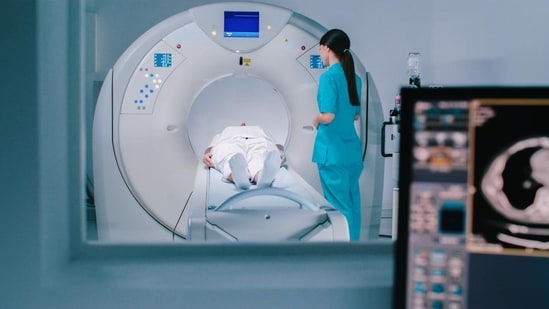
A ground check by HT found that patients arriving at the hospital for new MRIs are being handed dates for as late as 2028, while others waiting for CT scans and ultrasounds face similar delays. To be sure, officials said MRIs are still being offered at the hospital for in-patients and emergency/trauma cases.
According to a letter dated September 30 from the hospital’s department of radiodiagnosis to the medical director, titled “Critical issue in CT and MRI” and seen by HT, the services have been “stopped immediately.”
The shutdown, the letter states, was triggered by two issues. The Picture Archiving and Communication System (PACS) – a digital platform that stores and shares medical images – has been down since September 23, and engineers are still working to fix it. Compounding the crisis, the hospital has also run out of MRI and CT films, leaving radiology staff with no way to print or store scan results.
“We are constrained to stop CT and MRI services immediately,” the letter reads. “There has been no supply of CT/MRI films for the last seven days and, in the absence of the PACS system, there is a huge pendency on mainframe computers. We fear the system will crash, so only trauma and emergency cases are being done as a humanitarian measure.”
{{/usCountry}}“We are constrained to stop CT and MRI services immediately,” the letter reads. “There has been no supply of CT/MRI films for the last seven days and, in the absence of the PACS system, there is a huge pendency on mainframe computers. We fear the system will crash, so only trauma and emergency cases are being done as a humanitarian measure.”
{{/usCountry}}A senior hospital official, who asked not to be identified, confirmed the shortage. “We’ve been struggling with film supply for a month. The department is trying to expedite the process. We hope to resolve this within days,” the official said, requesting anonymity.
Asked about the three-year delay, the official said the hospital operates with just one MRI machine and an overwhelming patient load.
The long wait
At LNH’s crowded outpatient block, hundreds of patients line up daily for registration. But the waiting slips they receive now read like a cruel joke.
Eight-year-old Khushboo, suffering from severe headaches and fainting spells, was prescribed an urgent MRI this week. Her father, Ram Bhajan, a daily wage labourer, returned from the counter in disbelief. “The slip said November 12, 2028,” he said, showing the appointment. “I thought it was a printing mistake. When I asked again, they told me this is not a misprint.”
Nearby, Monu, a gig worker, was reeling from similar shock. His wife, Anupam, 39, a cancer patient, fell down the stairs and injured her spine. “The doctor said we need an MRI immediately,” he said. “The date I got was November 11, 2028. I don’t know how to tell her this. It’s a mockery of patients.”
For M Naseem, a 59-year-old rickshaw puller with a tumour on the side of his face, the hospital became both lifeline and punishment. “My first MRI date was also for 2028. When I begged for an earlier one, they shifted it to December 11, 2025,” he said. “For the poor, treatment at a government hospital means waiting for a slow death.”
HT has verified copies of all appointment slips.
At private centres in Delhi, MRIs cost between ₹8,000 and ₹15,000, a sum impossible for most of LNH’s patients, who come from the city’s working-class neighbourhoods and from nearby towns in Uttar Pradesh and Haryana.
The delays aren’t limited to MRI and CT scans.
For Ruby, a 32-year-old expecting her first child this month, the absurdity reached new levels. “I was told my ultrasound is scheduled for October 30, 2025,” she said, holding her belly. “By then, my baby will already be born by then. Why even give such a date? Just say you can’t do it.”
Similarly, Samina Khatoon, 28, who visited the hospital with a painful lump in her chest, was handed a mammogram date of December 5, 2025.
At private diagnostic centres, ultrasounds and X-rays cost between ₹1,000 and ₹5,000, compared to the free scans at LNH -- if one can get them.
LNH, the flagship Delhi government hospital, sees an outpatient footfall of over 7,000 daily and houses more than 1,600 admitted patients. Yet, the radiology department is equipped with only one MRI machine, nine ultrasound machines (two of those dedicated to gynaecology), and three CT scanners.
In total, there are 36 hospitals run by the Delhi government. But the importance of Lok Nayak Hospital is reflected in the fact that it is one of only three such hospitals that offer MRI services – the other two being GB Pant, and Indira Gandhi Hospital. Officials at the other two hospitals told HT their MRI waiting time ranges from three to six months, and is only expected to rise if the patient load moves in hordes from LNH.
The final option for patients then is, the Delhi Arogya Kosh (DAK) scheme, launched by the previous Aam Aadmi Party (AAP) government. It has provisions for referring patients to empanelled private hospitals for diagnostics that are not available, or are delayed in government facilities. However, to be eligible for this scheme, the patient must meet two criteria – first, be a Delhi resident for at least three years; and second, their annual family income must not be more than ₹3 lakh.
Government’s plan
In June 2025, the Delhi government announced that new CT and MRI facilities would be rolled out across more hospitals under a Public-Private Partnership (PPP) model to reduce waiting times.
“The government will now roll out MRI scan services in 34 hospitals and CT scan services in 12 hospitals,” Delhi health minister Pankaj Singh had said. “Patients may have to pay up to ₹2,400 for the scan.”
Officials claimed this model would reduce costs compared to private facilities while easing the burden on LNH and other major hospitals. But four months later, the plan remains on paper.
When asked about the delay in MRI at LNH, Singh, said, “We will ask the hospital director about why there is such a massive delay for MRIs. Serious action will be taken if any fault is found on authority levels for such a delay.”
Stay updated with all top Cities including, Bengaluru, Delhi, Mumbai and more across India. Stay informed on the latest happenings in World News along with Delhi Election 2025 and Delhi Election Result 2025 Live, New Delhi Election Result Live, Kalkaji Election Result Live at Hindustan Times.
Stay updated with all top Cities including, Bengaluru, Delhi, Mumbai and more across India. Stay informed on the latest happenings in World News along with Delhi Election 2025 and Delhi Election Result 2025 Live, New Delhi Election Result Live, Kalkaji Election Result Live at Hindustan Times.