E-Paper



Delhi maps local pollution at hot spots
Some pollution sources include traffic congestion, unpaved roads, dumping or open burning of waste — all of which can be “fixed quickly”, officials say, but sources such as construction sites and industrial areas will need long-term measures to be tackled

 Prefer HTon Google


The Delhi Pollution Control Committee (DPCC) and the state environment department have jointly identified 103 critical sources of local pollution across 13 hot spots in the city, fixing which, officials said, will be a priority this winter.
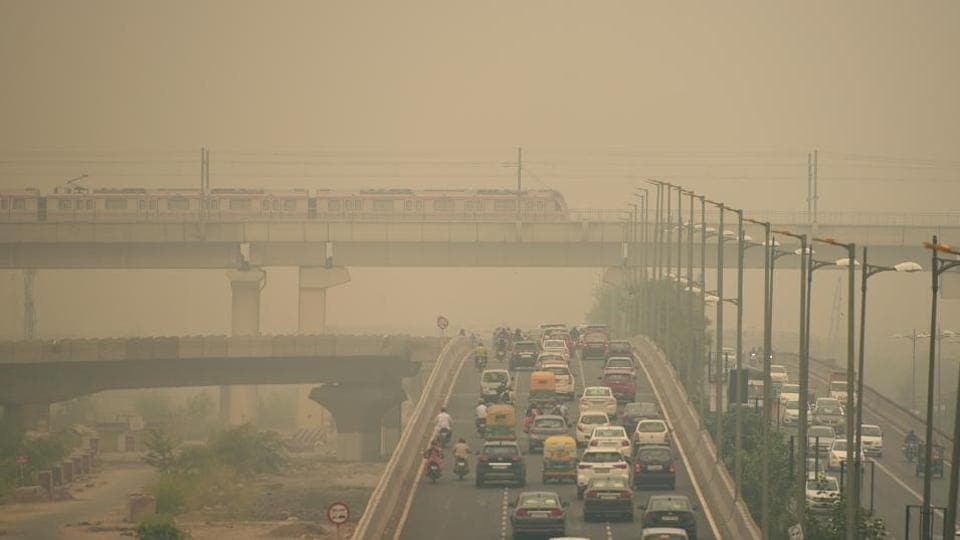
Some of the sources include traffic congestion, unpaved roads, dumping or open burning of waste — all of which can be “fixed quickly”, they said, adding that pollution sources such as construction sites and industrial areas will need long-term measures to be tackled. These pollution sources fall within a 5km radius of the continuous ambient air quality monitoring stations (CAAQMS) in the area.
The authorities have shared a list of the sources with land-owning agencies or private agencies working in the area and a nodal officer has been appointed from each agency to monitor the pollution sources, officials added.
To be sure, at least 19 of 103 sources are traffic congestion points within the 13 hot spots.
HT on Thursday reported how there has been a significant increase in traffic congestion across the city, according to a survey conducted by the Delhi Traffic Police.
The reasons, the survey had said, were myriad — from construction to encroachment and illegal parking to a rise in motor vehicles post the pandemic. The survey identified 117 choke points and 10 congested flyovers.
“As part of tackling the problem at Delhi’s 13 pollution hot spots, action plans have been prepared over the last few years. For this winter, in addition to localised action like mechanised sweeping and water sprinkling, we have decided to crack down on bigger sources of pollution and a list has been prepared following field inspections last winter and through the summer,” an environment department official said.
DPCC and the Central Pollution Control Board (CPCB) had in 2018 identified 13 pollution hot spots in Delhi — Anand Vihar, Mundka, Wazirpur, Jahangirpuri, RK Puram, Rohini, Punjabi Bagh, Okhla, Bawana, Vivek Vihar, Narela, Ashok Vihar and Dwarka.
Among these, Jahangirpuri and Punjabi Bagh have the highest number of pollution sources (12 each) followed by 10 sources each at Anand Vihar and Ashok Vihar.
Officials said that Anand Vihar in east Delhi, one of the most polluted locations in Delhi, was the first to get a localised survey done at the end of last year. Some of the major sources of pollution identified here were the Patparganj industrial area, the Kaushambi bus terminal, road congestion near the ISBT and the railway station leading to both road dust and an increase in vehicular emissions.
At Jahangirpuri, another hot spot, the sources include the ongoing construction work to build a skill centre, pollution from the DTC bus terminal, and road dust at Mukarba Chowk, among others.
Tackling pollution at Delhi’s hot spots was also part of the Delhi government’s 15-point action plan.
Meanwhile, experts said that with more vehicles being added on city roads, most stretches were accommodating vehicles beyond their capacity, adding to the congestion.
“This is not a Delhi-specific problem. We need to improve our public transport system further in order to reduce the reliance on private vehicles and at the same time, improve Delhi’s cycling infrastructure. There also need to be restrictions on certain vehicle types which eventually encourages only net-zero emission vehicles,” said Amit Bhatt, managing director (India), International Council on Clean Transportation.
Others said that the biggest source at each hot spot needs to be identified at the earliest and fixed