
 E-Paper



Leadership: Police preparedness must begin now for 2029 polls
A national call to kick-start anticipatory police preparedness for challenges closing in; recruitment, training, deployment planning and inter-agency coordination take time so the work must start now

 Prefer HTon Google


The countdown to the 2029 General Election has begun. Police preparedness cannot wait for the election schedule announcement. Recruitment, training, deployment planning and inter-agency coordination take time. The work must start now.
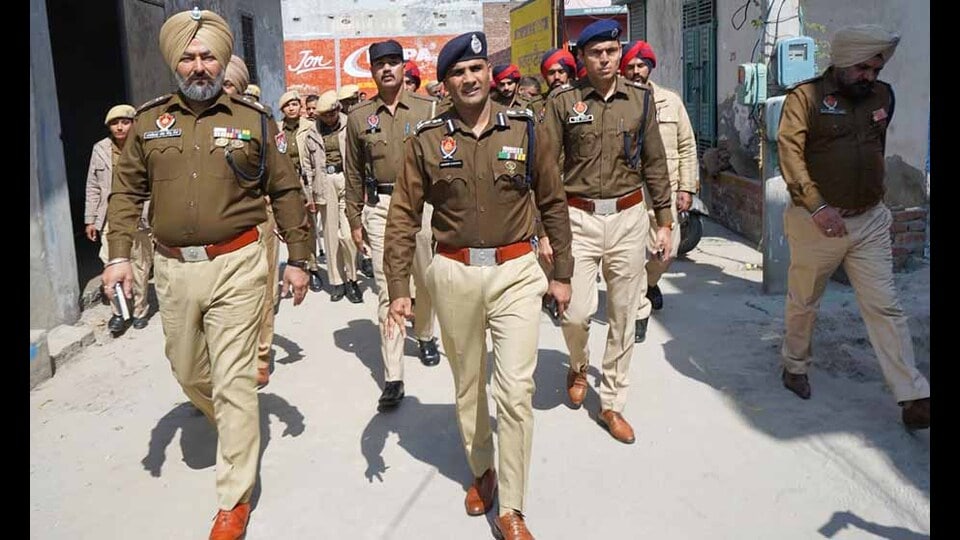
Across states, demonstrations, activism and mass mobilisation pressure police forces. Peaceful protest is a democratic right; violence and criminal conduct must be handled lawfully. The challenge is maintaining public order without compromising civil liberties, impartiality or everyday policing.
This is a national call to all states and Union Territories to begin a structured programme of anticipatory police preparedness.
Recruit early, train early
Recruitment takes time. Vacancies in frontline policing, women police, investigation and specialist units must be assessed and addressed now. Personnel need practical training before deployment. Refresher courses and scenario-based exercises should prepare them for crowd management, communication, de-escalation, and emergencies.
Protect investigation from mobilisation
Diverting personnel to law-and-order duties hurts investigations. Separate investigation teams must be maintained in practice, not just on paper. Serious crimes, offences against women and children, cybercrime, evidence collection and court deadlines cannot be neglected. Proper staffing and supervision must ensure continuous investigation.
Learn from incidents—and rehearse now
States should review recent law-and-order incidents to identify what worked and what failed across command, intelligence verification, communications, crowd management, use of force, medical response, evidence preservation and inter-agency coordination. Translate findings into updated operational protocols.
Reviews alone are insufficient. Rehearsals must start now before a crisis occurs. Conduct realistic mock exercises for sudden crowd mobilisation, escalation, rumour-driven unrest, emergency evacuation, communication breakdowns, and prolonged deployments. Test command-and-control systems, reserve mobilisation, and coordination among police, district administration, and emergency services. Evaluate failure points and correct weaknesses immediately to prevent crises.
Make deployment sustainable
Prolonged deployments exhaust personnel and impair judgement. Plan shifts, rotation, reserves, relief teams, rest periods and medical support. Mobile canteens, drinking water, sanitation and waste disposal are essential for deployed personnel and major gathering sites.
Strengthen women’s participation
Women police must have meaningful operational roles in field deployment, public engagement, liaison, searches, victim assistance, crowd management, and supervision. This requires timely recruitment, specialised training, proper facilities and career progression—not token presence.
Put dialogue before force
Communication, negotiation, mediation and liaison should be used to prevent escalation. Peaceful dissent is not criminality. Any use of force must be lawful, necessary and proportionate, with proper supervision and documentation. Gathering sites should feature accessible infrastructure, like transport and medical facilities, and transparent permission procedures without restricting peaceful assembly.
Prepare auxiliary services
Home Guards and civil defence personnel can support traffic management, evacuation, emergency assistance and relief when properly trained and supervised. Joint exercises with police, district administration, fire services, and medical teams should clarify responsibilities and test coordination before a crisis occurs.
Connect technology with field command
Emergency calls, field communications, traffic info, incident reporting and lawful CCTV feeds should feed into interoperable command systems. Technology enables timely decisions and preserves evidence. It cannot replace professional judgement, accountability, or direct public engagement.
Counter rumours with verified information
Designated state and district teams must verify circulating claims, forged notices, fake websites, manipulated videos and misleading messages. Prompt factual corrections must reach the public through credible channels. Preserve evidence and address unlawful conduct through due process, without labelling inconvenient criticism as disinformation.
Establish legal readiness and accountability
Police leadership needs ready access to government advocates and legal advisors regarding statutory powers, arrests, assembly restrictions, use of force, evidence and judicial directions. Arrangements must support prompt responses to urgent court proceedings, including public-interest litigation. Legal support must strengthen compliance and accountability, never shield misconduct or obstruct judicial scrutiny.
A common national framework
Each state and Union Territory should nominate a senior coordinating officer, audit its capacity, prepare district plans and conduct periodic exercises. The Union government can facilitate a common framework for states to adapt locally, while respecting the statutory roles of election authorities.
The countdown to 2029 must become a countdown to national police readiness. Preparedness cannot be reduced to election-day security. Police Reform 1.0 established an institutional agenda. Police Reform 2.0 must build operational capacity to deliver it.
Do not wait for a crisis to test the system. Start rehearsals now, learn now, correct now, and prevent what can be prevented.
kiranbediofficial@gmail.com
(The writer, India’s first female IPS officer, is former lieutenant governor of Puducherry)


