
 E-Paper



No bail grounds for 2020 riots accused, Delhi Police argue before SC
Delhi Police asserted that the evidence shows a “pre-planned” and “choreographed” conspiracy rather than spontaneous violence

 Prefer HTon Google


The Delhi Police told the Supreme Court on Tuesday that the narrative built outside the court in support of the 2020 Delhi riots accused, including student activists Sharjeel Imam, Umar Khalid and others, is far from reality as the WhatsApp chats and speeches delivered by them indicates a plot to communally divide the country and cause unrest.
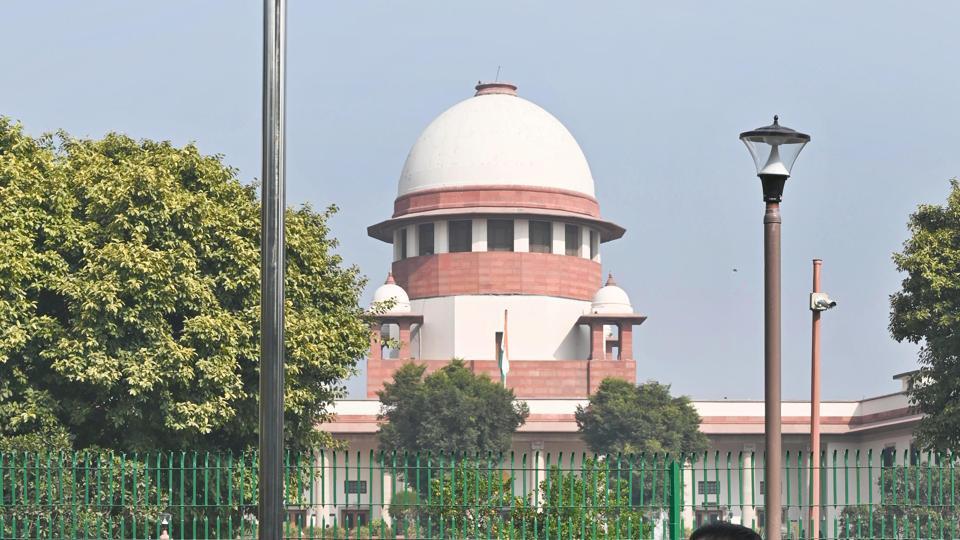
Opposing the bail pleas of Imam, Khalid and five others, the police said there was no “change in circumstance” since the Delhi high court rejected their bail in September, and therefore no ground for the Supreme Court to reconsider it.
The police also said the accused cannot seek parity with the Supreme Court’s May 2023 decision upholding bail for Devangana Kalita, Natasha Narwal and Asif Iqbal Tanha -- also accused in the same case -- as those three had already been granted bail by the high court in 2021, and the Supreme Court was only examining a cancellation plea, a proceeding with a “much narrower scope” than a fresh plea for grant of bail.
Opening arguments for the Delhi Police, solicitor general Tushar Mehta said:“A narrative is being built that these so-called intellectuals merely protested and exercised their fundamental right. First, let this myth be busted. This was not a spontaneous agitation. Speech after speech and chat after chat shows a discernible attempt to divide society on communal lines.”
Referring to a speech allegedly given by Imam before the February 2020 riots, Mehta said:“He was not speaking of Delhi alone. His statements sought to divide the country on communal lines. He goes on to talk about uniting Muslims to separate the entire north-east from the rest of the country.”
Mehta argued that the alleged plan “was not Delhi-centric” and claimed security agencies had prevented it from spreading further.
He added that despite extensive public discourse surrounding Imam’s role, “no substantial argument was advanced inside the court”, and asserted that the evidence shows a “pre-planned” and “choreographed” conspiracy rather than spontaneous violence.
The bench of justices Aravind Kumar and NV Anjaria, which had earlier asked the police to consider bail given that several accused have spent over five years in custody, sought clarity on the minimum punishment under the Unlawful Activities (Prevention) Act (UAPA).
Additional solicitor general SV Raju, also appearing for the police, said the accused are charged under sections 13 (unlawful activity), 16 (terrorist act) and 18 (conspiracy) of the UAPA, which carry a minimum sentence of five years and a maximum of life imprisonment.
Raju argued that the accused cannot rely on delay in trial to seek bail, saying the delay was “caused by them” and did not constitute a change in circumstance. He also reiterated that the present set of accused cannot claim parity with those granted bail in 2021, because the high court’s earlier interpretation of UAPA — which favoured the three — did not apply here, and the Supreme Court’s 2023 refusal to cancel those bails was based on a “narrower” legal test.
On Khalid, Raju said the activist had filed bail pleas repeatedly, noting that after the high court rejected his plea in October 2022, he approached the Supreme Court but later withdrew his petition citing a change in circumstance, before returning to the high court.
As Raju’s submissions remained incomplete, the bench posted the matter for further hearing on Thursday.
Apart from Khalid and Imam, the court is hearing bail pleas of Gulfisha Fatima, Meeran Haider, Shifa-ur-Rehman, Mohammad Saleem Khan and Shadab Ahmed. Imam was arrested on January 28, 2020 and Khalid on September 13, 2020. Both have cited prolonged incarceration and lack of direct evidence linking them to the violence as grounds for bail.
The high court had earlier relied on extensive material produced by the Delhi Police, including alleged WhatsApp groups, pamphlet distribution networks and speeches, to conclude that Imam and Khalid played the role of “intellectual architects” of the conspiracy. The police continue to maintain that the violence was orchestrated around then US President Donald Trump’s visit to project before the global community that minorities were being targeted in India.

Stay updated with all top Cities including, Bengaluru, Delhi, Mumbai and more across India. Stay informed on the latest happenings in World News along with Delhi Election 2025 and Delhi Election Result 2025 Live, New Delhi Election Result Live, Kalkaji Election Result Live at Hindustan Times.


