E-Paper



Older vehicles banned in Delhi as AQI hits ‘severe’, worst since November 4
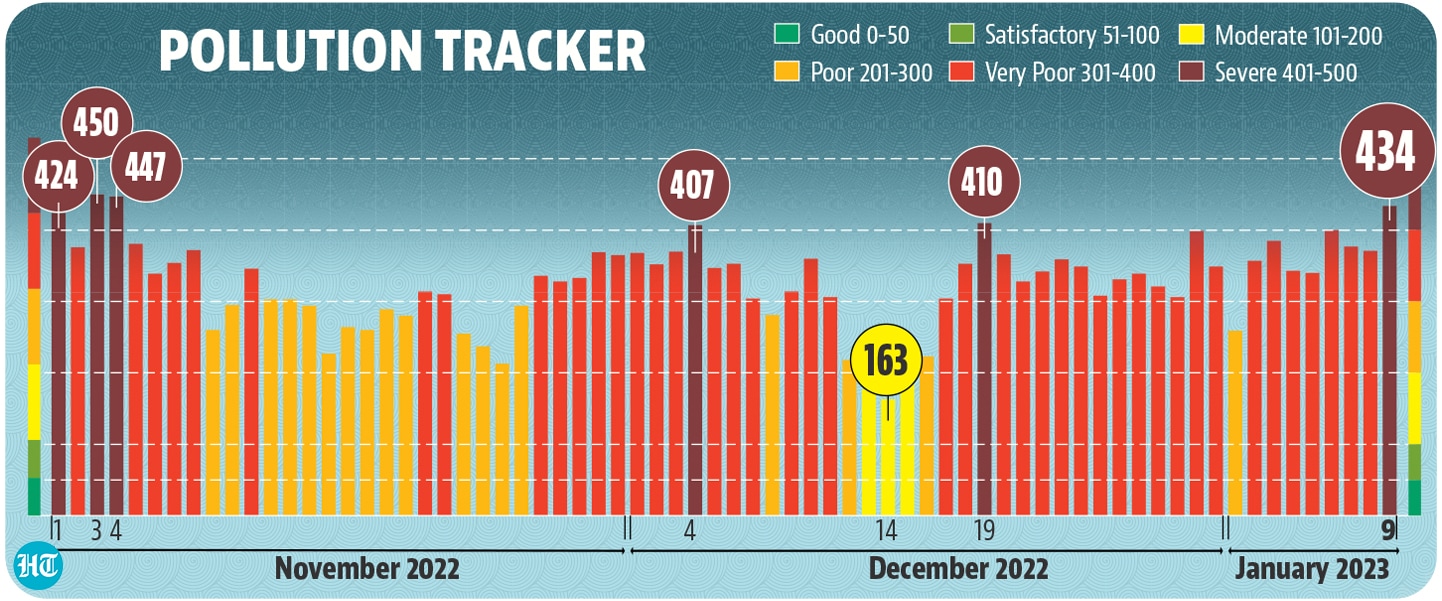
Monday’s AQI was a sharp deterioration from Sunday’s reading of 371 (very poor), and was the poorest air quality logged in Delhi since November 4, when the AQI was 447 (severe), CPCB data showed.

 Prefer HTon Google


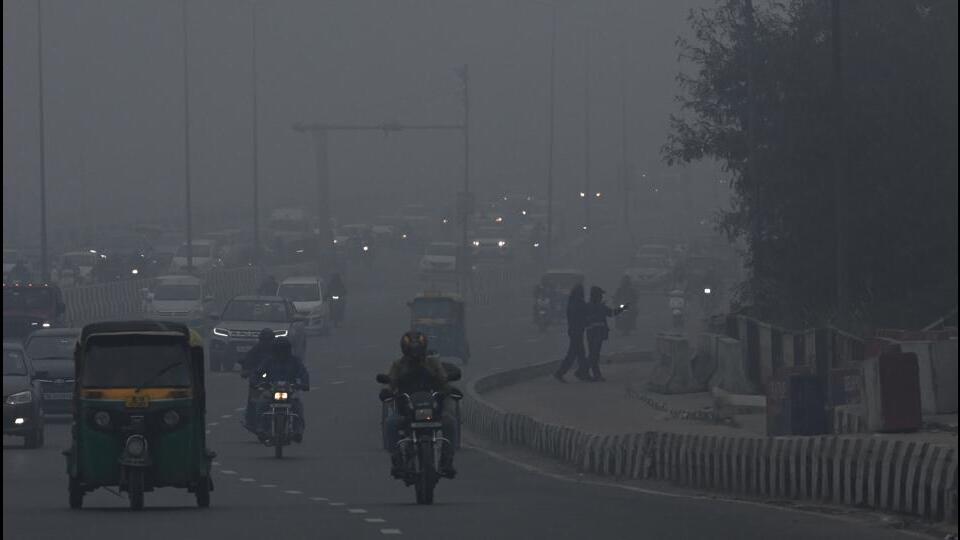
A combination of low wind speed, low temperatures and fog led Monday to be Delhi’s first ‘severe’ air of the year with an air quality index (AQI) of 434, according to the daily national bulletin released by the Central Pollution Control Board (CPCB) at 4pm, prompting the Commission for Air Quality Management (CAQM) to enforce a ban on BS-III petrol and BS-IV diesel vehicles in Delhi.
Monday’s AQI was a sharp deterioration from Sunday’s reading of 371 (very poor), and was the poorest air quality logged in Delhi since November 4, when the AQI was 447 (severe), CPCB data showed.
The CPCB classifies an AQI between 0-50 as ‘good’, between 51 and 100 as ‘satisfactory’, between 101 and 200 as ‘moderate’, between 201 and 300 as ‘poor’, between 301 and 400 as ‘very poor’ and over 400 as ‘severe’.
The CAQM had on January 4 imposed measures under Stage 3 of the Graded Response Action Plan (Grap), under which all private construction activities are banned in NCR, among other curbs, but had not enforced a ban on BS-III petrol and BS-IV diesel vehicles . However, after the high pollution levels on Monday, the committee enforced the vehicular ban.
The Delhi transport department in an order said BS-III petrol and BS-IV diesel vehicles have been banned till January 12, or till a downward revision of Grap measures. HT has seen a copy of the order.
Vehicles found violating the ban will be prosecuted under section 194(1) of Motor Vehicle Act, 1988 which provides a fine of ₹20,000, the order said.
Anumita Roychowdhury, executive director, research and advocacy at the Centre for Science and Environment (CSE) said while vehicular bans are disruptive in nature, they are also emergency measures aimed at controlling a spike in air pollution. “Such measures can be avoided in the future if long-term action is taken. As per Grap, these bans should also be lifted as soon as the AQI improves,” she said.
CAQM also held a review meeting with the governments of Delhi, Haryana, Uttar Pradesh and Rajasthan, asking them to deploy inspection teams to ensure Stage 3 measures of the Grap were strictly being adhered to.
Stage 3 of Grap calls for the closure of all brick kilns and hot mix plants not operating on clean fuels, closure of all stone crushers in NCR and a ban on mining and its associated activities.
“State government representatives and chairpersons or member secretaries of NCR’s pollution control boards or pollution control committees were impressed upon the need to implement the provisions of Grap in field with greater vigour to prevent further deterioration of air quality as well as to bring the overall AQI of Delhi down from the current ‘severe’ levels. The need to deploy inspection teams in adequate numbers to ensure Grap implementation was also reiterated,” CAQM said in a statement.
Forecasts by the Early Warning System (EWS), used by CAQM for pre-emptive action, shows Delhi’s AQI is likely to improve on Tuesday.
“Delhi’s air quality is likely to improve but will remain in the upper end of the ‘very poor’ category from January 10 to 12. The outlook for the subsequent six days shows air quality is likely to remain largely in the ‘very poor’ category,” said EWS.