E-Paper



Grap revamped: Key infra work to be exempt from curbs till last stage
Under the revised rules, crucial transport infrastructure projects, such as the Ashram flyover extension and Barapullah Phase 3, will be exempted from construction bans unless air pollution levels reach into the highest band.

 Prefer HTon Google


New Delhi: Crucial transport infrastructure projects, such as the Ashram flyover extension and Barapullah Phase 3, will be exempted from construction bans unless air pollution levels reach into the highest band, according to the revised Graded Response Action Plan (Grap) released by the Commission for Air Quality Management (CAQM) on Wednesday.
Also Read: In revamped Grap, ban on diesel car when air severe+
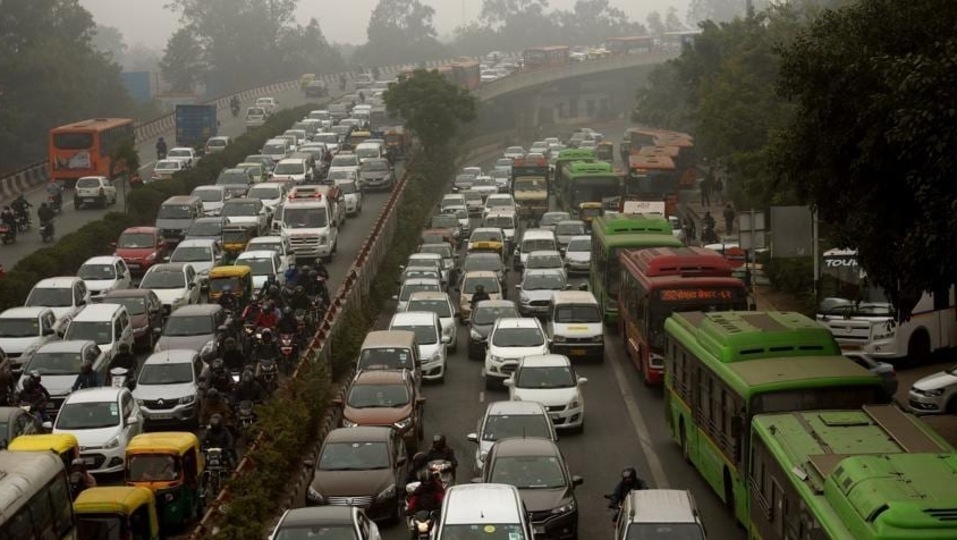
The decision is likely to give significant relief to commuters. In the past, projects like the Ashram underpass, the Pragati Maidan corridor and the RTR Marg flyover were delayed for months, if not years, when construction had to be halted due to bad air quality.
While such work will be stopped under the new mechanism as well, the threshold is set higher for projects that are part of “emergent and essential projects” such as road works, railways, metros and airports. These will be halted only in the fourth stage, when air quality index (AQI) breaches 450, compared to all other kinds of construction work that will need to be stopped if the AQI goes above 401.
Stage IV is assigned for what is classified as severe plus pollution days, which Delhi recorded on four instances in 2021.
Also Read: Delhi's arsenal for pollution fight retooled
A senior PWD official said extended construction bans had become an annual phenomenon in the city and contractors overseeing several of the projects cite these for repeated delays. “We will be able to enforce timelines more stringently if there are no long government-mandated bans. The construction ban in 2019 ran into several months and it was followed by pandemic lockdown. Many projects which were expected to decongest the city were derailed,” the official added, asking not to be named.
Another senior project manager with PWD said long construction bans also led to migration of labourers. “The rhythm of the projects was frequently disrupted and idle labour migrates during these bans. Once a ban is lifted, it takes 1-1.5 months to bring back heavy machinery and labour force to return and for work to return to normal. Contractors sought extensions and then went into arbitration citing the government’s construction ban,” the official added.
Over the last few years, transportation sector experts and engineers have contended that such projects have a significant impact in terms of decongestion and reduction in vehicular emissions and should therefore be exempted from pollution control curbs.
A 2018 study conducted by The Energy and Resources Institute (Teri), a Delhi-based research institute, showed that vehicle emissions account for 24%-28% of the city’s pollution while the contribution from dust was 18%-38% to the city’s overall pollution levels.
S Velmurugan, chief scientist, Central Road Research Institute (CRRI), welcome the new approach. “The key infrastructure projects may contribute a little dust in the environment but in overall larger context, the construction ban leads to delays in meeting deadlines and more contribution to pollution due to pending decongestion projects. This will help road-owning agencies keep tab on contractors executing the projects,” he added.
Velmurugan added that the construction agencies should adopt more stringent conditions in terms of dust control and watering of the site, and contracts should incorporate parallel simultaneous constructions at multiple points to meet completion targets.
Delhi witnessed a 38-day long construction embargo last year. A year prior to that, construction work was completely halted from November 4, 2019 till February 14.
Prof Sewa Ram, professor of transport planning in the School of Planning and Architecture, echoed the opinion. “We can deploy better regulations to control dust pollution from these sites but the overall impact in terms of reduction in vehicular emissions is significant. We should always keep in mind the background pollution while thinking about such blanket bans,” he added