
 E-Paper



In revamped Grap, ban on diesel car in Delhi-NCR when air severe+
The new Grap, released by the Commission for Air Quality Management (CAQM) on Wednesday, will take into account the index of air pollution, which reflects the concentration of several pollutants, and not just PM2.5 and PM10 as triggers for the curbs.

 Prefer HTon Google


Diesel vehicles not conforming to BS-VI will be banned in the National Capital Region (NCR) if the Air Quality Index (AQI) rises above 450, construction work will be halted above an AQI of 400, and diesel generators cannot be run if the index breaches 300, according to a revised Graded Response Action Plan (Grap) to combat air pollution.
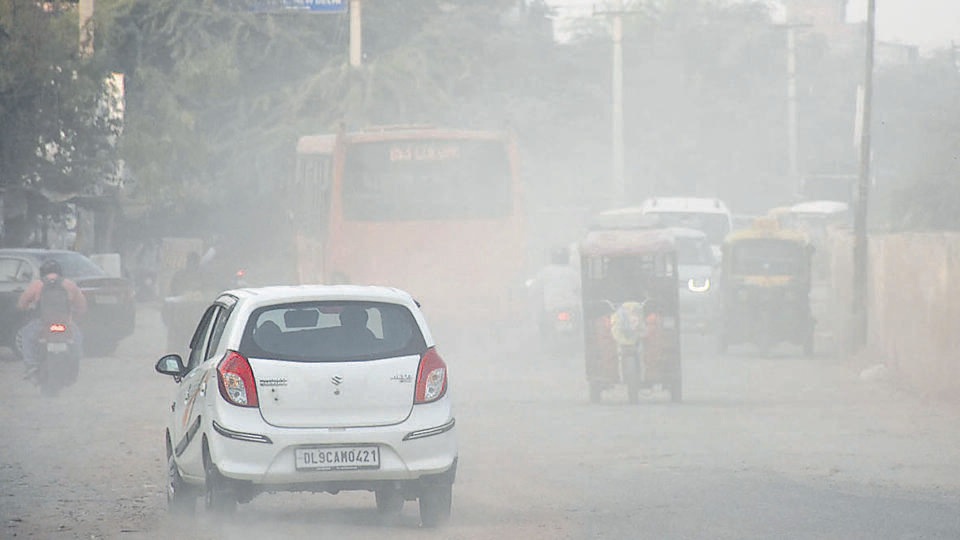
Released by the Commission for Air Quality Management (CAQM) on Wednesday, the new Grap will now take into account the index of air pollution, which reflects the concentration of several pollutants, and not just PM2.5 and PM10 as triggers for the curbs. More importantly, the imposition of restrictions under the three most serious levels will be pre-emptive instead of after pollution levels have spiked.

Grap is a set of progressively stricter list of curbs on the type of vehicles, or the types of works or business that lead to air pollution when air pollution levels hit certain trigger points.
The plan first came into force in 2017 but has been criticised for being ineffective, especially since it was considered reactive as stricter curbs were enforced 48 hours after pollution had already worsened.
“Actions under stages II, III, and IV shall be invoked at least three days in advance of the AQI reaching the projected levels of that stage, based on the dynamic model and weather/meteorological forecast... on a day-to-day basis,” the policy document said.
Previously, as per policy, agencies waited until PM 2.5 or PM 10 concentration crossed particular threshold for two consecutive days.
“The idea is to not wait and then take action, but to take action in advance and when Grap was formed, we did not have forecasting models. Now, these models will be used to forecast in advance and therefore these peak pollution events can be prevented in advance,” said Anumita Roy Chowdhury, executive director, research and advocacy at CSE and part of the expert member.
According to officials, the CAQM will receive reports from the Early Warning System for Delhi, a forecasting mechanism developed by the Indian Institute of Tropical Meteorology (IITM) along with the ministry of Earth Sciences (MoES) in 2019, and its Decision Support System (DSS), which was launched in 2021.
The DSS takes into account multiple readings and observations, including pollution data from across northern India, satellite data of aerosols and of farm fires. Forecasts can be made up to 10 days, with accuracy fairly high for up to a week.
A CAQM official said the policy was formulated keeping states in consultation and the final policy has been shared with the chief secretaries and the state governments. “There is no requirement of a notification of the policy and since the states were stakeholders in its formation, they can begin working on it. The policy will also be shared with the Supreme Court soon and if there are any changes that are required, fresh directions will be issued again.”
A subcommittee will meet frequently and issue necessary orders for invoking provisions of Grap based on the prevailing air quality and forecast, the document added.
The revised policy involves short-term (within 1 year), mid-term (within 2-3 years) and long-term (3-5 years) action plans across NCR with immediate effect, the commission said.
Under the new plan, stage I is when the AQI is in “poor” range (between 201 and 300), stage II when it is in “very poor” (between 301 and 400), stage III when it is “severe” (between 401 and 450), and stage IV when the AQI is in “severe plus” (above 450).
For stages II, III and IV, the curbs will be invoked three days in advance if there are predictions for AQI thresholds being breached.
Among the other key change is the limit on diesel private cars. In stage IV, the use of these will be banned unless they conform to the Bharat Stage VI (BS-VI) standard — the first time private cars will be banned on the basis of the fuel. Additionally, state authorities can also announce these curbs, as well as on BS-III petrol vehicles, in the third stage if they wish to, the policy says.
To be sure, AQI hit the “severe plus” stage on only four days in 2021 — twice in November, once in December, and once in January.
A second significant change is in allowing construction and demolition work to continue until AQI hits (or is predicted to) 401 or more. Last year, AQI was in this range for 20 days, but construction work was banned for 38 days in keeping with the earlier parameters.
Another relaxation for the construction sector applies to what has been defined as linear projects, which are mostly public use work such as for highways, roads, flyovers etc, which will need to stop only in stage IV.
The curbs on diesel generators will take effect in stage II — last year, the air quality was in this range for 64 days. The use of coal or wood-fired ovens in restaurants will also kick in from stage II.
Every year, for close to a decade now, the Capital and much of north India is plunged into a public health crisis in the run-up to and during most of the winter. The crisis begins when these regions are shrouded in smoke from farm fires in states of Punjab and Haryana, where farmers set fire to miles and miles of paddy fields after harvest to clear them of residue.
It is then precipitated by meteorological conditions marked by a lack of wind that would have otherwise blown local pollutants away, and festival fireworks during Diwali, creating the perfect storm of factors that lead to conditions that leave India’s Capital with no option but to shut schools, halt construction work, limit businesses and advise children and the elderly to stay indoors.
“The Commission has comprehensively revisited the contours of the Grap in vogue, towards an effective implementation mechanism and control on the adverse air quality scenario that generally persists in the entire NCR during the peak winter months,” said CAQM in the new policy released on Wednesday.
The policy was framed after the commission in December last year invited suggestions from the public and experts for a permanent solution to the air pollution problem. It then formed a nine-member expert group on January 7 to frame the policy focusing on five broad areas, including ensuring widespread access to affordable clean fuels and technology to the industry.
SN Tripathi, Steering Committee member of the National Clean Air Programme of the Union environment ministry, said the new policy should help control peak pollution events while gradually acting on different pollutants across different sectors. “AQI consists of gases too and we have seen gases leading to the formation of secondary particulate matter. If action is taken in advance, the peak will come down considerably and over time, Delhi-NCR can see an improvement in the pollution levels, both in the short-term as well as long-term.”



