
 E-Paper



Delhi: Roshanara Bagh to get a Sunder Nursery like revamp
New Delhi: Ever since it was opened in its rejuvenated avatar in the winters of 2018, the Sunder nursery--South East Delhi’ heritage garden -- has redefined open public spaces in the national capital


Ever since it was opened in its rejuvenated avatar in the winters of 2018, the Sunder nursery--South East Delhi’ heritage garden -- has redefined open public spaces in the national capital. For a highly congested capital starved of open green spaces, the 90-acre park has emerged a successful example of an urban renewal project.
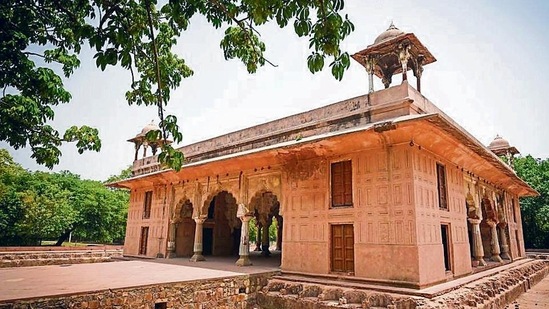
With historic landscapes of restored monuments, a lush British-era nursery, manicured gardens, lakeside cafe and biodiversity zones-- the green haven abutting Nizamuudin has something to offer for everyone-- families searching for picnic spots to youngsters looking for perfect backdrop for their reels.
The city authorities are now working to set up a similar blue-green infrastructure in northern part of the city. Spread over 57 acres, the 17th century Roshanara Bagh- a garden developed by the second daughter of the emperor Shah Jahan and begum Mumtaz Mahal- is now set for a turnaround.
The original garden was designed and commissioned by the princess in1650s at the time when the city of Shahjahanabad (Walled City) was being built, and the baradari at the centre of the garden now serves as her resting place. Municipal Corporation of Delhi, which oversees the park, and other government agencies are undertaking multiple projects for rejuvenating the neglected space such as reviving a dead lake and building a modern nursery.
Delhi lieutenant governor VK Saxena also visited the garden last week (June 18), announcing that restored landscaped greens at Roshanara Bagh will be at par with Lodhi Garden.
Modern nursery
MCD’s horticulture department has been tasked with developing a modern world-class nursery over a vacant 8.5-acre space in the Roshanara Bagh that will showcase rare exotic plants and supply more than 300,000 plants to the city every year.
A senior MCD horticulturist working on the project said that over next 3-4 months two polyhouse system units will be developed where air and weather-controlled conditions will be maintained to rear rare plant species. “Ideal condition for plant cultivation is 25-30° Celsius with proper media. These polyhouses will focus on rare varieties which cant be propagated in open environment. A list of 150 types of plants has been finalised,” the official said.
He added that the project will involve recreational aspects and providing subsidised plants to visitors. It will be linked with the heritage part of the garden as well as the new lake being developed so that visitors are able to spend several hours in cafeteria, learning about monuments and the new lake which is expected to come up by December. The first phase of project is expected to cost ₹60-70 lakh.
Lake revival
The historic Bagh has a lake, now dead, with 17th century Mughal monuments, canal systems and pavilions forming a backdrop. The garden is laid out according to the Persian pattern in which paradise (jannat) is believed to be laid out in mystical Islam-- a layout that was used by Shah Jahan while building the Taj Mahal around the same time.
Delhi Jal Board, under its city of lakes project, is undertaking a lake revival project to redeem the dead dry lake bed. A senior DJB official associated with the city of lakes project said that the tender for the Roshanara project was awarded around three months back and the civil work is in advanced stage. “50% construction work on developing a decentralised STP has been completed. The plant will have a capacity of cleaning 2.25 million litres of drain water everyday which will be fed to the lake,” the official explained.
Under the Rs11-crore project, a physicochemical treatment plant is being set up which will act as the source of water for the lake. In its previous avatar, the lake was fed by rainwater and channels from Najafgarh drain but with change in slope surfaces in surrounding area and increased concretisation, it has dried.
The Roshanara Bagh also has a raised canal system with flowering plants on both sides. The canal system too has dried up in absence of water reservoir. “Once the lake reaches a healthy stage, the plan to revive the canals using its waters can be taken up,” official said.
The erstwhile North MCD had tried to revive the lake by using excess groundwater seepage from digging up the Metro line section for phase 4, but it could not prove to be a long term solution. An MCD official said that boating will be allowed in the lake and a lake side cafe is also on cards. A meeting with Agha Khan foundation was also held around two weeks back to learn from their experience at the Sunder Nursery but the MCD officials said the civic body will try to keep concretised space to a minimum.
The clean-up of the monuments which will come up in the last phase next year will be taken up with the help of Archaeological Survey of India (ASI). The elite Roshanara Club, which was started here in 1922 by the colonial administrators is spread over 22 acres. It is a venue for first class cricket since 1927 and is also considered the birthplace of the Board of Control for Cricket in India (BCCI).
Parks need of the hour
Delhi’s total green cover is 342 sq km but the the area under parks is merely 81.23 sq km. The draft Master Plan for Delhi-2041 states that in all districts except New Delhi, the per capita park space is less than 9.5 sq m, which is the World Health Organisation-recommended benchmark for per capita green space in urban setting. Fayaz Khudsar, scientist-in-charge of Yamuna Biodiversity Park said that there is clear appetite for blue-green infrastructure in the city which can serve conservation, be educational and recreational at the same time. “All seven biodiversity parts of the city are a clear example. When we put in money for such infrastructure development, we should focus on creating quality green space which served the public. Before the pandemic, the Yamuna biodiversity park alone was receiving around 0.25 million visitors a year. Encouraging footfalls are seen in Kamala Nehru ridge, Neela Hauz, Tilpat Valley as well. Restoration of such wetland will tap more water and help Delhi to get more sustainable resilient environment,” he said.

Stay updated with all top Cities including, Bengaluru, Delhi, Mumbai and more across India. Stay informed on the latest happenings in World News along with Delhi Election 2025 and Delhi Election Result 2025 Live, New Delhi Election Result Live, Kalkaji Election Result Live at Hindustan Times.


