Despite a baseline report prepared for Delhi’s new master plan flagging a massive gap in rental housing and specifically calling for newer forms of accommodation such as hostels, dormitories, student housing and paying guest (PG) facilities, the final Master Plan for Delhi-2047 barely addresses PG accommodation.
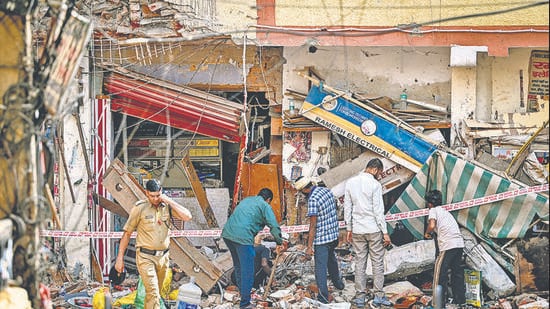
The omission is particularly stark after Sunday’s deadly building collapse in Satya Niketan, which has brought renewed scrutiny on the mushrooming PG sector and the limited enforcement of regulations governing buildings housing large numbers of students and young professionals.
MPD-2047 offers limited framework for PGs
The Master Plan for Delhi-2047 (MPD-2047) largely deals with PGs by restricting their operation in “A” and “B” category colonies. For the rest of the city, it leaves their regulation to “guidelines issued by the government, from time to time”.
Delhi’s residential colonies are classified from Category A to H according to circle rates, based on factors including infrastructure, location and land value. Category A includes some of the city’s most affluent neighbourhoods such as Vasant Vihar, Shanti Niketan, Maharani Bagh and New Friends Colony, while Category B includes Defence Colony, Nizamuddin East, Greater Kailash, Hauz Khas, Green Park and Safdarjung Enclave.
No dedicated licence system for PG accommodation
{{/usCountry}}No dedicated licence system for PG accommodation
{{/usCountry}}A senior MCD official said the lack of a specific licensing framework had allowed PGs to evolve from small-scale residential arrangements into commercial operations without a corresponding regulatory regime. “There are no licences issued for PG accommodation units as it is not a regulated activity,” the official said.
“Initially, PGs were operating as residential properties, with some space in houses being rented out. But now they are being run as full-fledged commercial operations, with packages and brands operating chains of such units.”
The official said MCD property tax department had in recent years also begun issuing conversion and commercial-rate notices in areas adjoining North Campus and elsewhere, reflecting the changing nature of these establishments.
Also read: After Satya Niketan tragedy, MCD plans PG survey, steps up demolition drive against unsafe buildings
PGs first brought under mixed-use rules in 2016
Under MPD-2021, PG accommodation was added only in August 2016 under “other activities” in the mixed-land-use chapter, which permits uses other than those originally envisaged for a plot. “PGs was added under ‘other activities’ in August 2016. It was only allowed in residential plots abutting roads that met specified right-of-way requirements for mixed-use streets,” the official said.
MPD-2047 has simplified the framework further, retaining the prohibition in A and B colonies but providing little detail on how PGs should otherwise be regulated. “MPD-2047 has left a grey area for regulating PGs, and when you leave regulations for a land use undefined, it is only prone to misuse,” the official said.
That gap assumes greater significance because of the severe shortage of hostel accommodation in Delhi’s higher education institutions, which has pushed thousands of students towards private PGs and other forms of rental housing.
Also read: Crackdown on illegal 5th floors in Delhi faces hurdles from as early as 2006
Government plans new PG regulation and safety law
On Tuesday, Delhi urban development minister Ashish Sood said that they work on a PG policy was already in the works and the same would be expedited now. The proposed Paying Guest Accommodation Regulation and Safety Bill, 2026, is expected to make licences mandatory for PG operators and provide for zone-wise rent bands, structural and fire safety audits, and a central portal listing PG accommodations.
The city has already seen the risks posed by poorly regulated accommodation. In 2023, PGs in Mukherjee Nagar, a major coaching hub in north Delhi, came under a sealing drive after a fire at a coaching centre injured scores of students.
An MCD official said coaching centres and PG houses were permitted subject to minimum plot-size and road-width requirements. They were also required to obtain a fire NOC if the building was more than 9 metres high and housed more than 20 students, with such premises treated as assembly buildings for fire-safety purposes.
Baseline report had flagged wider housing shortage
Yet the baseline report prepared as part of the MPD-2047 exercise had already identified the broader housing problem that has fuelled the growth of PGs.
It noted that Delhi’s formal housing system had failed to keep pace with urbanisation, with more than 60% of the city’s population estimated to be living in “unplanned informal settlements with compromised habitation conditions”. The report said this reflected a gap between housing demand and supply.
It recommended that “new and emerging demands for various models of housing which require less private space and more shared common facilities” be studied and incorporated into Delhi’s planning strategies.
The report specifically identified co-living, dormitories, paying guest accommodation and senior-living facilities as emerging housing formats. It also suggested that diverse short-term housing, including rental and transit accommodation, could be introduced as a separate land-use category.
Rental housing needs more policy attention
Its assessment of rental housing was even more direct. “Rental housing has received little attention in Indian housing policy,” the report said, noting that the issue was particularly important for Delhi because of migrants drawn to the city for employment, healthcare and education.
Despite identifying PGs and other emerging forms of rental accommodation as part of the city’s future housing needs, the final MPD-2047 offers little beyond a broad restriction on where PGs can operate and a reference to future government guidelines.
Stay updated with all top Cities including, Bengaluru, Delhi, Mumbai and more across India. Stay informed on the latest happenings in World News along with Delhi Election 2025 and Delhi Election Result 2025 Live, New Delhi Election Result Live, Kalkaji Election Result Live at Hindustan Times.
Stay updated with all top Cities including, Bengaluru, Delhi, Mumbai and more across India. Stay informed on the latest happenings in World News along with Delhi Election 2025 and Delhi Election Result 2025 Live, New Delhi Election Result Live, Kalkaji Election Result Live at Hindustan Times.