
 E-Paper



SC gives Delhi govt a week to decide on fee regulation for current academic year
The Supreme Court extended the deadline for Delhi to decide on deferring private school fee regulations to February 2, amid ongoing legal challenges.

 Prefer HTon Google


New Delhi
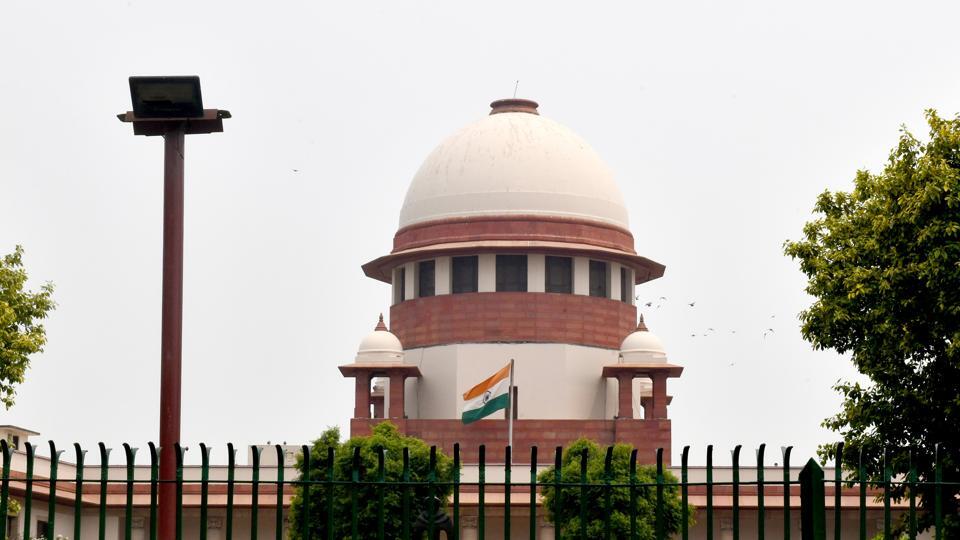
The Supreme Court on Tuesday granted an additional time of one week for the Delhi government to decide on deferring the implementation of the private school fee regulation law for the 2025-26 academic year—after it had observed on January 19 that implementing the law for the ongoing academic session would be “unviable”.
Then, it had also asked the additional solicitor general (ASG) to ascertain from the government whether it was willing to defer the implementation to April 2026.
On Tuesday, ASG SV Raju, appearing for the Delhi government, told the court, “I had one meeting with higher officials. We require one more round of meetings to come to a final decision.”
A bench of justices PS Narasimha and Vijay Bishnoi posted the matter for February 2.
The court was hearing a batch of petitions filed by private school associations, which have challenged the Delhi School Education (Transparency in Fixation and Regulation of Fees) Act, 2025, in the Delhi High Court. In a separate circular issued in December 2025, the government advanced the implementation of the law for the current academic year of 2025-26, which was also opposed by the schools.
Senior advocate Mukul Rohatgi, appearing for the private schools association, called for the matter to be resolved by Friday as the schools were not willing to wait any further.
Meanwhile, applications filed by aggrieved parents of children studying in private schools also sought to join the proceedings in support of the government. The bench said, “We will hear all parties on the next date.”
The Act came into force on August 14, 2025 and the December circular retrospectively imposed it from the start of the 2025-26 academic year.
The schools appealed against an interim order of the high court on January 9, refusing to stay the act or the December 24 circular mandating implementation of the law from April 1, 2025. This meant that the schools were mandated to set up a school-level fee regulation committee (SLFRC) by January 2026.
On January 19, the top court had observed, “No doubt, the fees are phenomenally high. This is legislation for public welfare. But in your over anxiety, you are creating institutions which are not viable. Acting hurriedly may lead to the committee not being constituted properly. This also will have an effect of recovery on them (schools). It will be unviable as you are forcing people to get up overnight.”
The court had told the government to consider the practical difficulties of setting up the SLFRC. It had said, “If you (government) are merely saying about the constitution of the committee, there is no harm. We will interfere with the HC order if your intention is to regulate fees for 2025-26. Think about it.”
The petitions were filed by individual schools along with Action Committee for Unaided Recognised Private Schools, Delhi Public School Society, and Forum of Minority Schools, among others.
In their petition before the high court, the schools claimed that their right to independently fix fees has been interfered with by the provision for SLFRC. Section 4(b) of the act provides the composition of this 11-member committee, of which only two members can be representatives of the management. Further, the nominee of the director of education is to be part of the committee, whose presence is mandatory for the SLFRC decision to be valid. Section 5(4) mandates that fee approval by SLFRC must be based on unanimous agreement, indicating that every single member of the committee can veto the fee proposed by the management.

Stay updated with all top Cities including, Bengaluru, Delhi, Mumbai and more across India. Stay informed on the latest happenings in World News along with Delhi Election 2025 and Delhi Election Result 2025 Live, New Delhi Election Result Live, Kalkaji Election Result Live at Hindustan Times.


