E-Paper



Shrubs to make up over 75% of Delhi’s plantations this year
Forest department officials said shrubs make a bulk of the share this time not just because of a paucity of space, but also because ground level vegetation is better at controlling dust pollution and will help make plantation exercises more meaningful.

 Prefer HTon Google


With Delhi slowly running out of land for carrying out its annual tree plantation, compensatory plantation and tree transplantation efforts, the annual greening target of 3.54 million saplings this year will be largely met by planting shrubs, which make up about 76% of the total 2.76 million saplings being planted by the 19 greening agencies of the national capital, forest department officials have said.
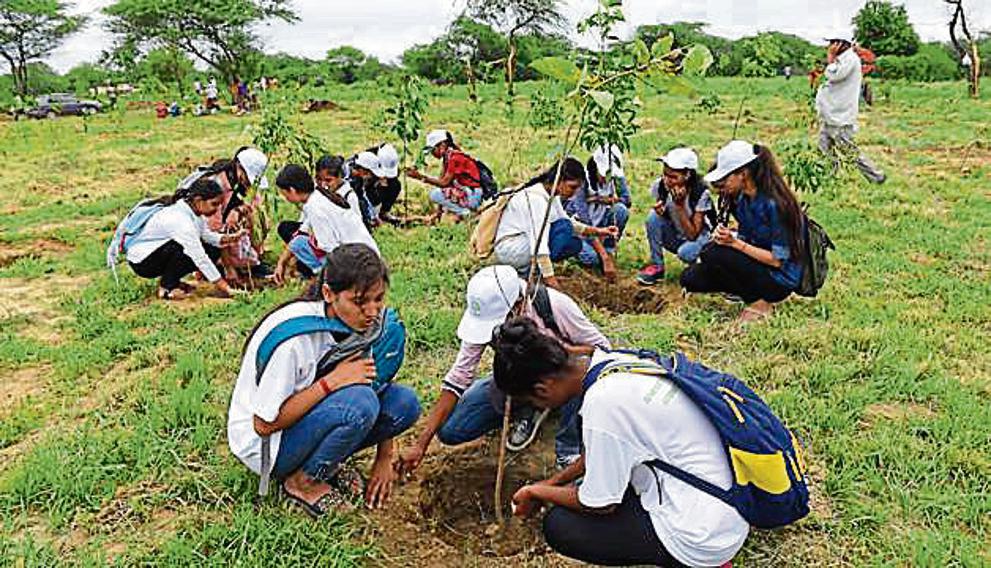
The remaining 779,000-odd saplings, consisting of both shrubs and trees, will be distributed free of cost to residents through the 14 government nurseries.
Forest department officials said shrubs make a bulk of the share this time not just because of a paucity of space, but also because ground level vegetation is better at controlling dust pollution and will help make plantation exercises more meaningful.
Last year, shrubs comprised around 67% of saplings planted by Delhi’s greening agencies.
“Greening agencies have been asked to focus on green-scaping using shrubs, which aims to make central verges and medians greener and control dust pollution. In larger spaces where trees are planted, shrubs also need to be accommodated at the base as without these ground-level or mid-level vegetation, trees alone will not provide much to the overall ecosystem of an area,” said a forest official, on condition of anonymity.
Data from this year’s plantation drive shows 2.10 million saplings will be shrubs and medicinal herbs, while 631,000 will be trees.
Residents can also visit the 14 government nurseries across the Capital to procure saplings from the 779,000 saplings that will be made available to them for free. “These largely consist of tree saplings but people usually also ask for medicinal plants and herbs,” said a nursery official.
Last year, Delhi set a target of planting 3.31 million saplings, with 2.67 million to be planted by greening agencies and the remaining to be distributed free of cost among residents. Delhi was able to plant 2.77 million saplings in total.