
 E-Paper



State govt informs SC it has launched ‘one nation, one ration card’ scheme
Asked by the bench, solicitor general Tushar Mehta, who represented the Union government, said that Delhi was one of the four states which was yet to implement the scheme. But Shroff was quick to retort: “We are now implementing the scheme.”

 Prefer HTon Google


The Delhi government informed the Supreme Court on Friday that it has commenced implementing the One Nation One Ration Card scheme, which helps beneficiaries, especially migrant workers, to avail of subsidised food commodities anywhere in the country.
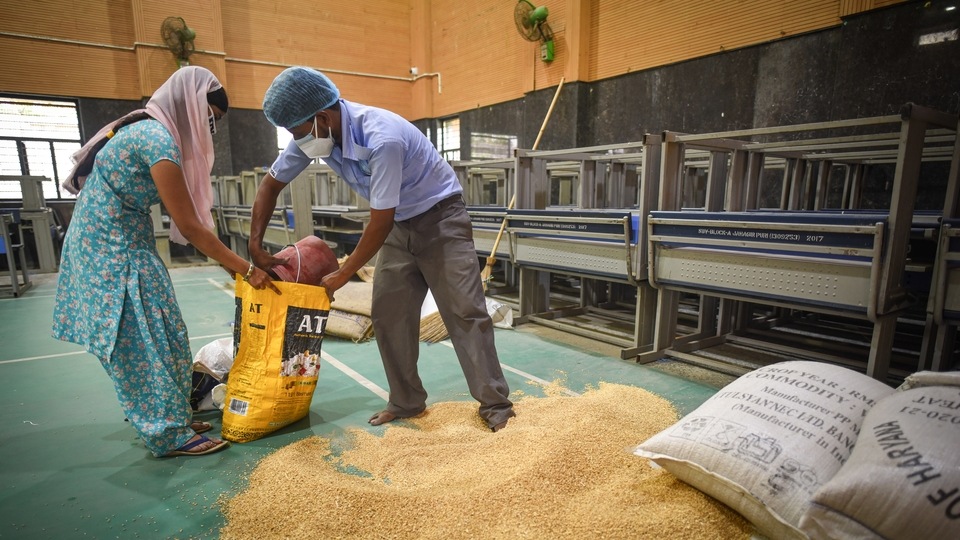
The bench of justices Ashok Bhushan and MR Shah was informed about the Delhi government making the national scheme functional by its standing counsel Chirag M Shroff while the court heard the suo motu (registered on court’s own motion) case on “problems and miseries of the migrant workers”.
Asked by the bench, solicitor general Tushar Mehta, who represented the Union government, said that Delhi was one of the four states which was yet to implement the scheme. But Shroff was quick to retort: “We are now implementing the scheme.”
The statement by the city government’s lawyer follows an affidavit submitted by it in the Supreme Court, stating: “Regarding efforts to be made to encourage migrant NFSA (National Food Security Act) beneficiaries to use facilities of portability under One Nation One Ration Card (ONORC), it is submitted that in Delhi, to begin with ONORC has been implemented in circle 63, Seemapuri, and from this facility, portability facility can be availed.”
The Delhi government’s affidavit, which was reviewed by HT, is dated June 8. The Union government had on June 8 written to the Delhi government to speedily implement the One Nation One Ration Card programme, pointing out that the scheme was already functional in 32 states and Union territories.
Delhi government spokespersons did not comment on the matter despite repeated requests.
The Delhi government and the Centre have been locked in a tussle after the state government’s ambitious plan to home-deliver subsidised foodgrain to the city’s residents, which has been blocked by the Centre citing procedural concerns.
On Tuesday, Delhi chief minister Arvind Kejriwal wrote to Prime Minister Narendra Modi, urging him to allow the home delivery scheme “in national interest” as he maintained that it was a waste of resources to have two schemes trying to do the same thing.
The One Nation One Ration Card scheme programme is currently functional in 32 states and Union territories, covering 690 million beneficiaries, or 86% of those eligible for food security cover.
It provides for a portable public distribution system (PDS) where food distribution takes place through a network of fair price shops that act as the final points of delivery.
Nearly 7.2 million people in Delhi are eligible for subsidised food, including 1.7 million ration card holders and nearly 3 million priority households, besides other additional food insecure categories identified by the Delhi government.
In its affidavit, the Delhi government has also apprised the top court of its decision to provide food grains also to those who did not possess ration cards and the benefits were envisaged for around 20 lakh persons.
On Friday, the apex court heard the submissions of the state governments briefly and reserved its order for issuing further directives while observing that all states must implement ‘One Nation One Ration Card’ scheme.



