
 E-Paper



Cellphones—the most treasured item inside India’s largest prison complex
Tihar houses all types of prisoners--gangsters, murderers, rapists, politicians, and terrorists. But inside the prison, they are all under one roof and locked up behind the same high walls. The number of murders, their dreaded past, or the wealth the prisoners once had does not matter

 Prefer HTon Google


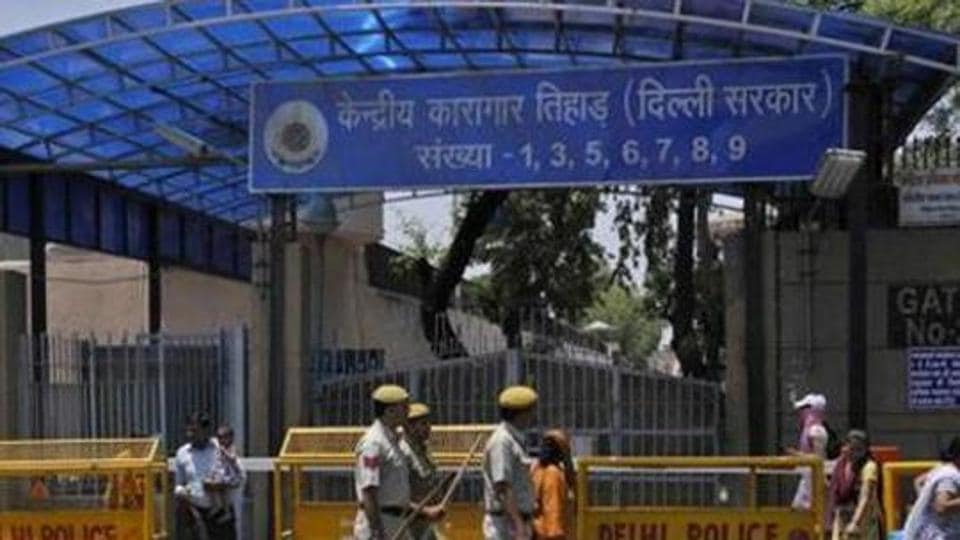
Authorities have expedited efforts to ensure an end to cellphone use at Tihar prison, the country’s largest, days after a Telegram message claiming responsibility for the parking of an explosives-laden vehicle outside industrialist Mukesh Ambani’s house in Mumbai on February 25 was traced to a phone inside the jail. The phone was among the two later recovered from jailed terror convict Tehseen Akhtar’s possession. The phones were found after Tihar authorities conducted searches inside the prison to trace the origin of the message.
Investigators have ruled out a “terror angle” in the Mumbai case and arrested police officer Sachin Vaze in connection with the bomb scare.
An inquiry is separately underway to probe how Akhtar, who was involved in multiple blasts, managed to have cellphones smuggled into the high-security prison. The prison authorities have held at least two meetings over the last week to fully block cellphone signals in the prison complex spread over 400-acre in western Delhi. The prison houses all types of prisoners—gangsters, murderers, rapists, politicians, and terrorists. Many of them have been influential, even rich too, and infamous. But inside the prison, they are all under one roof and locked up behind the same high walls. The number of murders, their dreaded past, or the wealth the prisoners once had does not matter. What matters here is if they have the prison’s most treasured item—a cellphone.
HT spoke to former, current prisoners, serving and retired jail officers to understand how cellphones are smuggled and used inside the prison.
A status symbol
Sunil Gupta, a former law officer who worked at Tihar for over three decades, said the cellphone is a status symbol inside the prison. “Outside Tihar, a cellphone is the most common item. Everyone has it; whether rich or poor. But in the prison, it is the most sought-after item. The prison has a phone facility, which is free for everyone. But many inmates, who refuse to reform, do not use it. They need cellphones to run their operations.”
Gupta said many criminals use cellphones to issue threats and run their businesses. “They cannot do this through the prison’s phone facility.”
Also Read | Engineering aspirant to IED developer: Tihar inmate at centre of Ambani case
The Delhi Police have over the last two weeks busted at least two gangs trying to extort money by claiming to be making calls from the prison. “They were making calls using jailed gangster Neeraj Bawana’s name. It is human psychology to be afraid after hearing that the threat call has been made from prison. In these two cases, none of the persons, who made the calls, were from the prison. They were only posing as jailed gangsters,” said a crime branch officer, who did not wish to be named.
The officer added the calls they have intercepted show at least three gangs continue their extortion activities from behind the bars.
Former Delhi Police inspector Anil Kumar, who was lodged for over 15 years in Tihar after his conviction in a shoot-out at Delhi’s Connaught Place in 1997, said only a few people secretly use cellphones. “These hardcore prisoners identify spaces in prison; do not let anyone near them and then use the phones. It is a wrong notion that everyone is using phones behind bars. The authorities are strict about this. This is the reason why so many inmates are caught at the gates trying to take the phones inside,” said Kumar, who was released last year.
It was not always like this
Unlike the calls made from the prison’s phones, cellphone calls cannot be intercepted unless the police or intelligence agencies are monitoring them. Delhi Police records show that in recent months, there have been at least three cases of jailed gangsters making threatening calls.
Gupta said before the phone facility was introduced in Tihar, they would give postcards to the prisoners to write to their families. “But some of them misused this facility. Through these postcards, threats were sent... Some also used human couriers to warn their rivals. During the weekly meetings with their relatives, the gangsters would send messages or letters. That was enough to create fear in the minds of the victim that the message had come from inside Tihar. Postcards have replaced cellphones now.”
Also Read | Tihar has no jammers that can block 4G signals
Jail records seen by HT show that in 2019, the prison authorities seized at least 60 phones. In 2018, at least 54 phones were confiscated. The actual number of phones smuggled and successfully hidden could be more.
Heater before cellphones
Gupta said until two decades ago, a room heater was the most prized item inside the prison. “Any prisoner who had it was seen as someone whose status was above other prisoners. They would use it not only to keep themselves warm but also prepare food after buying raw items from the jail’s canteen,” said Gupta. He added prisoners would smuggle heaters in clothes, etc. “Some rich prisoners would bribe jail guards and get a heater. Or their accomplices outside prison would throw them inside the jail from the main road outside the prison wall. The method of smuggling is the same. It is just that a cellphone has replaced the heater.”
Many prisoners had only heard about cellphones for years but had never seen one.
Former Youth Congress leader Sushil Sharma, who spent over 23 years behind bars including the first 20 without parole in a 1995 murder case, said he first saw a cellphone when he was taken for a court hearing. “Cellphones came to the prison very late. We would read about it in the papers or see actors use it on television. Many years after it became common outside, I remember seeing a lawyer using it for the first time more than 20 years ago.” He said he would read articles about the use of cellphones inside the jail, but only a few used it. “And they did it secretly. The jail officers have enough informers even among the prisoners. If they involve too many people, the informers will tip off the guards. The prisoners, who continue using cellphones, are those who do not want to be reformed. It is because of them that the image of the jail gets tarnished.”
One phone, multiple users
An under-trial, who is currently out on bail in a 2012 murder case, said that once a cellphone enters prison, it is used by several people. He added even junior jail guards would smuggle the phones. “Unless a prisoner hides phone parts in body cavities or someone successfully throws one from outside the prison gate at an identified spot, a cellphone cannot enter the prison complex without the connivance of the prison guards.” He said guards would charge anywhere between ₹10,000-20,000 for smuggling a phone. “Maybe it is even more. Often, they may not even know who the real user of the phone is. The worst that can happen if a guard is caught is a temporary suspension.” He added in most cases, they manage to get cleared. “With the prison already facing a shortage of guards, it is not practical for the top bosses to sack every employee caught for such violations.”
The under-trial said a bottle cap, or a spoon, are improvised in Tihar to make a weapon. “For more than 50-60 years, this prison has beaten all kinds of technology. You may bring any technology. It is only a matter of time before the inmates find a solution.”
Also Read | Delhi orders inquiry into Ambani case’s Tihar link
With 18,000 prisoners, Tihar is the most crowded prison in the country. It has high-risk inmates such as underworld don Chhota Rajan, gangster Neeraj Bawana, gangster-turned-politician Mohammed Shahbuddin, terrorist Yasin Bhatkal, and Akhtar. There are fewer than 1,500 jail officers to manage so many prisoners.
A prison officer, who did not wish to be named, said until a few years ago, many inmates would barter cigarettes or tobacco in return for making calls from smuggled phones. “Until 5-6 years ago, some prisoners would charge money to let others use the phone... a prisoner [once] charged an inmate about ₹100 to make a call to his girlfriend. Now with calls rates really cheap and all phones offering free calls, a phone is shared by many prisoners. Often, they use a common phone but have their own SIM cards. SIM cards are easy to smuggle because of their small size.”
Finding ways to stop the calls
The recovery of phones from Akhtar’s possession has prompted prison authorities to look for a permanent solution to the problem. The cellphone jammer at the prison is unable to stop 4G signals. The authorities are working on getting the latest jammers or some other latest technology.
Prison officers, who did not wish to be named, said every cell inside the prison was raided over the last week.
Sandeep Goel, the prison’s director-general, said they will adopt the dominant tower technology to block the signals. “With permission from the telecom department, we have installed one cellphone tower at Mandoli jail complex. It worked effectively there. This tower blocks all signals from that particular area. We will install similar towers in Tihar, too, which will cut off all signals.”


