
 E-Paper



Triveni Kala Sangam turns 75: Born of dance, but built for all
The Sangam in Mandi House is one place where everything is happening: different dance styles being taught, art galleries, a theatre, and a cafe

 Prefer HTon Google


It was a single, captivating dance performance in the 1940s that led to the birth of one of Delhi’s most beloved cultural institutions, the Triveni Kala Sangam in Mandi House. As the story goes, in Karachi in the 1940s, the institution’s founder, Sundari Shridharani, watched a recital that altered the course of her life. So deeply moved was she that she announced she would learn dance, much to her family’s surprise.
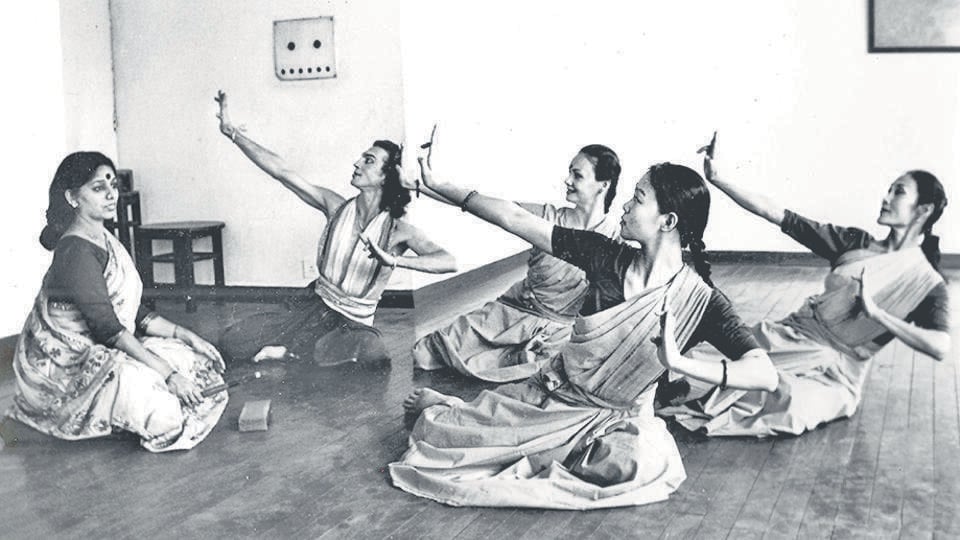
“She found out that the performer had studied at Lady Irwin College, so she immediately applied there,” recalls Kavita Shridharani, Sundari’s daughter and the current president of Triveni’s council.
Sundar’s training later took her to Santiniketan and then to dance legend Uday Shankar’s school in Almora. Immersed in that world, Sundari envisioned an institution that would offer similar artistic exposure to others, not as an exclusive enclave, but as an open space where disciplines of art could meet and mingle.
That vision took shape in 1950 as Triveni Kala Sangam in two small rooms in Connaught Place. It was much later that the Sangam moved to its now-iconic building in Mandi House. Over time, it grew into a space where dance, theatre, music and the visual arts coexist organically.
Now, as the institution marks 75 years, its legacy is not merely architectural or institutional, but philosophical: a belief that the arts must remain accessible, porous and alive.
“That was her dream; for the arts to be accessible to everyone. This is one place where everything is happening: different dance styles being taught, art galleries, a theatre, and a cafe,” says Kavita. “It was this intermingling of the arts that led flautist Vijay Raghav Rao to suggest the name ‘Triveni’.”
To celebrate the milestone, the institution is hosting a series of programmes from February 27 to March 15, featuring theatre productions, talks, dance and music recitals, and walk-throughs by artists associated with Triveni, past and present.
A conscious emphasis has been placed on revisiting its history. Kavita and her brother Amar Shridharani, the current director, say they wanted the public to understand the effort and struggles behind their mother’s vision.
The celebrations will also see the return of the “Heritage Menu” at the popular Triveni Terrace Cafe. “Mrs Puran Acharya used to run the canteen and serve simple snacks like tasty toast’, which was bread toasted over the fire with potatoes, along with paranthas and kebabs. If you came to Triveni, you had to have those,” Kavita says.
These dishes, once favourites of artists such as Habib Tanvir and MF Hussain, will be prepared as they were decades ago, before modern kitchen equipment became standard.
Architect Sudish Mohindro, who studied under Joseph Allen Stein, the architect of the Triveni building, says the structure itself was designed to invite engagement. “The idea of openness was central to Stein. Even if you came only for the cafe, the layout ensured you would pass a dance rehearsal or a theatre class,” he says.
Mohindro will join architect Meena Mani and journalist Mandira Nayar on March 14 for a discussion on Stein’s philosophy and impact.
Other highlights include “An Oasis for the Arts”, revisiting works from Triveni’s inaugural 1963 exhibition, and a talk by theatre director Feisal Alkazi titled “The Importance of Being Triveni”. His play Effie’s Burning will return to the venue after 34 years with its original cast.
For the Shridharani siblings, the anniversary is both celebration and affirmation. “It has evolved into what she really wanted,” says Kavita. “A haven for people to come to.”

Stay updated with all top Cities including, Bengaluru, Delhi, Mumbai and more across India. Stay informed on the latest happenings in World News along with Delhi Election 2025 and Delhi Election Result 2025 Live, New Delhi Election Result Live, Kalkaji Election Result Live at Hindustan Times.


