
 E-Paper



2-day session in city to identify ways to reduce air pollution using technology
The event was inaugurated by the minister for environment, forest and climate change Bhupender Yadav, who said the government was looking to incorporate suggestions from the public which can ultimately lead to a comprehensive action plan for NCR


The Commission for Air Quality Management (CAQM) in the National Capital Region (NCR) and the Union environment ministry on Monday kicked off a two-day interactive session in Gurugram, titled “Dialogue Towards Clean Air”, to find solutions to the problem of air pollution by looking at technologies and involving stakeholders.
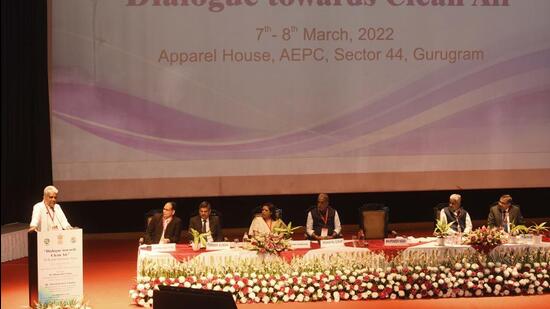
The event was inaugurated by the minister for environment, forest and climate change Bhupender Yadav, who said the government was looking to incorporate suggestions from the public which can ultimately lead to a comprehensive action plan for NCR.
“There is a common misconception that environment means shutting down everything. We don’t want closure, but regulation and, for that, we want people to assist us and work with us in making the air cleaner. This two-day event will bring about a lot of solutions to our air pollution problem and an action plan can be formulated based on these solutions,” the minister said on Monday.
Highlighting the efforts taken by the commission to bring about a significant improvement in air quality across NCR, Yadav also appealed to citizens to look after their surroundings and to take responsibility of the waste being generated by each of them.
“Whatever we take from mother earth, we are returning in different forms of waste. If every citizen becomes committed towards sustainable management of the waste generated by them, then it will serve as a great service to the environment.”
CAQM chairperson MM Kutty said the commission’s focus was currently on effective coordination between states, to carry out research and identify technologies that could be implemented on the ground and effective problem-solving.
“The major sectors contributing to pollution in the NCR and adjoining areas have been identified as industries, vehicles, construction and demolition waste, road dust, biomass incineration, solid waste, stubble burning and fires at landfill sites. Pollution control must lay emphasis on pollution prevention by adoption of the best available and practical technologies which will be the key element for pollution control and prevention,” said Kutty on Monday, adding that pollution needed to be dealt with using a combination of control and command methods, fiscal measures, awareness, advancement of research in pollution abatement technologies and effective enforcement.
The CAQM said it had taken specific air pollution measures across various sectors and in different states of the NCR, with 61 statutory directions and seven advisories issued so far since its inception.
Technical sessions on Day One of the two-day session involved discussions on the National Mission for Clean Air (NMCA), which included city-specific plans, discussions on urban solid waste management under the Swachh Bharat Mission and an open interactive session with NGOs to discuss the way forward to clean air in NCR.
Members from 22 NGOs interacted with the Union environment minister, who said the insights given by these organisations will be analysed by his ministry. The other stakeholders included officials from the central government, representatives from state governments and pollution control boards, members from municipal bodies, representatives from the private sector and industries, as well as academia.
Stay updated with all the Breaking News and Latest News from Mumbai. Click here for comprehensive coverage of top Cities including Bengaluru, Delhi, Hyderabad, and more across India along with Stay informed on the latest happenings in World News.


