E-Paper



Delhi floods: Chandrawal, Wazirabad water plants likely to be open today
Meanwhile, residents in the impacted areas that span over 13 assembly constituencies claimed that the shortage has led to a sharp spike in prices of bottled water cans


Two water treatment plants remained shut for a second consecutive day on Saturday amid the floods, worsening the water supply crisis in North, Central and Western parts of the city.
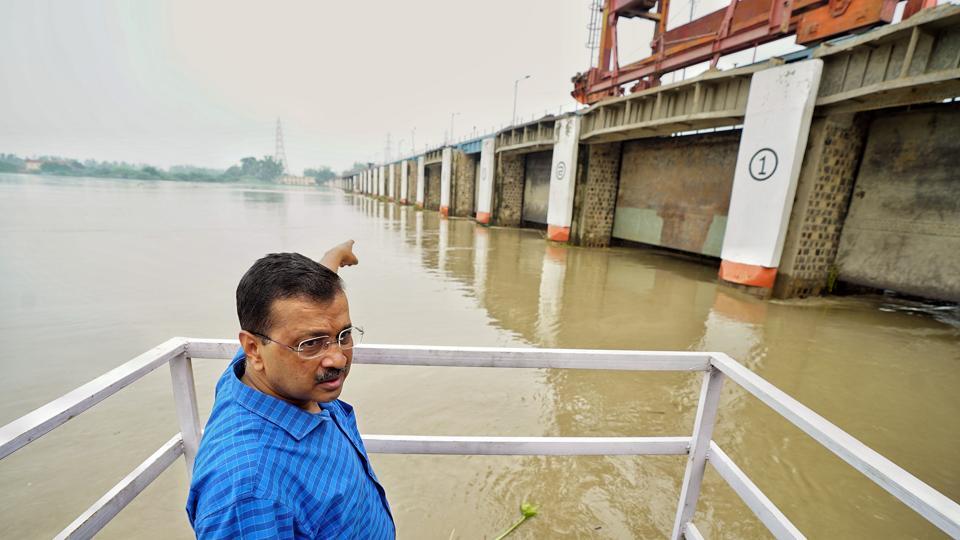
However, the situation was likely to improve and operations to be resumed on Sunday, the Delhi government said, as water had been drained out from the submerged Wazirabad and Chandrawal water treatment plants.
“Once they are dried out adequately, they will be put back in the system. Yesterday evening, Okhala WTP was restarted in full capacity and by tomorrow afternoon the other two WTPs will be started,” said Somnath Bharti, vice chairman, Delhi Jal Board.
The three plants were closed on Thursday when the river water levels had reached a high of 208.66. The water levels, however, have been receding over the last two days with Yamuna flowing at the 206.54 mark at 11pm on Saturday.
Meanwhile, residents in the impacted areas that span over 13 assembly constituencies claimed that the shortage has led to a sharp spike in prices of bottled water cans even as DJB said on Friday that it had deployed tankers in such areas. The New Delhi Municipal Council also supplied just a third of the usual supply to Lutyens’ Delhi. On Saturday, DJB reported a shortfall of 271 MGD (million gallons per day) in the daily waiter supply against a normal of 998 MGD.
A senior water utility official said that DJB plans to start the trials of first phase of Waziraabad plant with 40 MGD capacity during the intervening night of Saturday and Sunday, while the rest of the two phases are expected to be restarted by Sunday morning. Delhi chief minister Arvind Kejriwal has said that if there is no heavy rainfall, the situation could be normalised soon with the drop in Yamuna levels and both the plants will be restarted by Sunday after the drying process.DJB operates nine water treatment plants and array of tubewells and ranneywells to supply water to the Capital.
Ashok Bhasin, who heads North Delhi Resident Welfare Federation, said that taps were running dry over the last two days in the entire belt upto Trinagar. “The rush for drinking water cans has ensured that the water cans are being sold in retail for double the price. A water bottle crate which was available for ₹130 is not available at ₹180 while 20L cans are being bought at ₹50-60,” he added. “DJB should arrange wardwise water tankers.”
DJB has said that it has deployed 302 tankers to affected areas but several people reported that the helplines were non-responsive or busy. Complaints also continued to pour in from areas like Anand Parbat, Amar Colony, Karol bagh, Mukherjee Nagar, Patel Nagar and Rajinder Nagar belt.
The shortage of water also hit operations at the MCD-run Hindu Rao hospital. Deepak Tiwari, a relative of patient at Hindu Rao hospital said that his father’s surgery was postponed due to shortage of water at the hospital.