
 E-Paper



Why removal of dogs creates more problems than it solves: Maneka Gandhi
WHO-backed sterilisation, backed by adequate funding and legal compliance, is perhaps the only effective solution, writes Maneka Gandhi.

 Prefer HTon Google


In 1994, the municipal commissioner of Surat, Gujarat, ordered the killing of all the city’s dogs. Within two weeks, every single one was dead. Just two weeks later, the first case of bubonic plague — one of history’s deadliest diseases — appeared. With their predators gone, rats overran the city. Many people were bitten, and three cases of plague emerged. Across India, people began wearing masks, exports were halted, and tourism came to a standstill.
History is replete with such cautionary tales.
In the 1880s, Paris killed all its dogs and cats, with the same disastrous outcome. In China, a campaign to eradicate sparrows — accused of eating grain — in the late 1950s unleashed a locust invasion that triggered a famine.
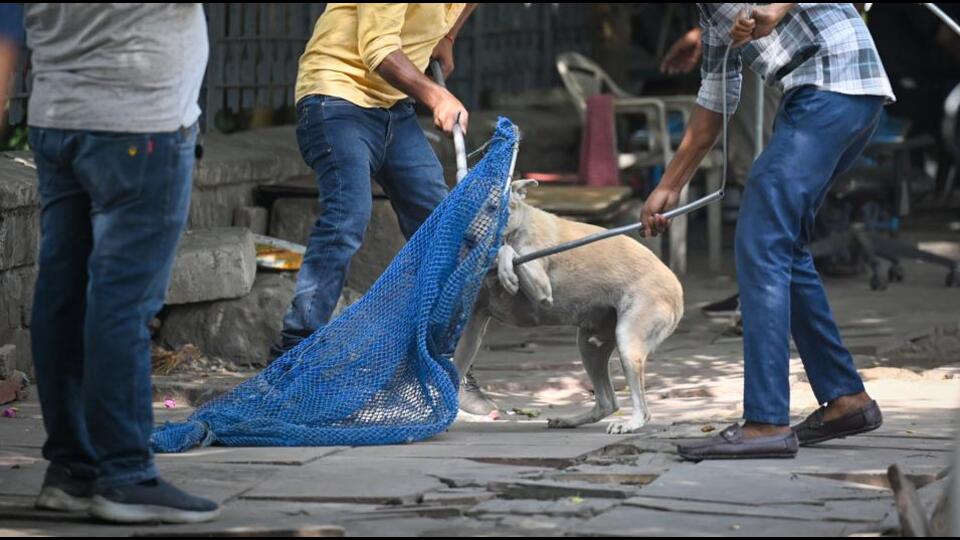
The Supreme Court judge who on Monday issued a suo motu order to remove all dogs from the streets appears to have done so from a place of anger. He has neither taken into account the current laws nor considered the harmful consequences if this order were implemented.
Let me give a list of the consequences:
First, if Delhi, Rajasthan, or Tamil Nadu were to enforce this order, they would need to divert more than half their budget towards building pounds. In Delhi alone, this would mean finding land to construct 3,000 shelters, hiring 150,000 cleaners, purchasing 500 vans, and employing veterinarians and guards. The estimated cost would come to ₹15,000 crore — excluding land. Feeding alone would cost ₹5 crore a week — an expense that is currently covered voluntarily by community feeders.
Second, pounds have repeatedly proven ineffective. In Jodhpur, a pound built 30 years ago had to be shut down within weeks because all of the dogs died. Conditions were so unsafe that staff could not enter due to constant fighting; food had to be thrown over the walls. Public outrage eventually converted it into an ABC (Animal Birth Control) facility. In Mohali, a large pound was constructed, but remains empty to this day — when they began filling it with dogs, the same problems arose almost immediately.
So, will it work? No. All living beings congregate where food is available. With thousands of meat shops in Delhi, food sources remain abundant across the city. Removing even 5,000 dogs would simply create a vacuum, which will be quickly filled by 5,000 others from outside the city. These newcomers, however, would be unsterilised, unfamiliar with the area, and thus more likely to bite.
Removing dogs would also bring back monkeys. There are over 25,000 monkeys in Delhi, with 16,000 already relocated to Asola. In areas with stray dogs, they rarely come down from trees. If the dogs are moved, the monkeys will return in large numbers.
While there is plenty that is wrong with the system, there are also practical measures that can be implemented in a short time.
The World Health Organization (WHO) conducted an extensive study and concluded that sterilisation was the only effective solution – a position that has been ratified by Indian courts. Unfortunately, in the decades since, although rules have been framed, there has been no effort to standardise the programme or provide adequate funding. The programme falls under the Animal Welfare Board of India — under the Animal Husbandry Ministry — which has minimal staff and no dedicated budget. Funding for dog sterilisation (ABC) centres is provided by the Urban Development Ministry of each state, but it is directed mainly to large cities, leaving Nagar Palikas to arrange resources on their own. In many cases ABC centres, such as those in Kanchipuram, Bhopal, and Indore, operate out of garbage dumps, making them unusable due to the unbearable stench.
All ABC centres and RWAs have contributed to the rise in bite incidents by relocating dogs on a daily basis. Dogs that are illegally moved into unfamiliar areas, instead of being returned to their own territories, are left frightened and hungry, and are attacked by local dogs and people. In such circumstances, biting is their only means of self-defence.
There is a mistaken belief that “animal lovers” and “animal haters” exist as separate groups. In reality, neither truly exists. The soul of India embraces both perspectives, united by a common goal: to have fewer dogs, fewer or no bite incidents, and a harmonious coexistence in which dogs are once again welcomed into the human community.
We also need to stop inflating the figures for dog bites. The reality is this: dog bites are recorded by doctors who administer anti-rabies injections. A complete course requires five injections, and each injection is counted as a separate bite.
Further, no official records distinguish between bites from pets and those from street dogs, but unofficial estimates place the ratio at 70-30. Reported rabies deaths total 54 across all of India in 2024. By comparison, car accidents claim around 2,000 lives every week.
Some cities already show the way. Lucknow, Uttar Pradesh, is far ahead of the rest of India. Not only does the city have an excellent ABC centre, but it has also passed an order requiring all pet dogs to be registered. Owners of foreign breeds must pay ₹500 annually, while there is no charge for adopted Indie dogs. This mix of effective facilities and sensible regulation offers a model for other Indian cities to follow.
A similar approach has been successful abroad. There is not a single stray dog in the Netherlands — and this was not achieved through killing or placing animals in pounds. The country adopted a compassionate strategy, passing the Animal Protection Act, which made it illegal for any owner to abuse an animal. They implemented a comprehensive, nationwide sterilisation programme to collect stray dogs, neuter them, vaccinate them regularly, and return them to the streets. One million dogs have been taken off the streets.
India’s courts have recognised limits to impoundment. In October 2022, a two-judge SC bench led by Justice Maheshwari ruled that “street dogs cannot be held in captivity”, staying a Nagpur bench order which required those who feed stray dogs to either adopt them or place them in shelters. Can a suo motu order overrule this? India already has a well-defined legal framework for animal protection, most notably the Prevention of Cruelty to Animals Act and the Animal Birth Control Rules. Any action must be conducted within this framework, or it risks leading to an outcome that is both tragic and predictable.
Every day, across India, a quiet ritual plays out. Colony caretakers step out to greet the hopeful eyes and wagging tails of local stray dogs. They spend their meagre savings on biscuits or rice for abandoned animals, creating moments of quiet connection and kindness. The time has come to scale this compassion into a structured, phased, government-driven programme — one that improves the lives of stray dogs while also reducing risks to the wider population. The way forward must be guided by empathy, reason, and morality.
Maneka Gandhi is an animal rights activist and founder-chairperson of People for Animals. A former Union minister and former member of parliament, she writes here in her personal capacity. The views expressed are solely those of the author and do not necessarily reflect the editorial stance of HT.
Stay updated with all top Cities including, Bengaluru, Delhi, Mumbai and more across India. Stay informed on the latest happenings in World News along with Delhi Election 2025 and Delhi Election Result 2025 Live, New Delhi Election Result Live, Kalkaji Election Result Live at Hindustan Times.


