
 E-Paper



Work on new Ring Road to unclog Delhi kicks off
The highways authority has asked the Delhi Development Authority (DDA) to provide land for transplantation of around 4,000 trees which need to be cut of the project

 Prefer HTon Google


The National Highways Authority of India (NHAI) has started the construction work on the much-delayed Urban Extension Road-II (UER-II) project, also referred to as the third Ring Road of Delhi, and is expected to be ready by October 2023, senior NHAI officials said.
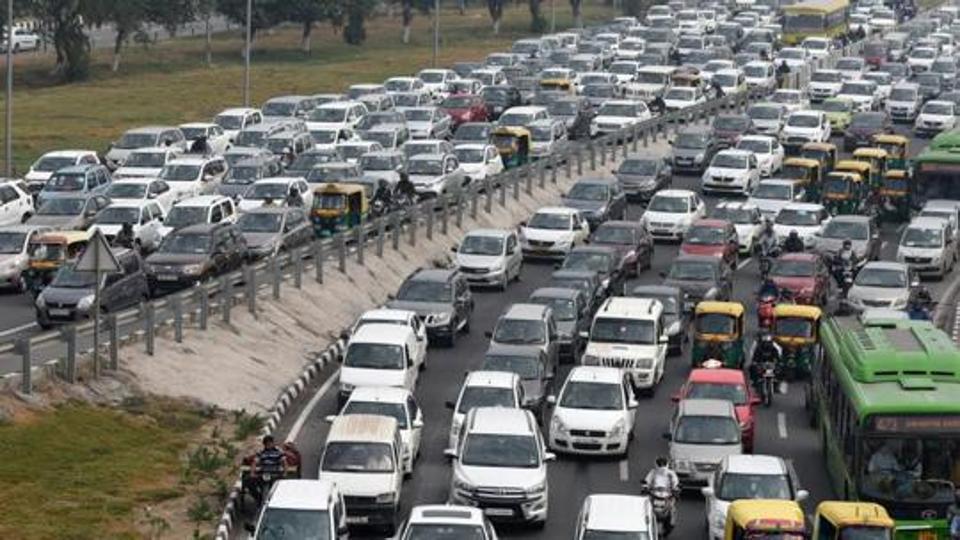
The highways authority has asked the Delhi Development Authority (DDA) to provide land for transplantation of around 4,000 trees which need to be cut of the project.
A senior NHAI official said, “Tree transplantation is the foremost activity that needs to be carried out to prepare the site for construction. We have written to the DDA to provide us approximately 6.4 hectares of land, preferably closer to the site, for transplantation of around 4,000 trees.”
Conceived in the early 2000, UER-II could prove to be crucial for decongesting the national capital. The 75.71km-long corridor will connect four national highways (NH-1, 10, 8 and 2) and provide seamless connectivity between north, northwest Delhi and IGI airport and Gurugram. The ₹7,715.6-crore-project will also pass through around 25 villages in Delhi, starting from GT Karnal Road.
The project, which was to be initially executed by the DDA, was approved by Delhi’s apex traffic and transport planning body, Unified Traffic and Transportation and Infrastructure Planning and Engineering Centre (UTTIPEC), in 2016. But due to delay in land acquisition related issues, the project was transferred to the NHAI in April 2018.
The highways authority has got permission to cut and transplant 6,600 trees from the Delhi government, of which 80% will be transplanted along the proposed corridor, according to the state government’s tree transplantation policy. “The work to transplant close to 4,000 trees along the corridor has started. We have transplanted around 700-odd trees so far. The work is going on unhindered,” said a second senior NHAI official who asked not to be named.
In addition to this, the NHAI has to carry out compensatory afforestation, since 54.87 hectares of deemed forest land was diverted for the project. The NHAI has got 55 hectares of land from the Delhi Development Authority (DDA) for afforestation.
While approving the diversion of deemed forest land under the Forest Conservation Act, 1980 last year, the Regional Empowered Committee, under the Union ministry of environment, forest and climate change, had asked NHAI to transplant trees as far as possible.
“Usually, transplantation is not done under compensatory afforestation. But the committee has asked us to transplant as many trees as possible while giving the permission, so we are planning to transplant around 4,000 trees. For this, we need around 6.4 hectares of land. We have written to the DDA in this regard,” the official said.
When contacted, a senior DDA official said, “As a policy, it has been decided not to give land for tree transplantation. Land for transplantation has to be managed by the infrastructure agencies. We are anyway struggling to provide land for compensatory afforestation; it is not possible to provide land for transplantation.”
Sabyasachi Das, former planning commissioner in-charge at DDA, agrees with DDA officials and said, “Providing land for compensatory afforestation and plantation is a big challenge. The land available right now is for future development of the city and those land parcels can’t be given for plantation purposes.”
Environment expert Diwan Singh says that land must be provided for compensatory afforestation when deemed forest land is being diverted for development, and questioned the need for carrying out such projects. “There is no end to development. We have to decide how much development is required which the city can actually accommodate. This highway project will only result in urban sprawl, as land of villages falling on the corridor will be used for urban development such as commercial, residential and industrial spaces. We are already facing a major air pollution problem. Can the city really afford such development?” said Singh.
The project
Of the 75.71 kms, 38.1kms will be constructed in Delhi covering a majority of rural villages, especially on the periphery, in north and south west Delhi and connecting them to the IGI Airport and rest of Delhi. The access-controlled highway will pass through villages such as Narela, Bawana, Alipur, Holami Kalan, Mundka, Chhawla, Najafgarh etc.
Though the NHAI invited bids for the project in 2019, it couldn’t start work as it had asked the DDA, which was to execute the project initially, to pay a viability gap funding of ₹4,000 crore. The matter was resolved last year and work for the project was awarded in October last year.
“The pre-construction work started in November. The work will be carried out at a fast pace as we have all necessary permissions. We have to complete the project by October 2023,” said a senior NHAI official.


