
 E-Paper



20-day survey finds over 600 vehicles speeding daily on Delhi-Mumbai e-way: NHAI
Vehicles clocking over 200 kmph on the Delhi-Mumbai expressway has raise alarm bells among officials

 Prefer HTon Google


Worried by the findings of a recent survey that vehicles -- especially high-end luxury and sports vehicles -- were frequently violating the speed limit of 120 kilometres per hour (kmph) on Delhi-Mumbai Expressway, the National Highways Authority of India (NHAI) has initiated a speed calming exercise on the 246km Sohna-Dausa stretch to avert grave accidents.
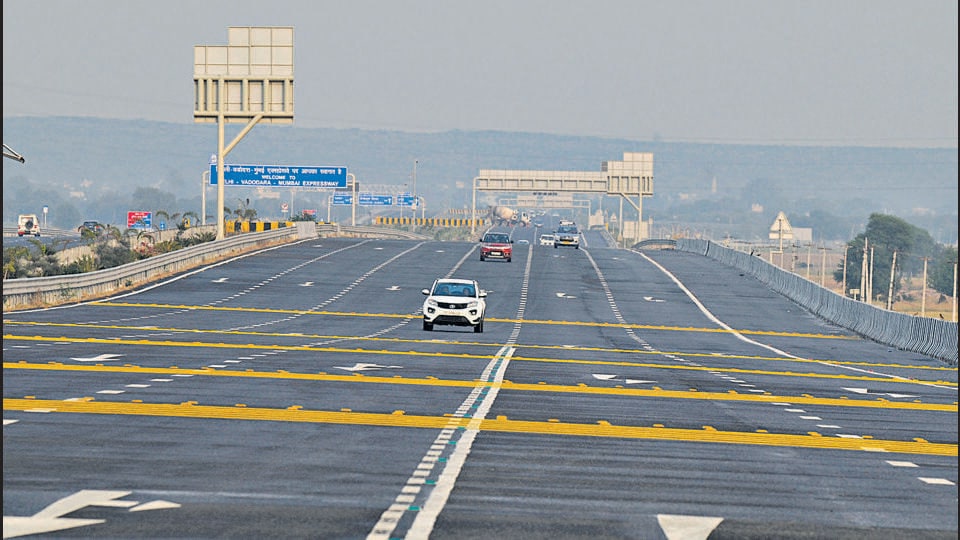
NHAI officials said a survey conducted over the past 20 days found that almost 600 vehicles were daily violating the speed limit. These violations were caught by the high speed detecting automatic numberplate cameras that have been installed at every kilometres of the expressway, they said.
What startled the NHAI officials was that 40 vehicles were caught speeding beyond 180kmph, and one vehicle even touched 249kmph, the highway officials said. Currently, an average of 22,000 vehicles use the Delhi-Mumbai Expressway and the number is rising gradually, said the highway authority.
Mukesh Kumar Meena, project director, Delhi-Mumbai Expressway (Sohna-Dausa section), said in order to curb speeding, the NHAI will soon connect its vehicle accident database with Haryana traffic police headquarters in Karnal though a National Informatics Centre (NIC) link and share data of violations for penal action and speed limit enforcement.
“We are concerned about vehicles frequently crossing the maximum speed limit as this can lead to fatal accidents. It has been decided that NHAI will soon start data generated through its vehicle speed detection system with Haryana traffic police so that fines are issued to violators automatically and enforcement is carried out strictly, and in real-time, “ said Meena
The data on violators found during these past 20 days is also being prepared and it will be shared with Haryana traffic police soon, he said.
Meena said the 246km long Sohna to Dausa stretch of the expressway has been developed in five phases and the vehicle speed detection system is operational on two phases, while work is being expedited to ensure that it becomes operational in all five phases of the stretch at the earliest. “We have witnessed serious and fatal accidents caused by speeding and we want to ensure that vehicle users follow the norms and drive safely,” he said.
Two persons were killed in August this year, when a Rolls Royce Phantom car being driven at over 200kmph struck a petrol tanker in Nuh on the Delhi-Mumbai Expressway. NHAI officials said the Rolls was speeding.
In another incident, a Faridabad resident, who while returning from Karoli on Rajasthan died after his Mercedes hit a milk tanker on Delhi-Mumbai Expressway in Nuh on September 5. Highway officials said this accident was also a result of speeding.
Meena said the Gurugram traffic police has deployed an interceptor vehicle on the expressway, which frequently carries out testing and issue fines. “Traffic police team is also deployed for enforcement and to catch violators,” he said.
NHAI officials said most of the vehicles that have been caught speeding are high-end luxury and sports vehicles, which have very powerful engines and can attain very high speeds within seconds. “The high-end vehicle owners should understand that bulky trucks and slow moving vehicles also move on this expressway and maneuvering cars at high speeds can put many lives at risk,” said Meena, adding that they will also launch awareness drives against speeding and parking violations.
Anurag Kulshreshta, founder and CEO of Trax, a road safety NGO, said the primary reason for speeding is a lack of enforcement and a similar situation was experienced on Nagpur-Shirdi Expressway and Mysore-Bengaluru Expressway, where speeding has led to several deaths. “There is immediate need to boost enforcement and the police need to seize vehicles that are caught speeding. This was done on Mysore highway and the problem of speeding is resolved. Also, the erroneous perception that the expressway will help one reach Mumbai in 12 hours prompts many to drive faster to reach there in even less time,” he said.
.


