
 E-Paper



Juvenile held for murder of junior in madrasa in Nuh
On September 3, an 11-year-old boy went missing from a madrasa in Nuh district, his body was recovered from a room near a mosque on the madrasa premises on September 6 afternoon

 Prefer HTon Google


Hoping that the crime would dissuade his parents from continuing his enrolment in a madrasa in Nuh, a 13-year-old killed his best friend --- an 11-year-old boy --- at the institution by assaulting and strangulating him to death on September 3, the police said. Police recreated the crime scene following which he was apprehended on Sunday.
This is a similar case of September 7, 2017, where an eight-year-old student of class 2 at a private school in Bhondsi was killed on the school’s premises by a class 11th student to postpone parent-teacher meeting due to his poor performance, said Nuh police.
Varun Singla , superintendent of police, said that they apprehended the juvenile and his statements were recorded and a confession was given before the family and police on Sunday. “ The juvenile had no interest in studies and desperately hoped that a co-students death would lead to the madrasa getting defamed and his parents withdrawing him from the institution,” he said.
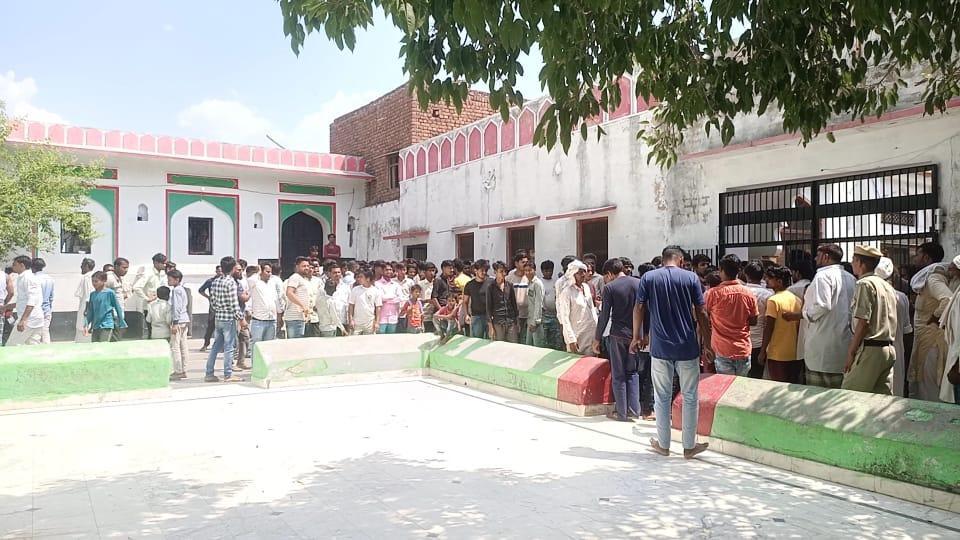
On September 3, an 11-year-old boy went missing from a madrasa in Nuh district, his body was recovered from a room near a mosque on the madrasa premises on September 6 afternoon. Police said his body was recovered from a hall inside the madrasa hidden under the mud after they discovered foul smell coming from a room, and found the boy’s body buried in mud. It was partially decomposed, said police.
Satbir Singh, station house officer of Pinagwan police station, said that the deceased identified as Sameer was murdered in Shah Chaukha Madrasa and his friend was apprehended. “The juvenile was produced before the juvenile justice board and was sent to Observation home in Faridabad on Sunday,” he said.
Singh said the juvenile took the extreme step as his family was forcing him to study at the madrasa but he had no interest. He often looked for excuses to return home and wanted that either his family takes him or it gets shut. “He hatched a plan to kill a student and we looked for an appropriate chance. He choose Saturday as there were less people present in the premises. Earlier he had planned Friday but due to ‘Jumma’ the madrasa was crowded,” he said.
Police said the deceased was very fond of the juvenile and often played with him. “He took him to a hall in the basement, hit his head on wall, punched on his face a few times and strangulated him to death. To ensure he was dead, he buried him beneath the mud and fled from the spot and started behaving normally,” said SHO Singh.
Police said the basement was hardly used by staff and students so he had planned the murder there.
On September 5, the staff and students complained of a foul smell following which they checked the basement and found the body, said police.
Singh said the juvenile got scared when police started questioning students and staff and he feared that he will be caught. “His father came to pay a visit on September 5 , and asked him to take him but he refused. On September 8, he again came and he revealed before him that he had murdered Sameer. The father informed us following which he counselled him with the help of child welfare officer and recorded his statement. He was changing his statement again and over again due to which , initially we thought someone is trying to mislead us and have asked him to take the blame on him,” said Singh.
The police questioned the juvenile on September 9 and 10 in the presence of his family members, who was repeatedly changing his statement.
Singla said that on Sunday student was again questioned in front of his father and another person, he spilled the beans. “We recreated the crime scene in the madrasa which gave clarity that juvenile was behind the murder and no one else had any role to play,” he said.


