
 E-Paper



Water management in Gurugram to be bettered with flow meters
To improve management of water supply, ensuring equitable distribution and minimal waste, the Gurugram Metropolitan Development Authority (GMDA) will be installing 500 flow meters across the city, officials said on Sunday.


To improve management of water supply, ensuring equitable distribution and minimal waste, the Gurugram Metropolitan Development Authority (GMDA) will be installing 500 flow meters across the city, officials said on Sunday.
Officials said that the authority undertook a pilot project, as a part of which flow meters were installed at 31 places, and after successful results, it is being expanded.
“We have around 500 underground tanks in the whole of GMDA area, which comprises many big colonies like DLF, Unitech, besides establishments such as hotels. We are planning to connect flow meters in all these tanks. By connecting the sensors to the pipelines connected to these tanks, we will know the level of water, how much water is being supplied and measure if water theft is taking place in between from the pipelines,” said a senior GMDA official, who did not wish to be named.
The official said that the pilot project is almost complete, with a few minor tests remaining and that the expansion work will start within a few weeks.
Officials said that this measure will not only conserve water but will also ensure that the authority gets the amount due for the water being supplied to residents. The project is a part of a centralised integrated water management system, which is being developed by the Smart City division of GMDA and aims to provide water to all residential housing societies, individual houses and hotels.
With the centralised system, the GMDA will have a larger degree of control over the entire distribution and supply chain from a single location through the Integrated Command and Control Centre (ICCC). Electrical sensors in water pipelines help in the proper management of water and tapping of illegal sources used for water theft.
“We tested the service in a pipeline which starts from Basai till Dhanwapur and whatever underground tanks are falling on this stretch, sensor devices have been installed in these tanks. The water in this pipeline goes through equipment like a water flow meter (to measure how much water is being supplied), water control valve (to ensure the same water pressure to every house). This way, we are also able to ensure that water is not wasted with the tanks overflowing as regular updates are received at the command centre,” said the official cited above.
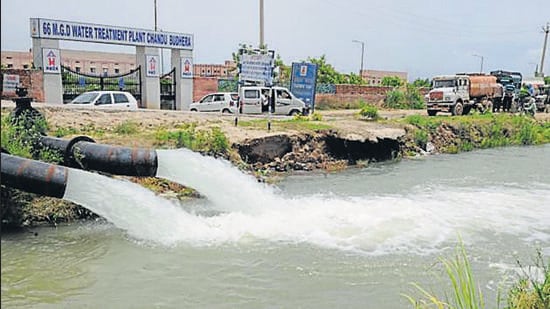
At present, Gurugram’s water comes from the water channels in the National Capital Region and the Yamuna channel. This raw water is carried to the water treatment plants (WTPs) at Basai and Chandu Budhera, which have a daily operational capacity of 270MLD (million litres per day) and 300MLD, respectively. There are also two boosting stations in sectors 16 and 51 to help overcome the difficulty of transporting water to the eastern parts of the city, which is on a higher ground level than the two WTPs.
Stay updated with all the Breaking News and Latest News from Mumbai. Click here for comprehensive coverage of top Cities including Bengaluru, Delhi, Hyderabad, and more across India along with Stay informed on the latest happenings in World News.


