
 E-Paper



Excessive rain in eastern Rajasthan, deficit in western
Deficit rainfall affects crops in 11 districts of Rajasthan. Only 20% of the agricultural land in the state is irrigated by canals, the remaining land is dependent on groundwater for irrigation, the level of which is low because of the lack of rain

 Prefer HTon Google


While parts of eastern Rajasthan faced floods at the end of July and the first week of August, all of western Rajasthan is staring at a drought situation, with rain deficiency up to 40% in certain districts.
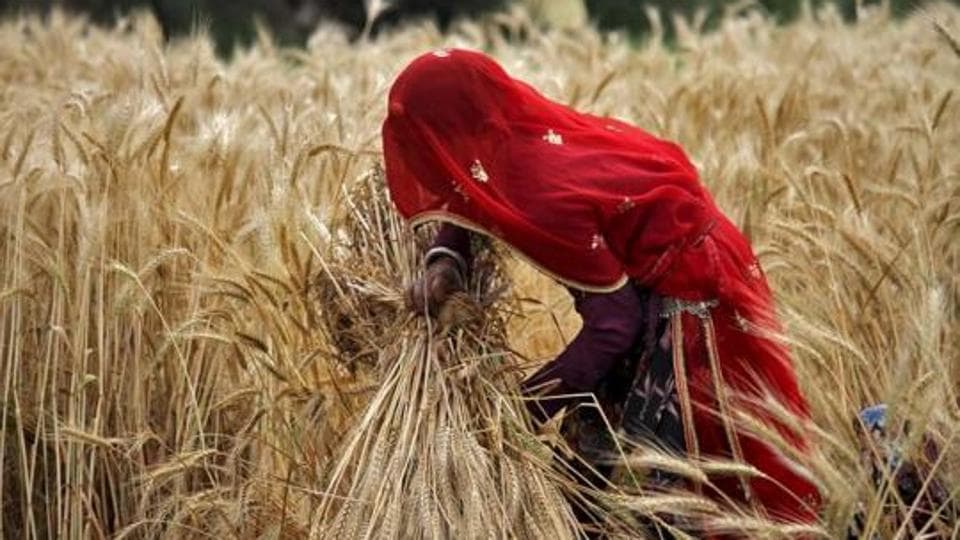
Officials said the lack of enough rain this monsoon has badly affected Kharif crops and said would impact Rabi crops, if the deficit is not made up in the remainder of the monsoon.
India Meteorological Department (IMD), Rajasthan, director Radhey Shyam Sharma said the amount of rainfall will increase around August 20 in eastern Rajasthan, and western Rajasthan will continue to witness light rain.
“There was less rainfall this monsoon due to the 20-day break monsoon conditions in June. The monsoon has taken a break again,” he said.
Sharma said the uneven distribution of rains is a usual phenomenon and happens every year. “Rainfall in some districts in western Rajasthan is likely to remain below normal because no significant rainfall is expected there now,” he said.
Also Read | 4 killed in road accident in Hanumangarh district of Rajasthan
However, the amount of rainfall could increase after a couple of days with the possibility of light to moderate rain in the eastern parts of the state with the possibility of heavy rain at isolated areas, he said. He did not rule out another flood-like situation in eastern Rajasthan, where another round of good rainfall is expected.
Kisan mahapanchayat president Rampal Jat expressed concern over the weak monsoon, especially in western Rajasthan. He said districts such as Banswara and Dungarpur generally receive excessive rain, but this time the less rainfall is a surprise.
“The crops are totally dependent on good monsoon. Already, the Kharif crops (jwar, corn, maize, millet, soybean, pulses) were weak as sowing was affected by the delay in the onset of monsoon. Now, Rabi crops (wheat, gram and millet), which, too, are dependent on rains will get adversely impacted,” he said.
The total land under agriculture in Rajasthan is around 18.2 million hectares. The government had set the sowing target of 16.38 million hectares, of which 13.86 million hectares (85%) is achieved. Around 7.5 million hectares of land is part of western Rajasthan, where some districts have received deficient rainfall.
Jat said only 20% of the agricultural land in the state is irrigated by canals, the remaining land is dependent on groundwater for irrigation, the level of which is low because of the lack of rain.
According to the state water resources department, of the 727 dams in Rajasthan, 118 are completely filled, 308 are partially filled and 279 are empty.
The department also said that 11 of the 33 districts in the state faced a deficit in rainfall, 14 saw normal rainfall and four districts received excessive rain from June 1 to August 16.
Four districts recorded abnormal rain in the same period.
Kota division, which saw floods, recorded abnormal rains with 71.7% more rain than the average for past 10 years.
The Bharatpur division recorded excess rain while the Jodhpur division is under the deficit rainfall category. Bikaner, Ajmer and Jaipur are under the normal category.
Districts with deficit rain (-20% to -59%) are Banswara, Barmer, Bhilwara, Dungarpur, Ganganagar, Jalore, Jodhpur, Pali, Rajsamand, Sirohi and Udaipur; while Ajmer, Alwar, Bharatpur, Bikaner, Chittorgarh, Churu, Dholpur, Hanumangarh, Jaipur, Jhunjhunu, Nagaur, Pratapgarh and Sikar recorded normal rain (19% to -19%).
Districts such as Jaisalmer, Jhalawar, Karauli and Tonk are under the excess rainfall (20% to 59%) category whereas Baran, Bundi, Kota and Sawai Madhopur recorded abnormal rain (60% or more).
A senior official of the agriculture department said the assessment of Rabi crops could be made once the rain resumes, till now the monsoon was useful for the Kharif crops. “The sowing for Kharif crops was affected because of poor monsoon in Jodhpur, Bikaner, and Jalore divisions,” he said.


