
 E-Paper



50 yrs of Emergency: ‘It changed power not system’
Thousands--largely politicians and students--were sent to jail across the country, including Uttar Pradesh, during Emergency. Suresh Trivedi was one such person. He recollects his activities and life in those times


This year marks 50 years of Emergency that was set in motion by the then Indira Gandhi government on June 25, 1975, and was withdrawn on March 21, 1977. Its imposition gave Indira Gandhi to rule by decree and entailed curbing of civil-liberties to a great extent.
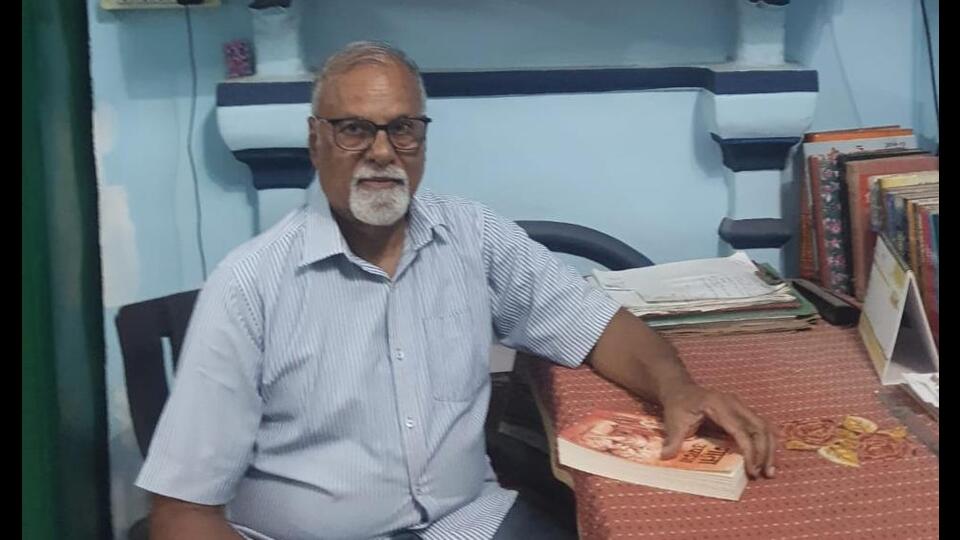
Thousands--largely politicians and students--were sent to jail across the country including Uttar Pradesh. Suresh Trivedi was one such person. He recollects his activities and life in those times.
Suresh Trivedi, now 70, was a Loktantra Senani—a term often used to identify, acknowledge and honour those who were arrested and detained under emergency laws like the MISA (Maintenance of Internal Security Act) or the DIR (Detention in India Rules) for their political activism and opposition during the Emergency.
“I was 21-years-old and it was September 7, 1975. I was at the English department of Allahabad University where I gave my BA first-year viva-voce for English. A PAC truck with a police vehicle in front came onto the campus. Before coming near the department, they had already scanned for me at the PC Banerjee Hostel. I had an inkling and a sense that they had come for me. But I was sure they might not recognise me by my face even if they had come for me. So I came out of the department and walked past the posse nonchalantly. One of the cops asked me if I knew Suresh Trivedi?, I said “no” and walked on,” Trivedi recalls.
“I had passed just around 50 metres when they might have realised that I indeed was the one they were looking for. They caught up with me. Now, there was no point in bluffing anymore. They arrested and took me to Colonelganj police station in Allahabad where the police beat me before I was sent to the Naini jail,” he says.
Talking about his time before the Emergency and events leading to his arrest, Trivedi shares: “ I am from Unnao district and from there went to pursue my BA from Allahabad University. There was already an atmosphere of a movement on the campus. But even before moving to the AU, I had joined the Tarun Shanti Sena that Jayaprakash Narayan (JP) had formed during the Bangladesh events of 1971. I was in class 11th in a school in Unnao. While I was in the first year of BA in Allahabad University, I joined the Chatra Yuva Sangharsh Vahini that was formed by JP.”
Talking about the atmosphere in the country at that time, he says: “Already, the Nav Nirman movement had begun in Gujarat, which was a regional movement against the then Congress government in Gujarat. JP went to participate in it. The sparks that flew from Nav Nirman movement set flames of movement in Bihar and then to UP and then the entire country.”
“Just like there was the agitation against Congress government led by Chimanbhai, JP wanted a movement in UP against the Congress government led by Hemwati Nandan Bahuguna and also against the Congress government in Bihar. JP came to UP for the movement, but things intensified in Bihar and he went back and concentrated in Bihar,” Trivedi recalls.
“But when the Allahabad HC’s decision came on June 12, 1975 cancelling the then PM Indira Gandhi’s Lok Sabha membership and barring her from elections, things got intensified further. And eventually, under the circumstances, Indira Gandhi declared Emergency. Arresting of several leaders had begun even before and once the Emergency was imposed, thousands of big leaders were held. Most of our teachers who were involved in Aandolan were also arrested,” he says.
“I and some of my associates went underground. We mulled raising a big movement, secretly communicating with like-minded people not only in UP but also in Bihar, Delhi, Rajasthan and Madhya Pradesh. From Allahabad, we moved to Lucknow and planned our movement at a restaurant in Aminabad. I went to Indore for our secret campaign. Then we reassembled in Allahabad,” Trivedi recalls.
Narrating further, he says: “We came up with this idea of writing secret letters and making many copies of them through a cyclostyle machine. We had been sending letters one after the other to our group members in different cities who were not yet arrested or were not on police radar. We camouflaged the envelopes as some official letters from some government departments. But one such letter sent by me was caught in Unnao. Police suspected something and they began checking the letters and came to know that they were “subversive” letters. They caught some of the addresses. Some of those addresses, under police pressure, divulged our names . And that’s when the police came after me.”
“I had appeared in my English exam and then three or four days after me being lodged in Naini jail, I had my Sanskrit exam. Some of the teachers who were also lodged in the Naini jail made a request to the jail authorities to let me take the exam in the jail itself. The jail authorities allowed it. My classmates bought books. I studied there. Question paper, answer sheets, examiner, invigilator all came to the jail. I passed in the first division”, he says.
“But the police had lodged three different cases under the DIR (Defence of India Rules) in Unnao for the letters were caught in Unnao. So, I was sent to Unnao district jail. MISA was invoked against me and I had spent two months in Naini jail and more than one year till the Emergency ended in Unnao district jail,” Trivedi recalls. Talking about his jail time, he says: “Jail was not really strict. Rules and regulations there were such as I was allowed to meet only one direct family member once a month. We read a lot.”
“I had completed my BA final by the time Emergency was over. The Congress government had gone and the Janata Party government replaced it. I learnt about an all-UP exam for district information officers’ appointments. I took the entrance test and passed it. I was then appointed district information officer, Farrukhabad. I joined and worked for four year, but got disenchanted with it. I quit it and then attempted PCS, cracked it twice but could not pass the interview on both the occasions. Then I joined a bank—Aryavrat Bank—in 1983 in Farrukhabad and retired in 2014 as senior manager,” Trivedi shares.
He says he also wrote political satire (in form of a column) for a Hindi daily on a weekly basis in between. Summing up the Emergency and the associated movement, Trivedi says: “It did satta parivartan (change of power), but could not do vyavastha parivartan (change of system).” Trivedi is now settled in Farrukhabad but often visits Unnao.


