E-Paper



66k Hindus saved from conversion in 6 months last year: VHP report
The report presented at VHP’s Central Board of Trustees meeting at Mahakumbh also claimed ‘Ghar Wapsi’ of 19,000 Hindus during the said period

 Prefer HTon Google


The Vishwa Hindu Parishad (VHP)’s Dharma Prachar Evam Prasar Vibhag has claimed to have saved 66,000 Hindus from getting converted to other religions during six months’ time between July 1, 2024 and December 31, 2024.
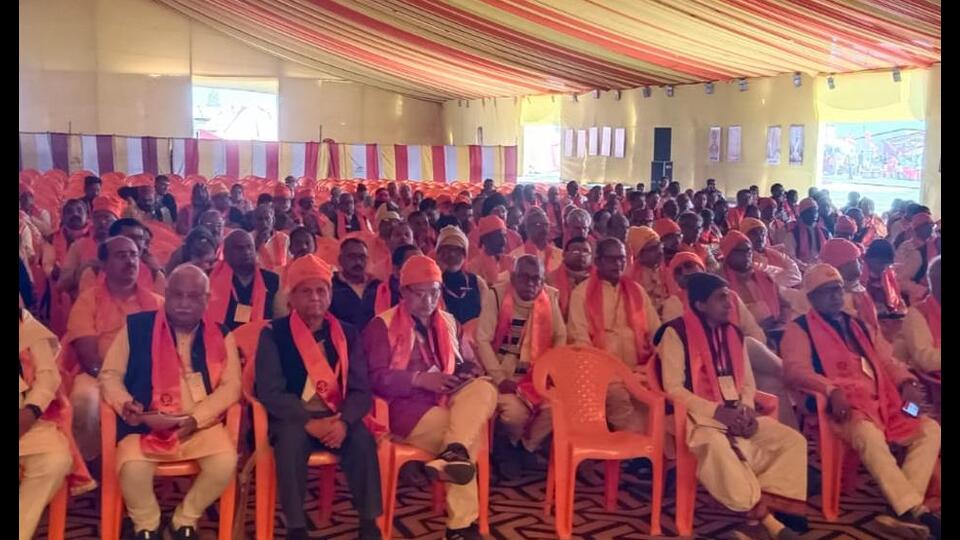
The said vibhag presented its report in this regard on the second day of three-day VHP’s Central Board of Trustees meeting at parishad’s camp in Sector 18 of Mahakumbh Nagar on Saturday, said national spokesperson for VHP Vinod Bansal.
The report also claimed ‘Ghar Wapsi’ of 19,000 Hindus who were practising other faiths during the said period. “Ghar wapsi was carried out through consensus, by spiritual and legal counselling besides taking affidavits from the Hindus willing to make a comeback to Hinduism,” Bansal said.
As per the report, 3,000 young women were freed from ‘love jihad’ through joint efforts of VHP’s affiliated bodies such as Bajrang Dal, Matru Shakti and Durga Vahini. Some 97,934 cows, claimed the report, were saved in six-month period from illegal slaughterhouses by a network of activists of VHP’s affiliated bodies.
Currently, the VHP has a basic working structure 78,000 committees divided into 21 regions and 45 pranths. The working of Bajrang Dal is monitored through a task force of 57,000 convenors. On the other hand, the working of Durga Vahini and Matru Shakti is controlled through a network of 21,000 female convenors.