
 E-Paper



After Assam sanitation workers’ poll leave, Lucknow Municipal Corporation pushes for 75% local hiring
The decision comes after staff from two private agencies in Lucknow took leave to vote in the Assam assembly elections; mayor cracks down on unauthorised tax collection; safety audit of all school buildings to be done by May 15


After bearing the brunt of migrant sanitation workers from Assam taking leave to vote in the assembly elections in their home state, the Lucknow Municipal Corporation (LMC) House on Wednesday made a pitch for hiring at least 75% of sanitation workers locally to improve sanitation efficiency and accountability.
The move follows a spike in resident complaints about door-to-door waste collection during the migrant workers’ leave. Two private agencies in Lucknow employ these workers.
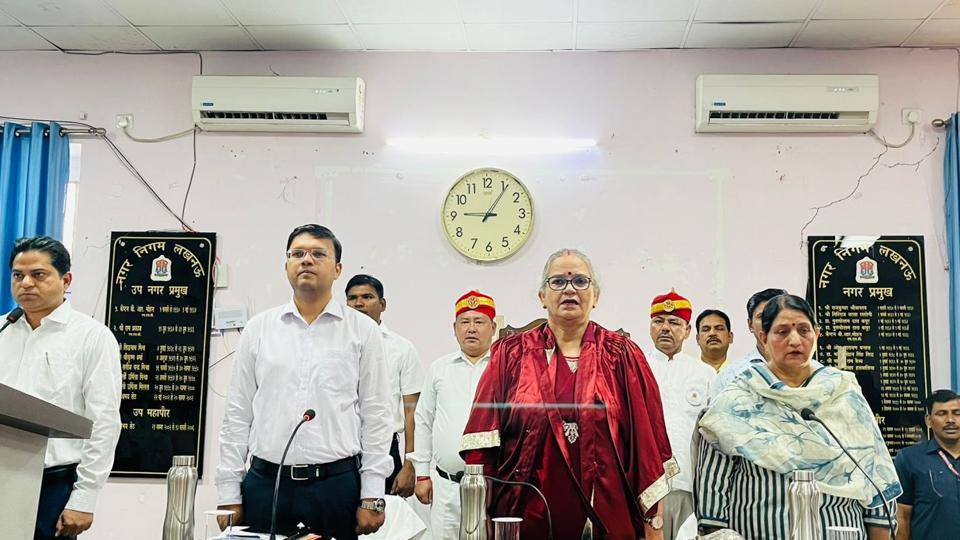
Amid an uproar over sanitation related issues in the LMC House, mayor Sushma Kharkwal gave verbal instructions on hiring 75% local sanitation workers. The proposal to this effect was also passed. Besides, the House unanimously approved all other items on the agenda..
When asked by HT, Sanjeev Pradhan, LMC’s environmental engineer, stated that LSA (Lucknow Swachchata Abhiyan, private agency) employs around 2,200 sanitation workers engaged in fieldwork across the state capital. Approximately 900 of these workers, accounting for about 41% of the workforce, are Assamese. Similarly, another private agency, Lions Enviro, employs nearly 4,500 workers, of which an estimated 30%, around 1,350, are Assamese.
However, Pradhan clarified that the LMC lacks concrete data of its own on the current number of Assamese workers, and the figures provided are based on statements and communication provided by officials of the respective agencies.
Meanwhile, expressing concern over declining cleanliness standards in recent months, corporators flagged gaps in monitoring and execution. Acting on this, the House fixed agency accountability and directed them to prioritise local recruitment to ensure better supervision and quicker response at the ground level.
The mayor ordered that only authorised municipal staff with valid identity cards carry out door-to-door tax collection. She banned the engagement of private individuals in the process and warned of strict action against officials found violating the directive.
The House approved multiple infrastructure projects under the CM Grid scheme, including road construction and upgradation across key areas such as Gole Market-Kapoorthala and Rajnikhand. Funds were sanctioned and officials were directed to ensure timely completion. To streamline waste management, the House set April 30, 2026, as the deadline for completing all pending transfer stations, aiming to improve garbage disposal systems citywide.
Focusing on student safety, the House passed a proposal to conduct a reassessment of all school buildings by May 15, 2026. Officials will fix responsibility for any structural lapses identified during the audit.
The House approved the return of leased land from Deendayal Upadhyay Seva Nyas and cleared its transfer for planned development through the Lucknow Development Authority. It also directed authorities to intensify anti-encroachment drives and utilise reclaimed land for community centres and welfare infrastructure.
To tackle waterlogging, the House cleared sewerage and drainage projects in Lohia Nagar, Vikas Nagar, and Bhawaniganj. It also approved desilting of the Kukrail river and beautification of Ghobighat pond.
The LMC House further sanctioned park development and Miyawaki plantations in Natkur village, aiming to enhance urban green cover and environmental sustainability.
The House approved a proposal by the St. Joseph Group of Schools to grant a 50% tuition fee concession to children of permanent municipal employees.
The mayor instructed officials to ensure transparency and time-bound execution of all approved proposals. She reiterated that public interest remains the corporation’s top priority.


