
 E-Paper



From political fortress to prison: How strongman Vijay Mishra’s empire fell
On Friday, that long-running political empire suffered perhaps its biggest collapse yet after a Bhadohi MP/MLA court sentenced Vijay Mishra, his wife and former MLC Ramlali Mishra, and son Vishnu Mishra to 10 years of imprisonment each in a six-year-old land grab and fraud case, while his daughter-in-law Rupa Mishra was awarded four-year jail term. The court also imposed a fine of ₹50,000 on each convict.

 Prefer HTon Google


For nearly two decades, the political arithmetic of eastern Uttar Pradesh’s Bhadohi district revolved around one man — former MLA and strongman Vijay Mishra. Governments changed, parties rose and fell, caste alliances shifted repeatedly, but the control over the Gyanpur assembly seat largely remained with the Mishra family.
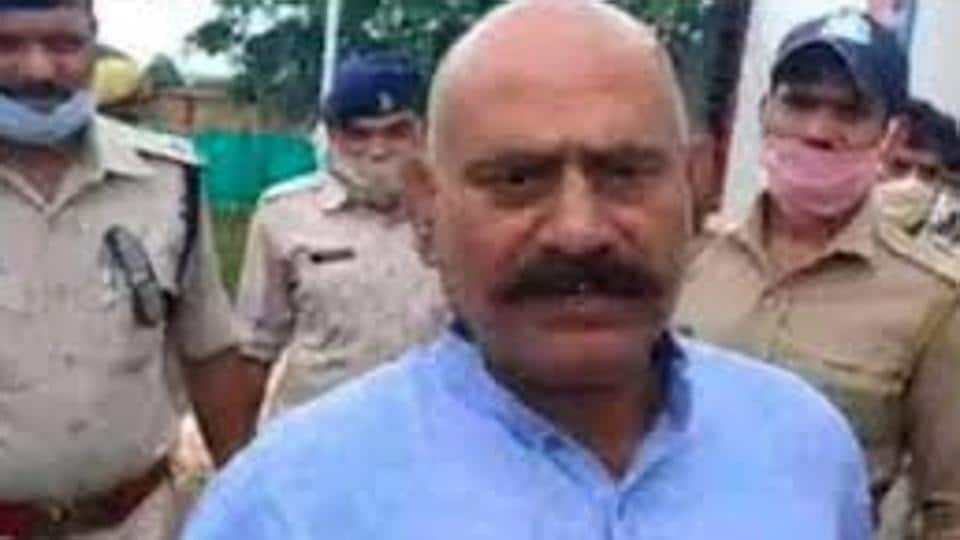
On Friday, that long-running political empire suffered perhaps its biggest collapse yet after a Bhadohi MP/MLA court sentenced Vijay Mishra, his wife and former MLC Ramlali Mishra, and son Vishnu Mishra to 10 years of imprisonment each in a six-year-old land grab and fraud case, while his daughter-in-law Rupa Mishra was awarded four-year jail term. The court also imposed a fine of ₹50,000 on each convict.
With the latest verdict, every key member of the immediate Mishra family is now behind the bars — an extraordinary fall for a family that once exercised enormous influence across Purvanchal politics, real estate networks and local administration.
The case originated from a complaint filed by Krishna Mohan Tiwari alias Munna, a relative of Vijay Mishra, on August 4, 2020. The complainant alleged illegal occupation of nearly 50 bighas of land, a 6,000 square feet house and a large hall spread over around one bigha, apart from financial irregularities allegedly involving nearly ₹1,500 crore.
Ten days later, Vijay Mishra was arrested from Madhya Pradesh’s Agar district on August 14, 2020, marking the beginning of a prolonged legal and political decline for the once-feared ‘Bahubali’ leader.
The conviction also reflects a broader shift in Uttar Pradesh’s political and administrative landscape, where several influential strongmen who once operated with near impunity are now confronting sustained legal action, shrinking political space and weakened patronage networks.
For years, Vijay Mishra represented the archetype of the eastern UP Bahubali-politician — a figure combining electoral influence, caste mobilisation, financial clout and coercive local authority.
Between 2002 and 2017, he retained control over the Gyanpur assembly constituency across changing political dispensations. He won repeatedly on different party platforms, including the Samajwadi Party and later the Nishad Party, demonstrating how personal influence often outweighed party identity in parts of Purvanchal.
But the decline began gradually after multiple criminal and financial investigations intensified.
In 2017, complaints regarding disproportionate assets against Vijay Mishra and his wife triggered a vigilance inquiry. Investigators later claimed that between 2002 and 2017, the family’s known income stood at around ₹2.32 crore, while assets worth nearly ₹23.82 crore were allegedly accumulated during the same period.
The family’s business network also drew attention. Daughter-in-law Rupa Mishra, now convicted, served as director in multiple private companies linked to construction, infrastructure, real estate and jewellery ventures.
Meanwhile, legal troubles expanded beyond Vijay Mishra himself. Son Vishnu Mishra is lodged in Lakhimpur jail, while nephew Manish Mishra remains incarcerated in Jaunpur district jail in separate cases related to intimidation, fake arms licence allegations and other criminal accusations. Manish Mishra had also emerged as a politically influential figure locally and served three terms as block pramukh.
Political observers say the family’s downfall accelerated after the 2022 Uttar Pradesh assembly elections, when Vijay Mishra’s hold over Gyanpur was decisively broken. The Nishad Party denied him a ticket and instead fielded Vipul Dubey. Mishra contested separately under the Pragatisheel Manav Samaj Party banner but finished third, signalling a sharp erosion of his once-formidable electoral machinery.
The latest court verdict now symbolically closes a chapter in Purvanchal’s strongman politics — where political dominance once extended from ballot boxes to business empires and local power structures, but increasingly finds itself challenged by legal scrutiny and changing political equations.


