
 E-Paper



Har Ghar Nal Yojana to generate employment too, says UP minister Swatantra Dev Singh
Efforts are also on to provide technical training to polytechnic students and give them employment under the Har Ghar Nal Yojana


The Bharatiya Janata Party (BJP) government in Uttar Pradesh is looking at the Har Ghar Nal Yojana in drought-prone regions to not only ensure availability of pure drinking water through taps, but also to generate employment, especially in rural areas, Uttar Pradesh jal shakti minister Swatantra Dev Singh said.
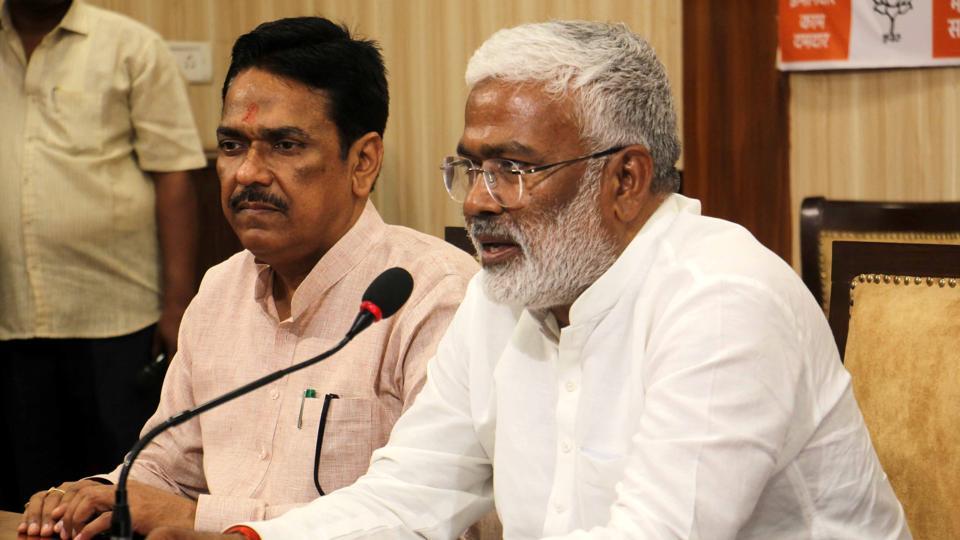
“We are also looking to generate jobs under the scheme in rural areas. Contractual posts of plumber and technicians are being created so that we can provide employment to local populace in a big way,” Swatantra Dev Singh said at a press conference at the UP BJP headquarters in Lucknow on Monday.
“Efforts are also on to provide technical training to polytechnic students and give them employment under the Har Ghar Nal scheme. We are mulling over various ways to generate employment,” Swatantra Dev Singh added.
The results of the twin initiatives would be visible by 2024, when the next Lok Sabha elections are due.
The initiative involves ensuring 100 per cent coverage of pure drinking tap water availability in water starved regions of Bundelkhand and Vindhya regions and generating employment under the scheme.
“We are targeting coverage of all villages under Har Ghar Nal in 66 districts, specifically in water starved Bundelkhand and Vindhya regions. Already, the water availability has begun in 913537 houses. Through retrofitting scheme, another 1644139 households have been added,” Swatantra Dev Singh said.
“We are closely monitoring all small and big schemes of the department. We have also started providing clean water supply in 28,008 such households located in regions that were affected by arsenic and JE,” Swatantra Dev Singh said.
He said in seven districts of Bundelkhand and two districts of Vindhya region, 77,839 households have already been provided functional household tap water connections, benefitting an estimated 3,11,356 people.


