E-Paper



Illegal LPG trade thrives in the shadows despite crackdowns
Some delivery personnel allegedly siphon off small quantities from cylinders during transit. Over time, this accumulated gas is used to refill other cylinders, indicate investigations

 Prefer HTon Google


LUCKNOW Despite repeated crackdowns by authorities, the illegal trade of domestic LPG cylinders continues to thrive across Lucknow, exposing significant gaps in enforcement while posing serious risks to public safety. Officials estimate that nearly 5 to 10% of domestic cylinders are still being diverted into the black market through organised and innovative methods.
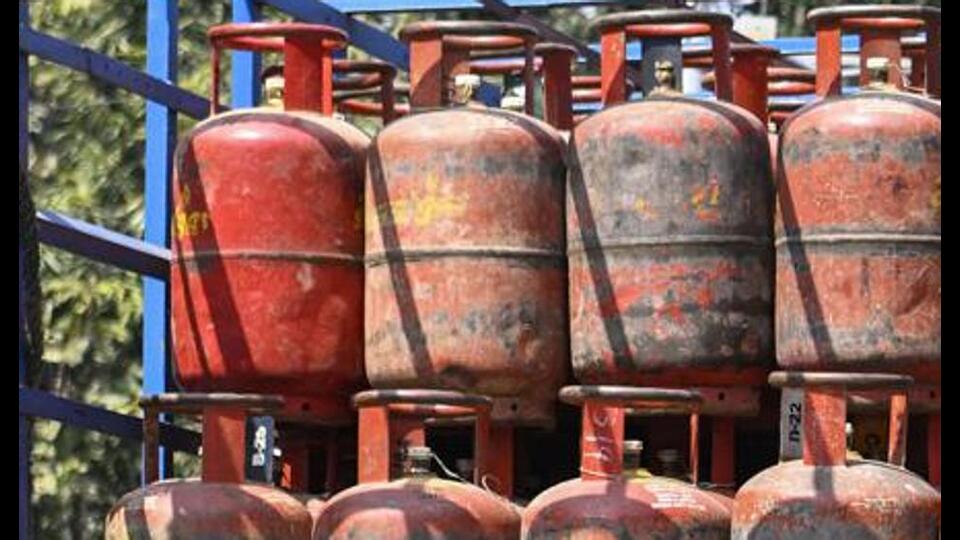
Investigations indicate that malpractice often begins during last-mile delivery. Some delivery personnel allegedly siphon off small quantities — around 2 to 3 kg — from cylinders during transit.
Over time, the accumulated gas is used to refill additional cylinders, effectively generating one extra cylinder out of every four. These activities are reportedly carried out in coordination with local agents, forming a network where profits are shared across multiple levels.
However, the problem extends far beyond delivery-level pilferage. Authorities are now examining the role of consumers who hold multiple LPG connections. Such households are suspected of diverting surplus cylinders into illegal supply chains, further strengthening the parallel market. In certain cases, insiders within distribution systems are also believed to be complicit, enabling the unauthorized removal of cylinders from storage facilities and godowns.
Officials admit that a large share of demand in the black market comes from urban migrants, students, tenants and gig workers who lack formal LPG connections. Estimates suggest that over 40,000 such users may be relying on illegal cylinders every month. Additionally, an almost equal number of smaller 5-kg cylinders are reportedly refilled illegally at unsafe facilities each month.
Beyond economic losses to the exchequer, safety experts warn that unauthorised refilling poses a major hazard. Illegal refilling units often operate without proper equipment, trained personnel, or adherence to safety protocols. This increases the risk of gas leaks and fires. Despite these dangers, such operations continue in several parts of the city, including Naka Hindola, Sardari Khera in Alambagh, Amausi, Jankipuram, Indira Nagar, Chinhat, Dubagga and Chowk.
Rising fuel costs and supply constraints have pushed small businesses and low-income households towards the black market, where cylinders are more readily available, albeit at inflated prices. Domestic LPG cylinders are reportedly being sold for ₹1,700 to ₹2,200 while illegal refilling rates have surged.
An undercover interaction highlights how the network has adapted to enforcement pressure. “Come at 4am with a cylinder wrapped in a bag. I can fill it in the dark,” a vendor told this correspondent, indicating the level of secrecy involved. The operator, who previously ran an open shop on Deva Road, has shifted operations to his residence to avoid detection.
Prices have also risen sharply. “ ₹350 per kg loonga,” the vendor said — more than three times the earlier rate of around ₹100 per kg.
For many residents, the risks are outweighed by necessity. A young tenant living in a high-rise apartment in Chinhat, without an official LPG connection, said he had no option but to rely on informal networks. “I finally managed to get a cylinder for ₹2,100. Earlier, it used to cost around ₹1,000. In this situation, it’s not a bad deal,” he said, adding that he had to travel to Ashiana after contacting old suppliers.
Authorities maintain that enforcement efforts have been intensified. ADM (civil supplies) Jyoti Gautam said officials are conducting continuous checks, but the racket is evolving. “Vendors are now operating discreetly, relying on trusted customers and frequently changing locations,” she noted. So far, more than 150 cylinders have been seized, around five individuals arrested and nearly 10 FIRs registered. In a recent operation, about 60 cylinders were recovered from a house in Sardari Khera, Alambagh.
District supply officer Vijay Pratap added that over 200 raids have been conducted in the past month alone, with more planned based on public inputs and intelligence.
Experts argue that enforcement alone will not solve the problem. They stress the need for technology-driven tracking systems, stricter auditing of supply chains and policies to improve access to legitimate LPG connections.