
 E-Paper



Lucknow Metro East-West Corridor work likely from July
Officials said the MoU is a legally binding framework required for implementation of the corridor and is necessary for securing loans from foreign funding agencies. Although the Detailed Project Report (DPR) had already been approved by both the Central and state governments, the Monday’s Cabinet decision formally aligns all departments and agencies involved in project execution.

 Prefer HTon Google


Construction work for Lucknow Metro’s much-awaited East-West Corridor is expected to begin from July after the Uttar Pradesh Cabinet approved a tripartite Memorandum of Understanding (MoU) among the state government, Centre and Uttar Pradesh Metro Rail Corporation (UPMRC), clearing a key procedural hurdle for the project.
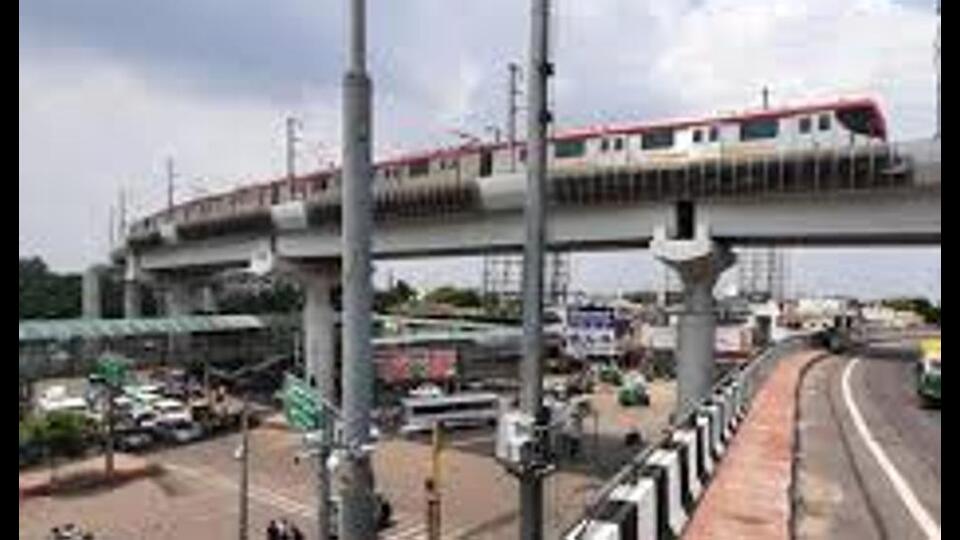
The ₹5,801-crore metro expansion aims to improve east-west connectivity across Lucknow and strengthen public transport access in densely populated parts of the city.
Officials said the MoU is a legally binding framework required for implementation of the corridor and is necessary for securing loans from foreign funding agencies. Although the Detailed Project Report (DPR) had already been approved by both the Central and state governments, the Monday’s Cabinet decision formally aligns all departments and agencies involved in project execution.
The approval authorises coordination among departments such as Lucknow Development Authority (LDA), municipal corporation, finance department and housing department for land acquisition, utility shifting, financial support and clearances required for the metro expansion.
Sources associated with the project said groundwork has already begun. The tender process for the underground section has been finalised, while tenders for the elevated portion are expected to be completed by next week.
Officials said work beginning in July will largely focus on mobilisation due to the monsoon season. Authorities are expected to avoid large-scale road excavation during the rains to minimise commuter inconvenience and reduce risks linked to waterlogging and traffic congestion.
The initial phase will involve installation and movement of heavy machinery, tunnel boring machines (TBMs), casting equipment and construction material at designated sites. Limited digging and preparatory civil work may begin at select locations with minimal traffic impact.
The East-West Corridor is expected to pass through some of Lucknow’s busiest commercial and transport zones, including Charbagh, Gautam Buddha Marg and Aminabad.
Officials said traffic diversion and management plans have already been prepared in coordination with local authorities to ensure smoother vehicular movement once construction activity intensifies.
Traffic marshals are also expected to be deployed at key junctions and congested stretches to regulate movement and assist commuters. Alternative traffic routes for affected areas have been identified in advance to reduce disruption in old city and central Lucknow.
Sushil Kumar, managing director, UPMRC, said the metro expansion project is aimed at strengthening east-west connectivity and reducing travel time in densely populated urban pockets.
The East-West Corridor, planned as Line-2 of Lucknow Metro, is an 11.165-km stretch connecting Charbagh Railway Station to Vasant Kunj through old Lucknow and will include 12 stations.
According to the DPR, the project will have 4.286 km of elevated alignment with five stations between Vasant Kunj and Thakurganj, and 6.879 km of underground alignment with seven stations between Charbagh and Niwazganj. A depot is also planned at Vasant Kunj.
The Line-2 project received approval from the Central Government in August 2025.


