
 E-Paper



Mulayam Singh Yadav mastered the art of balancing paradoxes with sharp political moves
Samajwadi Party patriarch Mulayam Singh Yadav had the ability to make friends across the diverse political spectrum


Mulayam Singh Yadav balanced paradoxes with sharply thought-out political moves that would take many by surprise, political observers say.
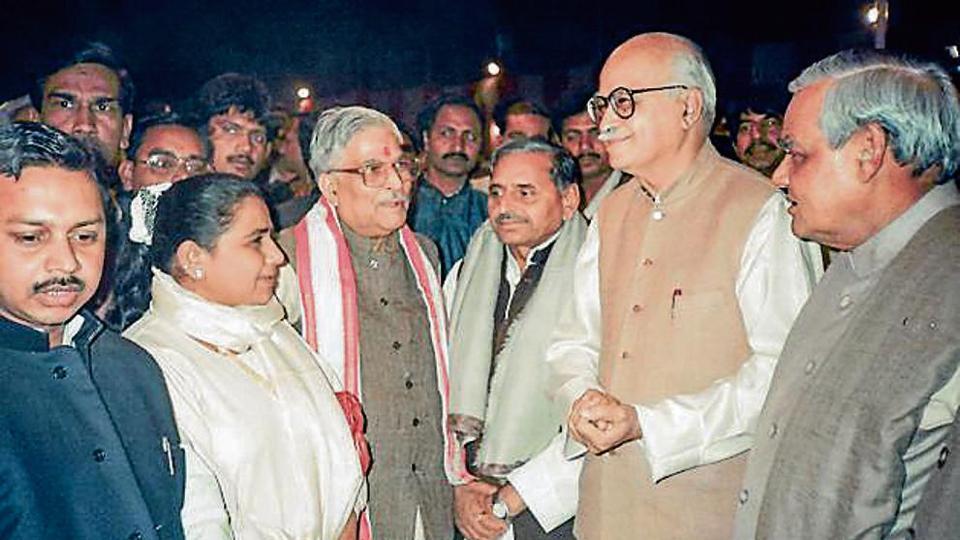
An enigma, Mulayam Singh Yadav had the uncanny political ability to think differently.
For instance, he attended Mayawati’s swearing-in ceremony as chief minister after a bitterly fought 2007 assembly election, in which the Bahujan Samaj Party (BSP) leader had repeatedly asserted for the first time that if voted to power she would send Mulayam Singh Yadav to jail. Then, he quietly took the back row to attend Narendra Modi’s oath-taking as Prime Minister in New Delhi in 2014 (Amit Shah later escorted him to the front rows), despite his party suffering heavy losses in the Modi wave.
After her 2007 UP win, Mayawati, when asked by journalists if she would actually get Mulayam arrested, had rather harshly remarked “ab marey huey ko kya maarna (what’s the point in striking someone who is already down).”
This decision of Mulayam, to attend her swearing-in, had thus caught many, including some BSP leaders, off guard.
Twelve years after that BSP win in 2007 and 24 years after the infamous guest house incident, which saw SP-BSP becoming bitter political rivals, Mulayam agreeed to share the political stage with Mayawati to support his son Akhilesh, who scripted a short-lived, yet-much talked about political alliance with the BSP in the 2019 Lok Sabha polls.
Yet, in keeping with the intrigue that surrounded his moves and his statements, despite his son working up political plans to stop the BJP, Mulayam, just ahead of the 2019 LS polls, did not hesitate to praise PM Modi in the Lok Sabha and state his wish of seeing him as the prime minister again.
“Away from political compulsions, he continued to shower his blessings on me,” the PM said in his condolence message while Union home minister Amit Shah visited the Gurugram hospital to pay his last respects.
“Mulayam Singh Yadav was called netaji, meaning a leader, a term coined for him perhaps by Samajwadi Party stalwart late Janeshwar Mishra ji, who was respectfully also referred to as Chhotey Lohia. MSY would not always be bound by party lines as he would take apparently surprising, yet, seemingly well-thought-out decisions, which would highlight his ability to correctly read the political script of the time. The obituaries that are pouring in are testimony of his ability to make friends across the diverse political spectrum,” said professor Manuka Khanna of Lucknow University’s political science department.
In keeping with the mystery and secrecy that accompanied MSY’s moves, Samajwadi Party founder publicly admonished his chief minister son Akhilesh to realise the need for making peace with his brother at an Independence Day function in 2016, addressed press conferences with his brother by his side, and yet a couple of months later, blessed his son on taking over the party that he founded.
“Despite obvious differences, he kept his family together with that ‘ghar ke badey (house elder)’ type feeling. That is why, despite falling out with Akhilesh, MSY’s brother Shivpal didn’t directly challenge Akhilesh beyond a point. Only recently, Shivpal said he won’t contest from Mainpuri, Mulayam’s Lok Sabha constituency if netaji (Mulayam) would. Now, with him gone, it would be interesting how the extended Yadav clan reacts,” said Irshad Ilmi, a political observer.
“He would sit as comfortably with the ‘maulana Mulayam’ tag that Vishva Hindu Parishad bestowed on him after the 1990 police firing in Ayodhya as while sharing space with RSS and BJP top leaders,” Ilmi added.
“Mulayam was the CM when I, as a first-time lawmaker, made a point about migrant workers. He immediately agreed to my suggestion. He was a leader, a true neta,” recalled Dharampal Singh, UP’s minority affairs minister.


