E-Paper



One house, 4,271 voters in Mahoba: Officials blame it on clerical error
Voter list revision for 2026 panchayat polls in a Mahoba village reveals major discrepancy; the exercise is being conducted under State Election Commission, not ECI

 Prefer HTon Google


The ongoing voter roll revision for the 2026 panchayat elections in Uttar Pradesh has revealed a major discrepancy wherein a house in Mahoba district is said to shelter 4,271 registered voters in Jaitpur gram panchayat, according to the draft voter list.
The Uttar Pradesh State Election Commission (SEC), and not the Election Commission of India (ECI), conducts the preparation and revision of electoral rolls for the panchayat elections. It is a separate voter list from that prepared by the Election Commission of India whose list is used in state assembly and parliamentary elections.
While the 4,271 figure amounts to nearly one-fourth of Jaitpur’s 16,069-strong electorate, election officials have described the error as a clerical one, insisting that the names themselves are genuine.
Booth-level officers (BLOs), tasked with verifying names through a door-to-door campaign, discovered that three entire wards had been mistakenly tagged to a single property — house number 803.
Assistant district election officer RP Vishwakarma said, “In rural areas, house numbers are often not consistently recorded. During data entry, multiple names were wrongly aligned to one address. This is being corrected.”
Additional district magistrate (ADM) Kunwar Pankaj Singh called it a “house numbering mismatch” that had also surfaced in the 2021 revision exercise.
“The voters are real. Only their addresses have been wrongly clubbed. The earlier rolls too had similar irregularities which we are now working to fix,” he said.
For the house owner, however, the discovery was no less than a shock. Neighbours too expressed disbelief that a single property could be shown as home to thousands. The anomaly, once reported, quickly turned into a talking point in the village, with political opponents seizing on it as evidence of poor oversight.
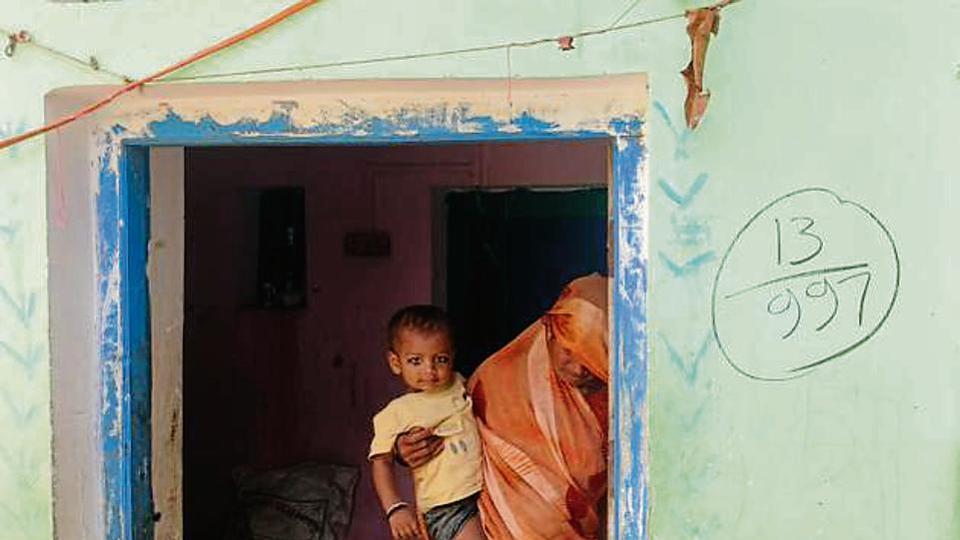
Jaitpur is not an isolated case. In nearby Panwari town, the revision exercise revealed 243 voters registered under house number 996 in Ward 13. A subsequent check found another 185 names listed under house number 997. The residents, baffled to find hundreds of people officially “residing” in their homes, lodged complaints with the BLOs.
Social activist Chaudhary Ravindra Kumar, who owns one of the houses and first flagged the issue in Panwari, accused the administration of negligence.
“This is not a small error. It shows how casually the rolls are maintained. When one house has 200 or more voters from every caste and community, it damages trust,” he said.
While houses belong to the people of scheduled castes, the voter lists show the names of people from general category as well as the other communities.
Supervisors have since confirmed the discrepancy and directed corrections. Officials insist the anomalies were not deliberate but the result of flawed address mapping.
The latest revelations come against the backdrop of a larger clean-up drive. An Artificial Intelligence (AI)-assisted audit last year found over one lakh duplicate or suspicious voters across Mahoba district. Out of 5.66 lakh registered voters in 2021, AI flagged 24,000 entries in Jaitpur, 22,000 in Panwari, 46,000 in Kabrai and 12,000 in Charkhari block as questionable.
The State Election Commission has since launched a door-to-door verification campaign, deploying 486 BLOs and 49 supervisors across 272 gram panchayats. The campaign, which runs until September 29, involves adding fresh voters, deleting names of the deceased, and correcting discrepancies. Draft rolls are expected to be published on December 5, after inviting objections from the public.
While officials maintain that these are minor clerical issues, residents argue that repeated errors erode confidence in the system.
“If addresses can be so badly mismanaged, what is the guarantee that votes are not being misused?” asked a villager in Panwari.
Opposition leaders have also begun citing the errors as evidence of “systemic negligence” that undermines the transparency of elections.
Vishwakarma, assured that corrective measures are being taken.
“Such anomalies do not indicate bogus voting. The rolls are being revised thoroughly to ensure fairness,” he said.