
 E-Paper



SGPGIMS Renal Transplant Centre: Nephrology dept shifts to centre, dialysis unit, OTs inaugurated
The nephrology department of the Sanjay Gandhi Post Graduate Institute of Medical Sciences (SGPGIMS) has shifted to the new Emergency and Renal Transplant Centre


The nephrology department of the Sanjay Gandhi Post Graduate Institute of Medical Sciences (SGPGIMS) has shifted to the new Emergency and Renal Transplant Centre.
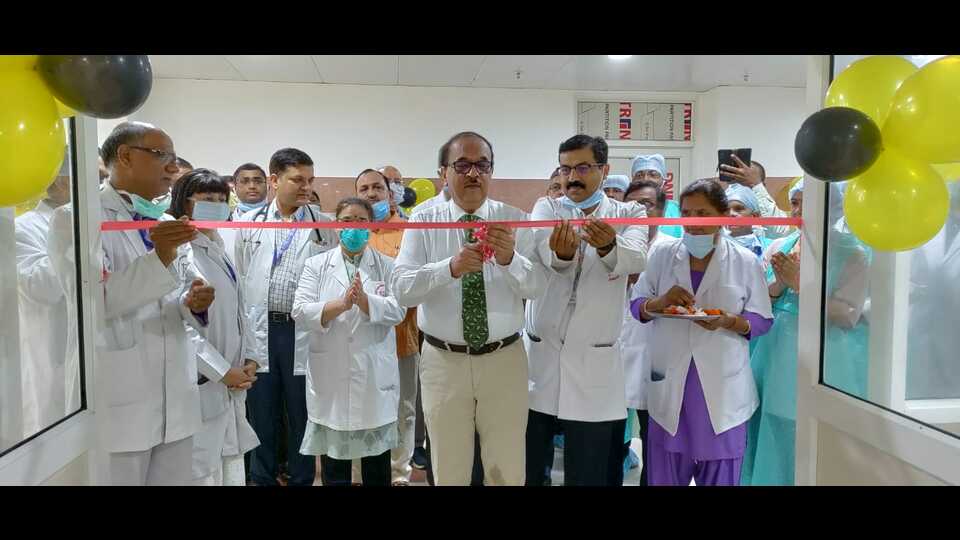
Prof RK Dhiman, director, SGPGIMS, inaugurated another ward, dialysis unit, and operation theatres of the department on Tuesday.
Head of department, nephrology, professor Narayan Prasad said, “Gradually, the shifting process started in January and now the department of nephrology has completely shifted to this centre. The centre is equipped with 97 general and private beds, 111 dialysis centres with the most advanced system of the reverse osmosis water plant, along with a central distribution system (CDS) of dialysate, which is unique, making SGPGIMS the only government institute in India which has this facility.”
Professor Prasad said, “Dialysis will be provided in 2 to 3 shifts with the availability of manpower for the same. The centre has two top-class operation theatres equipped with facilities for digital substation angiography (DSA) and C-arm, that will be used for the treatment of vascular access failure, thrombectomy, and Arteriovenous fistuloplasty. This is the only centre that provides such treatment.
“The department of nephrology has started the course in intervention nephrology, which is unique to the institute and the only public sector institute which provides a post-doctoral certificate course in Intervention Nephrology. There was a strong need for this process in the state, with the launch of the Pradhan Mantri Dialysis Program at the district level, and as the requirement of the number of cases for vascular intervention increased and the patients were bound to come to SGPGIMS for the treatment of AVF failure.”
Another operation theatre will be used for making AVF, placing the jugular catheter, and subcutaneous tunnelled catheter for vascular access to patients requiring dialysis. This is the only centre that provides slow continuous renal replacement therapy to very sick patients. The urology department of EMRTC has world-class 6 OTs which will be used for renal transplantation purposes. At present, this is the only major centre in the public sector hospitals which provides renal transplantation, even the most difficult highly sensitised renal transplant with different blood groups.


