
 E-Paper



Shah Jahan’s ‘urs’ at Taj ends with ‘chadar-poshi’
It is a tradition that a multi-coloured ‘chadar’ is offered to the grave of Mughal emperor Shah Jahan at the Taj Mahal on the third day of the ‘urs’ every year and with this offering the ‘urs’ concludes.


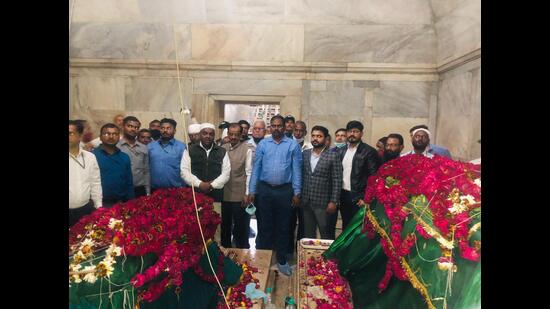
Agra :::The three-day ‘urs’ of Mughal emperor Shah Jahan at the Taj Mahal ended on Tuesday with the ritual of ‘chadar-poshi’. A ‘satrangi Hindustani chadar’ ( rainbow-hued Indian sheet), measuring 1381 metres in length, was offered to the ‘mazar’ ( grave) of Shah Jahan as per tradition.
Entry to the monument was free all day long, drawing a huge crowd which became unmanageable at times and the Central Industrial Security Force (CISF) jawans had a tough time dealing with the crowd pressure. The surge of visitors also increased as Tuesday was a holiday on account of ‘Mahashivratri’.
‘The 1381-metre ‘chadar’ was first taken to the Hanuman Temple in Tajganj locality and then brought to the Taj premises. It was held above the head and taken to the basement to be offered at the grave of Mughal emperor Shah Jahan,” informed Tahiruddin ‘Tahir’, convenor of ‘Khuddam-e-Roza’ committee which looks after the Urs every year.
“It is a tradition that a multi-coloured ‘chadar’ is offered on the third day of the ‘urs’ every year and with this offering the ‘urs’ concludes. The colours of the ‘chadar’ depict different faiths to showcase the composite culture of the nation and people from all faiths join every year in making of this ‘chadar’, the size of which increases every year,” added Tahir.
Superintending archaeologist of ASI, Raj Kumar Patel was present to participate in the ‘chadar-poshi’ and carried on his head flower petals to be offered at the grave, as part of custom.
“There was unusual increase in crowd in these days of Urs, more so on the third day when entry to Taj Mahal was free all day long. CISF personnel were present and active to streamline the movement of visitors,” stated an ASI official at Taj Mahal but denied use of force to control the mob.
However, CISF personnel had tough day as visitors entered garden on Taj premises and there was a mad rush to climb the main platform where the mausoleum exists.
To note, the actual graves of emperor Shah Jahan and his consort Mumtaz Mahal are housed in the basement below the main platform and are opened for viewing only during the three-day Urs.


