
 E-Paper



Special Intensive Revision of electoral rolls kicks off across Uttar Pradesh today
Enumeration forms to be distributed in all 403 assembly constituencies in Uttar Pradesh as ECI aims at error-free, updated voter list

 Prefer HTon Google


The stage is set for the Special Intensive Revision (SIR) of electoral rolls to begin in Uttar Pradesh, along with eight other states and three Union Territories from Tuesday. After Bihar, this is the second round of SIR. According to Election Commission of India data, there are approximately 15.44 crore voters in Uttar Pradesh at present.
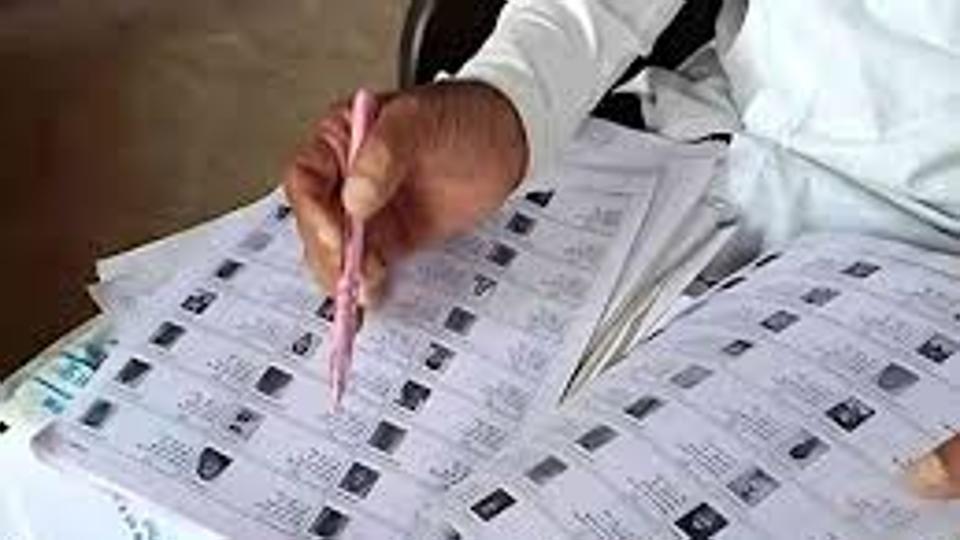
The exercise will commence with the distribution of the enumeration forms by Booth Level Officers (BLOs) in all the 403 assembly constituencies of Uttar Pradesh.
“Preparations for the SIR have been completed and it will be conducted simultaneously at 1,62,486 booths in 403 assembly constituencies,” Uttar Pradesh chief electoral officer Navdeep Rinwa said on Monday.
The Election Commission of India intends the voter lists of the 403 assembly constituencies to be completely error-free, updated and transparent to ensure that every eligible citizen can exercise their franchise during the polls, he added.
The BLOs will contact all voters in their polling station and provide each voter with a two-copy enumeration form. BLOs will visit each voter’s home at least three times to distribute and collect the forms.
The enumeration form will contain the voter’s name, EPIC number, part number, serial number, assembly constituency and state entries, the CEO said. The photo will also be pre-printed. The voter can also affix their latest passport-size photograph to the counting form.
The exercise will involve 1.62 lakh booth level officers appointed by the Election Commission, 1.93 lakh booth level agents representing political parties, 2,445 EROs (electoral registration officers), AEROs and 75 district election officers. They will carry out mapping of the 2003 electoral rolls with the 2025 poll rolls. The previous SIR in Uttar Pradesh was conducted in 2003.
The voter will fill in other details in the enumeration form with information from the last SIR of 2003 electoral rolls. In case of any difficulty in filling in the details, assistance can be sought from the BLO, Rinwa said.
The details of all voters will be verified. Duplicate entries, deceased persons, and those who have migrated will be removed from the electoral rolls. The wrongful inclusion of foreigners will also be addressed during SIR. The names of new eligible voters will be added to the voter list.
Voters are not required to provide any documents during the distribution and collection of enumeration forms. The voters who fill out their details on the enumeration form and submit it to the BLO will be included in the documented voter list as ECI has made it clear that if the name of a person exists on the old electoral rolls, mostly from 2003, then that person need not prove anything else to stay on the rolls. Only the enumeration form would suffice in such cases.
However, for those whose names are not in the 2003 voter rolls, the process is likely to be similar to that in Bihar, where the SIR was carried out just ahead of the assembly polls scheduled for November 6 and 11.
That person will have to show the parents’ names on the older lists and prove his relationship with them using an ID document.
The distribution and collection of enumeration forms by BLOs will be carried out from November 4 to December 4. Publication of draft electoral rolls will be done on December 8. Claims and objections will be invited from December 9 to January 8, 2026.
The notice phase is from December 9 to January 31, 2026. The publication of final electoral rolls will be done on February 7, 2026.
KEY DOCUMENTS
All voters, whose names could not be matched/linked with the voter list of the last special intensive revision, will be issued a notice for hearing by the electoral registration officer (ERO) of the respective assembly constituency.
During the hearing before the ERO, the voter will be required to submit one of the following documents:
*Any identity card/pension payment order issued to a regular employee/pensioner of any Central government/state government/public sector undertaking.
* Any identity card/certificate/record issued in India by the government/local authorities/banks/post office/LIC/public sector undertaking before July 1, 1987. Birth certificate issued by a competent authority.
* Passport or the matriculation/educational certificate issued by a recognised board/university. The permanent residence certificate issued by a competent state authority.
* Forest rights certificate.Other Backward Class/Scheduled Caste/Scheduled Tribe or any other caste certificate issued by a competent authority.
* The National Register of Citizens (wherever it exists) can also be for registration.
* The family register prepared by the State/local authorities.
* Any land/house allotment certificate issued by the government.
* Aadhaar as per the instructions issued by the Commission vide letter No. 23/2025-ERS/Vol. II dated September 9, 2025 (Annexure II) will apply.


