
 E-Paper



“Swarnim Vijay Mashaal” arrives at CAC in Prayagraj on Friday
Swarnim Vijay Mashaal was lit by Prime Minister Narendra Modi at War Memorial on December 16, 2020 to commemorate the victory in 1971 Indo-Pak war


The “Swarnim Vijay Mashaal” (victory torch), which was lit by Prime Minister Narendra Modi at War Memorial on December 16, 2020 to commemorate the victory in 1971 Indo-Pak war, will reach Central Air Command (CAC) headquarters in Prayagraj on Friday.
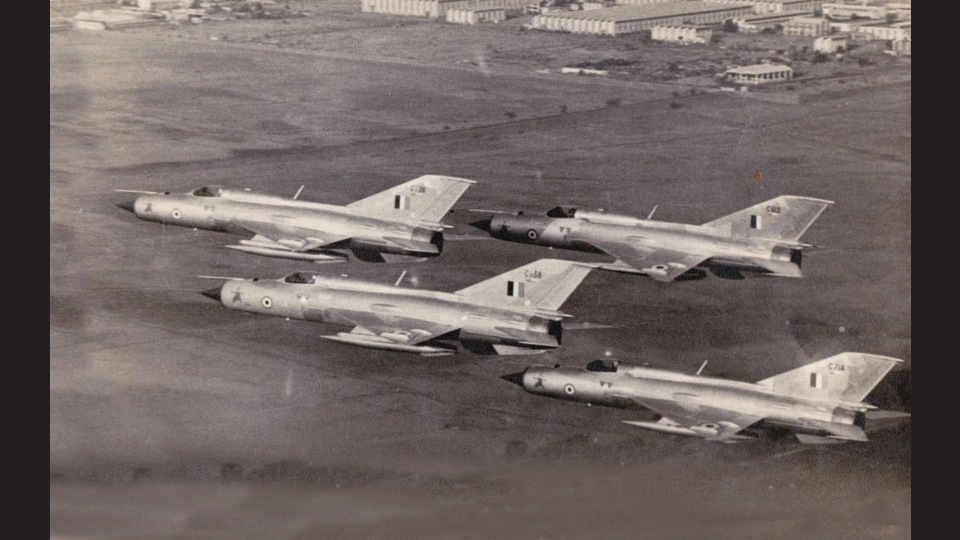
“The liberation of Bangladesh is a proud chapter in the history of CAC as the birth of Bangladesh in 1971 owes a lot to air operations. As the situation on the subcontinent deteriorated, the Indian Air Force (IAF) was alerted to the possibility of another armed conflict. On November 22, 1971 an aerial interception battle, called ‘Battle of Boyra’ was fought between IAF and intruding Pakistani Air Force (PAF) jets that had crossed into Indian airspace while giving covers to its ground forces,” said regional public relation officer (defence, Prayagraj) Group Captain Samir Suresh Gangakhedkar.
He said a detachment of four Gnats of 22 Squadron had intercepted a PAF aircraft. The PAF pilots ejected over Boyra and were made prisoners of war (POW) by Indian forces. The battle of Boyra took place before the formal start of Indo-Pak war of 1971, he added.
Gangakhedkar further said on the evening of December 3, 1971 (at 5.45 pm), the Pakistan launched a pre-emptive air strike at Indian air fields of Amritsar, Srinagar, Awantipur, Pathankot, Uttarlai, Jodhpur, Ambala and Agra.
“India was fully geared up to respond and went into action. The IAF continued operations at an unprecedented pace of over 500 sorties per day. As the Indian Army progressed forward in the East Pakistan, the IAF continued with its attack against Pakistani targets as the campaign developed into a series of anti-airfield, anti-radar and close-support attacks by the fighter jets with night attacks against airfields and strategic targets by MIG 21s, Canberras and AN-12s,” he added.
“Transport and airlift operations were handled by the three C-47 Dakota Sqns, two Antonov-12, one DHC Caribou, one DHC-3 Otter and one C-119 Packet Sqn augmented from Western, Central and Eastern commands and based at Jorhat, Guwahati, Barrackpore and Dum Dum during December 3 to 16, 1971,” informed the official.
Gangakhedkar also spoke about an interesting incident wherein the Governor of East Pakistan had to resign following the action by IAF fighters.
“On the morning of December 14, a message was intercepted by the Indian intelligence concerning a high-level meeting in East Pakistan. A decision was then made to mount an attack within 15 minutes of the interception of the message and a strike was launched against Dhaka. Armed with tourist guides map of the city four MIG 21s of 28 Squadron became airborne. Only a few minutes had passed after the meeting had started when the IAF aircraft blasted the governor’s house with 57mm rockets, ripping the massive roof off the main hall and turning the building into a smouldering wreck,” he informed.
AH Malik the governor of East Pakistan was so shocked after the incident that he resigned on the spot by writing his resignation on a piece of paper, thereby renouncing all ties with the West Pakistani administration, he recalled.
“The December 1971 war also witnessed the gaining of India’s highest award for gallantry to the IAF Flying Officer Nirmaljit Singh Sekhon, flying Gnats with number 18 Sqn from Srinagar, secure hits on one PAF Sabre and damaged another. He was posthumously awarded the Param Vir Chakra, informed the PRO.


