E-Paper



UP Board exams start tomorrow; centres under watch of 10k CCTV cameras, control rooms
The hi-tech surveillance include the state control room receiving feeds from all 75 districts, cameras outside strong rooms at all 8,041 examination centers

 Prefer HTon Google


UP Board high school and intermediate examinations would be held under a “three-layer monitoring network”, officials said. The hi-tech surveillance include the state control room receiving feeds from all 75 districts, cameras outside strong rooms at all 8,041 examination centers, and local control rooms set up in the offices of all district inspector of schools and at the five regional offices of the board.
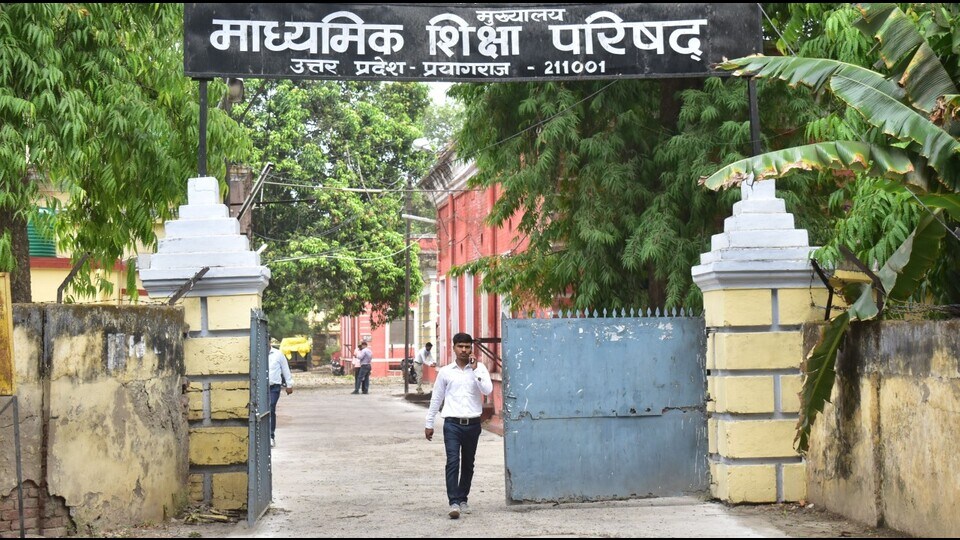
As per secretary Bhagwati Singh, the board already has intelligence inputs about active solver gangs, and coordinated efforts with state police and intelligence agencies would be made to take strict action against any person trying to disrupt the exam.
This year, the board examinations may prove to be an acid test for the government as over 12 per cent of the total exam centres have been assessed to be hypersensitive or sensitive.
As per the secretary, utmost care was taken to set up the centres. “All district inspectors of schools have submitted their list of sensitive and hypersensitive centers to the Board,” the official said.
To prevent any irregularity during the exams, monitoring will be done through a network of over 10,000 high-resolution CCTV cameras, which will send 24x7 feed to the state control room in Lucknow. Cameras with zooming ability have been placed outside strong rooms at examination centers to prevent question papers from leaking.
The Public Examinations (Prevention of Unfair Means) Act, 2024, a recently passed legislation in India with the aim to curb cheating and uphold the integrity of public examinations, has provisions for stringent punishments, including ₹1 crore fine and life imprisonment.
“While no criminal case will be registered against examinees caught cheating, but their results will be withheld. In an instance of mass copying, schools will be blacklisted. If a school manager or other staff member is found guilty of promoting the use of unfair means, he or she may face punishment of a monetary fine of up to ₹1 crore and life imprisonment under the new Act,” informed the board secretary.
Also, invigilators will be given QR code-equipped identity cards, which will work only within 200 meters of the allotted examination center.
For the 2025 edition of the examinations, a total of 54,32,519 students are enrolled to take the exam including 27,41,674 students for high school and 26,90,845 for intermediate exam. The exams are scheduled to commence on February 24 and end on March 12.