
 E-Paper



Ludhiana’s AQI ‘very poor’, raises concerns over spike in Covid cases
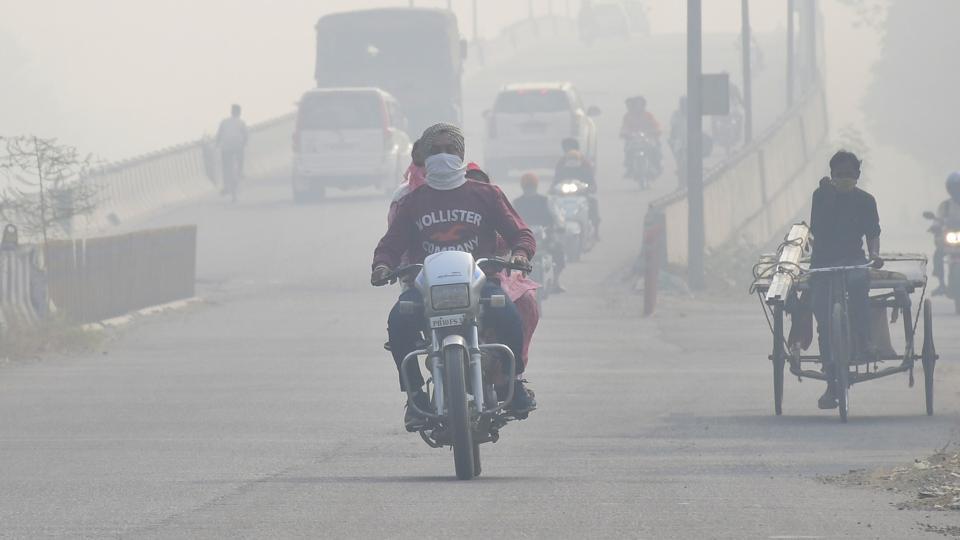
The AQI recorded on Sunday was 316 while the concentration of particulate matter, PM 2.5, stood at 366 micrograms.

 Prefer HTon Google


At 316, the city’s air quality index (AQI) remained very poor on Sunday even as health experts expressed concern over the possibility of a spike in Covid cases due to this.
Senior cardiologist Dr Bishav Mohan, who is also a member of the Covid-19 Task Force formed by the state government, said that pollution can cause several health issues ranging from blood pressure, heart ailments and lung problems, besides also increasing the chances of contracting Covid-19.
“The logic is simple. Pollution may lead to coughing and sneezing, especially among Covid patients, and this can in turn lead to the spread of the virus. The problem is only heightened by the fact that the droplets remain suspended in air for longer periods in cold weather conditions,” said Prof Mohan.
Stubble burning to be blamed
He added that stubble burning (which a major cause of dipping AQI levels) has caused a 15% increase in Covid cases across the country.
Prof Mohan said that at least three studies have been published in the last six months, highlighting the ill-effects of stubble burning on human health.
As per the data provided by the Punjab Pollution Control Board, Ludhiana saw as many as 3,150 stubble burning cases between September 21 and November 7. The figure stood at 995 and 1, 890 for the corresponding period in 2019 and 2018 respectively.
Meanwhile, the concentration of particulate matter, PM 2.5, in air also remained worrying at 366 micrograms.
Civil surgeon Dr Rajesh Bagga said that the concentration of dust can cause eye irritation and respiratory discomfort. “Those who have dust allergy or a compromised immune system should avoid going out,” he cautioned, adding that people should wash their hands and face regularly and cover their face while going out. “Our body has its own fighting mechanism. These dust particles have lesser toxicity than automobile exhaust and particulate matter produced by burning of crop residue,” he said.


