
 E-Paper



Monday Musings: Wanted: A national dialogue on Police Reforms, driven by PIC
The just-concluded Asia Economic Dialogue marks a high point for Pune International Centre which should now throw the national spotlight on the burning issue of pending police reforms in the country


One of the best things that has happened to Pune in a long time is the Pune International Centre (PIC).
This collective of people of eminence and achievement to their credit is emerging as a fountainhead of thought and action in this city of ours with an extraordinary social and intellectual legacy. Countless stalwarts from this city have contributed to this legacy for more than a century now.
Tilak and Gokhale, Maharishi Karve, Mahatma Phule and legendary scholars such as the oriental historian RG Bhandarkar, Wranglers Paranjpye and Narlikar, the Buddhist scholar Dharmanand Kosambi and his multi-faceted, illustrious and eccentric son, Damodar Dharmanand Kosambi, all lived in this city and come foremost to mind.
Given this enviable past, the PIC can certainly emerge as a national think tank of reckoning, looking at India’s most pressing socio-political issues afresh and proposing approaches, direction and solutions to these problems. The PIC has been doing precisely this year after year ever since its first event, nine years ago- a lecture on ‘Thinking strategically’ by Prof. Avinash Dixit, Professor Emeritus of Economics, Princeton University, followed by a discussion.
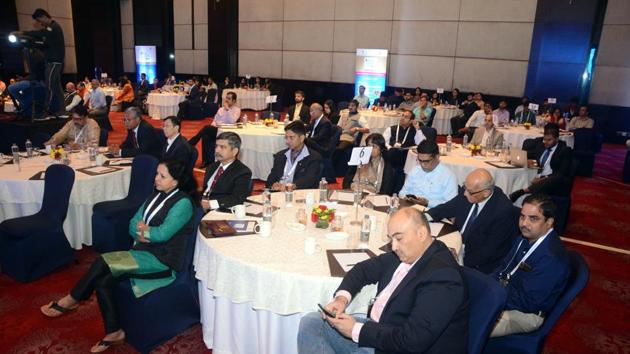
The just-concluded Asia Economic Dialogue in partnership with the Ministry of External Affairs (MEA), will now become an annual feature and is one of the high points in PIC’s journey so far.
Other annual events such as the National Conference on Social Innovation, PIC Policy Papers, annual lectures, Pune Dialogue on National Security and focused discussions on accelerating agricultural growth in Maharashtra have been forward looking and thought provoking.
What is most surprising and unfortunate is that the PIC has so far not had a national seminar on India’s crying need for police reforms. Every corner of this vast country is fully aware of the tragic turn of events in the national capital in recent days.
Our heads hang in shame over what has happened, the needless deaths and destruction and the poison of communal hatred that has once again been injected in our society. This has happened because of the failure of the police and the failure of the nation to implement Police Reforms as directed by the Supreme Court in September 2006, in the Prakash Singh vs. Union of India case.
The apex court had issued seven directives to the central and state governments asking them to establish a mechanism to initiate police reform. The crux of the order related to providing functional autonomy for the police and creating a “buffer body” between the police and the government to prevent, or at least, minimise misuse of power by the ruling politicians.
There has not been much progress on this and the heavy price that the nation is paying is there for all to see.
Thus, nothing can now be more important for the PIC than throwing the national spotlight on the burning issue of pending police reforms in the country. Such is the urgency of the matter that this is the least that can now be expected of the PIC as an intellectual fountainhead and as a think tank of relevance.


