
 E-Paper



150-year-old Horniman Circle Garden restoration to be completed by Feb
This intricately crafted boundary, reminiscent of London’s Kensington Gardens, stands as a testament to the urbanisation of Bombay in British India. The restoration of the garden is now slated for completion by February 2025

 Prefer HTon Google


Mumbai: Nestled in the heart of the bustling Fort area, the 150-year-old Horniman Circle Garden, also known as Bombay Garden, offers a serene oasis for office workers and passersby. Every day, they flock to its lush, grassy expanse, unpack their tiffins, and enjoy a tranquil meal before diving back into the grind. Despite the quiet harmony, few visitors realise they are surrounded by history, enclosed within a Grade I heritage fence imported from Shropshire, England, in the 1860s (Victorian era). This intricately crafted boundary, reminiscent of London’s Kensington Gardens, stands as a testament to the urbanisation of Bombay in British India. The restoration of the garden is now slated for completion by February 2025.
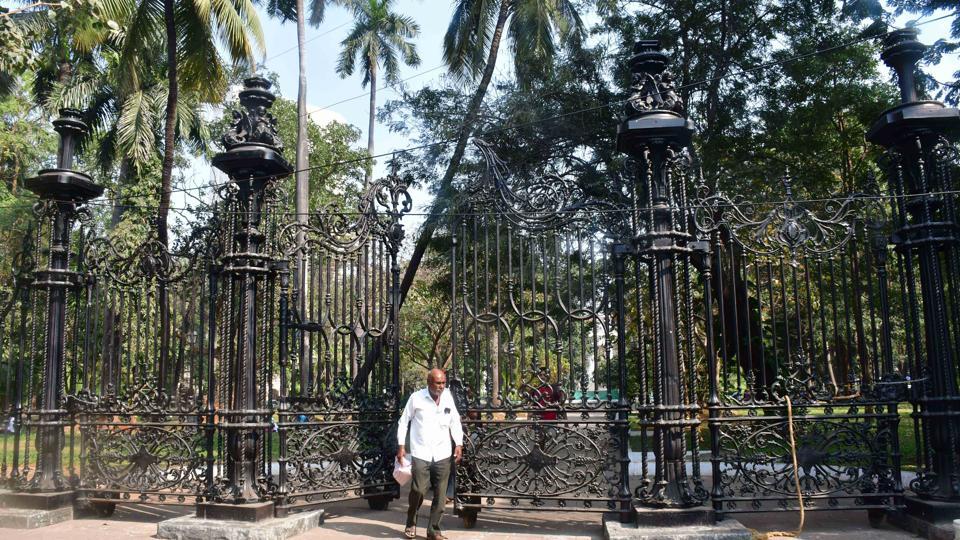
“The cast iron used for the fence is of a quality unlike what is available today,” said Pankaj Joshi, the consultant conservation architect leading the Brihanmumbai Municipal Corporation’s (BMC) ambitious ₹16 crore restoration project. The fence, stretching 360 metres with openings at four gates adorned by cupid heads pointing in all directions, had suffered decades of neglect. Rust, gaps, and missing pieces plagued its decorative elements. “To restore the fence, we conducted metallurgy composition tests to replicate the original cast iron and recreated the missing sections by mirroring intact parts from the other gates,” Joshi explained. Some rods were beyond repair and had to be replaced. The restored elements were oxidised to achieve a black sheen and coated with a transparent polyurethane layer that will require periodic renewal to protect against corrosion.
Raising the Past
Beyond the fence’s restoration, Joshi’s team faced a unique challenge: the passage of time had altered the garden’s topography. As layers of urban development raised the city’s ground level, much of the garden’s original features had been buried. “When this garden and its fence were constructed, Bombay was transforming into the Mumbai we know today. The American Civil War had ended, the Suez Canal had opened, and the city’s fort walls were being dismantled as the need for tight security diminished,” Joshi recounted.
During the 19th century, the Horniman Circle, the erstwhile Cotton Green, was a bustling hub for cotton trading, and the inception of the Bombay Stock Exchange took place under a banyan tree in its vicinity. A well that served as a gathering point now lies buried 10 feet below ground. Similarly, the base anchor stones of the fence were all buried beneath the ground. The water trough in the centre, built with basalt stones near the location of first the Victoria memorial (later shifted to the BDL Museum grounds), had its base submerged over time.
To restore these features, the team painstakingly raised the fence and waterfall by two to three feet, depending on the land’s slope, reinforcing them with RCC beams. A section of the fence remains at its original height, entwined by the trunk of a towering ficus tree—a poignant reminder of the passage of time.
Preserving green solace
Despite initial plans for a two-year timeline starting in August 2022, the restoration extended by six months and is will be completed by February. The municipal commissioner, Bhushan Gagrani, is closely monitoring the project to ensure it remains on track.
Joshi’s efforts extended beyond the heritage fence. The garden’s pathways, previously hard impervious concrete, have been replaced with basalt stone interspersed with grass pavers. These pavers allow grass to grow and rainwater to percolate through, replenishing the underground well that continues to supply water to nearby offices. The footpaths surrounding the garden, spanning 10,000 square metres, have also been reconstructed, with bollards added to prevent cars from encroaching on the space. Unsightly concrete structures, including a toilet block, were removed, doubling the garden’s greenery. “The winding path now blends seamlessly with the garden’s aesthetic, while being environmentally sustainable,” Joshi noted.
An officer from the heritage department told HT, “Despite the extensive work, the park remained open to visitors throughout, with the restoration carried out in phases. Its role as a refuge for workers was too important to disrupt.”
As the restoration nears completion, Horniman Circle Garden is set to reclaim its status as a jewel in the city’s heritage crown. For the countless workers who seek solace here, February promises an uninterrupted escape into history and greenery, a quiet sanctuary amidst the chaos of urban life.

Stay updated with all the Breaking News and Latest News from Mumbai. Click here for comprehensive coverage of top Cities including Bengaluru, Delhi, Hyderabad, and more across India along with Stay informed on the latest happenings in World News.


