
 E-Paper



After surviving the Great Plague, cinema and TV, will theatre withstand Covid and OTT?
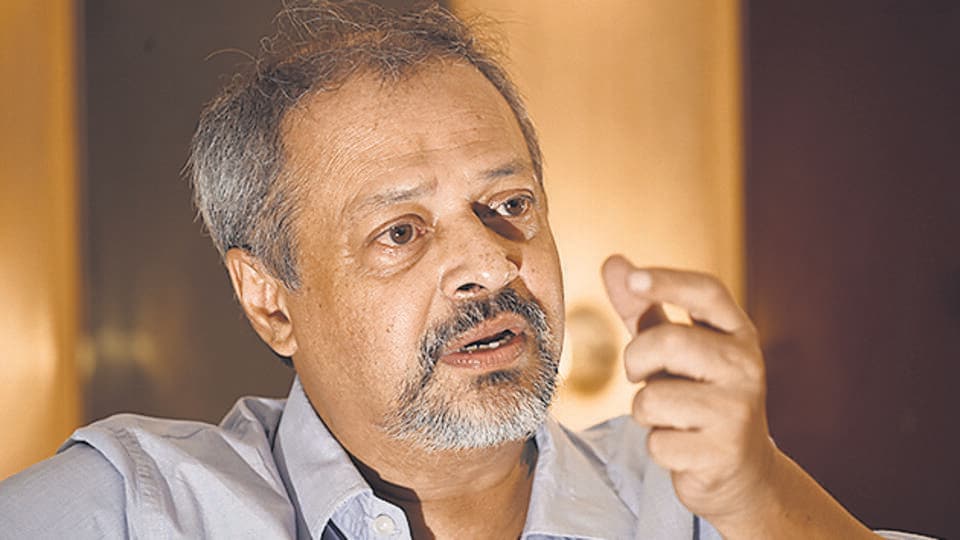
At a recent talk, theatre director Sunil Shanbag drew from his online project ‘Playing to Bombay’ to present an audio-visual slice of the history of theatre


MUMBAI: As weeks stretched into months in the first Covid lockdown, theatre personality Sunil Shanbag found himself wondering whether Mumbai, which saw an average of 1500 plays in a month, had ever gone through a similar situation in the past. Indeed, it had. That drought had lasted much longer, all through the Great Plague that struck in 1896 and lasted 20 years.
In his readings, Shanbag found uncomfortable parallels between the way the British government handled the situation then and the way our elected government handled Covid. Then as now, the poor were seen as the carriers of disease and faced the brunt of preventive measures: the authorities would bear down on the congested “native town” that lay on today’s Mohammed Ali Road and spray entire stretch of houses with disinfectant. The rich meanwhile, would hide sick family members to avoid them being taken into quarantine.
Of course, the colonial government did nothing to help theatre artistes, suddenly rendered unemployed – the same way that our elected state government looked the other way.
It was Theatre Dost, an initiative started during the second lockdown by Shanbag and a few others that helped artistes remain afloat.
One of the online events organised by Shanbag’s Tamasha Theatre to raise funds for Theatre Dost was ‘Playing to Bombay’, a history of the city’s theatre tradition from 1775 to 1896, hosted jointly with Sharmishta Saha. Funds garnered from the online viewing were also used to arrange doctors and provide medicines for the needy.
Last week, Shanbag presented this audio-visual slice of history at the Asiatic Library.
Saha, who teaches Humanities at IIT, was among those who did the research that helped Shanbag curate ‘Playing to Bombay’. “This isn’t my original research; it rides on the scholarship of others,” said Shanbag, insisting on naming every one of them: Kumudini Arvind Mehta, Arvind Ganachari, Shanta Gokhale, Kathryn Hansen, Meera Kosambi, Janaki Bakhle and Sharmila Rege.
The collective endeavour revealed that Bombay was as vibrant a theatre city in the late 18th and 19th centuries as it is now -- or was before Covid. Plays were staged in different languages and different formats, catering to a varied audience in distinct locales.
The first theatre hall in the city was Bombay Theatre, which stood at the spot where the Asiatic Library now stands, an area then called Bombay Green. A 1793 announcement in a paper called ‘Bombay Courier’ spoke of a performance of ‘The School for Scandal’ by Richard Sheridan, the 18th century Irish satirist and playwright, at Bombay Theatre. Interestingly, this British comedy was first performed in London only 16 years earlier.
A theatre performance at Bombay Theatre was treated like an evening out, the play being followed by a ball and a formal dinner; and the audience made up of the colonial elite.
However, the British hoi polloi had their own informal theatre in Matoonga village, called Matoonga Theatre, which was patronised by soldiers. This theatre house was made up of indigenous materials: bamboo walls, a thatched roof. It boasted of an orchestra, and beardless young soldiers played female roles.
Men continued to play female roles for more than a century; the famous singer Bal Gandharva played female roles as late as in 1920. When serious thought began to be given to get women on stage, tawaifs (courtesans) who had all along performed on stage, were the first to be contacted, but they turned down the offer as the payment offered was too low. Next in line were widows, who were seen to be beyond the pale anyway.
An interesting fact brought out by Shanbag’s presentation was that the great men who built many of Bombay’s institutions also contributed to its theatre. Thus, when Bombay Theatre was in financial trouble, the man who donated the maximum amount -- ₹150 -- was Bomanjee Hormasjee, who installed the clock tower at Bazaar Gate. Following him at ₹100 among others were Jamsetjee Jeejeebhoy (JJ School of Art, JJ hospital) and the educationist Jugonathjee Sunkersett (Jagannath Shankarseth). Thanks to these two men, after Bombay Theatre closed down, a new theatre opened in 1846 on Grant Road. By then, the audience included Indians, especially Parsis whose large turbans blocked the view of the Englishmen who sat behind them in the expensive boxes.
However, Grant Road wasn’t quite the locale favoured by the whites. In 1879, the Gaiety Theatre opened, taking English theatre back to Fort. It later became Capitol Cinema. The once popular cinema hall was, till it closed down recently, a regular haunt of those who grew up or worked in south Mumbai. They would never have given its interiors a second glance, but when Shanbag visited it during the lockdown, he was awestruck. Here, he felt, was the ideal location for a museum of theatre in Mumbai.
That would indeed be fitting, for Gaiety Theatre became the venue for a wide array of performances in different styles and languages, including plays by Vishnudas Bhave, known as the author of the first modern Marathi play, ‘Seeta Swayamvar’ (1843). Shanbag however, pointed out that this honour should actually go to Jyotiba Phule, whose play ‘Treetiya Rana’ in 1855 not only had a written text but also dealt with the contemporary theme of caste.
All of this: English and Marathi plays, Parsi theatre, Gujarati Bhangwadi, Goan Tiatr, as well as plays performed in public spaces, came to an abrupt end when the Great Plague struck in 1896. In July 1897, the Lumiere brothers brought cinema to Watson’s Hotel, Fort.
The miracle is that long after these cataclysmic events, theatre continued to survive in Mumbai. As Shanbag pointed out, a century later it weathered the challenge of television. Post-lockdown, OTT platforms have emerged as the new threat.
Yet, on a weekday evening in 2023, the Asiatic Society’s grand Durbar Hall was almost full to capacity with people having come from all over the city for a presentation on theatre in Mumbai.
Stay updated with all the Breaking News and Latest News from Mumbai. Click here for comprehensive coverage of top Cities including Bengaluru, Delhi, Hyderabad, and more across India along with Stay informed on the latest happenings in World News.


