
 E-Paper



Ahead of Ganpati festival, state proposes two-step recycling process for PoP idols
According to the report of the expert committee submitted in court on Wednesday, PoP idols must first be immersed in artificial immersion tanks for at least three weeks to allow proper dissolution of paint, softening and partial disintegration of the PoP material, so that less energy is consumed during the subsequent grinding and calcination process.

 Prefer HTon Google


MUMBAI: In pursuance with directions of the Bombay High Court to the state government last year to constitute an expert committee and suggest methods for scientific recycling of Plaster-of-Paris (PoP) idols, the government on Wednesday proposed before the court a two-step recycling method which would make the PoP material fit for reuse.
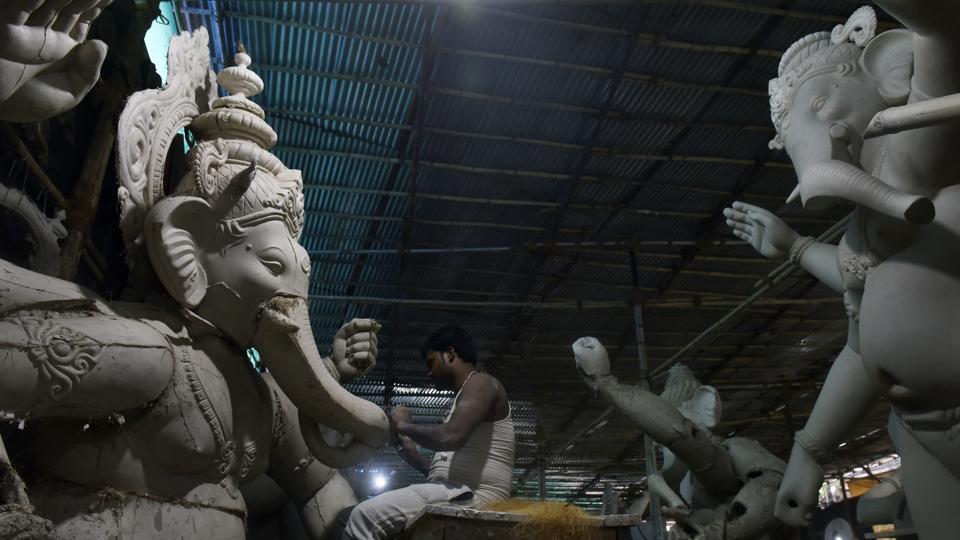
According to the report of the expert committee submitted in court on Wednesday, PoP idols must first be immersed in artificial immersion tanks for at least three weeks to allow proper dissolution of paint, softening and partial disintegration of the PoP material, so that less energy is consumed during the subsequent grinding and calcination process. Urban local bodies (ULB) must collect the idols after three weeks and transport them to dedicated processing units, the report said.
The high court had, in July 2025, made it mandatory for all Ganesh idols measuring up to six feet – whether made of clay or PoP – to be immersed in artificial ponds allocated by municipal corporations and local bodies across Maharashtra. The order was issued in pursuance with a public interest litigation (PIL) filed by Thane resident Rohit Joshi through advocate Ronita Bhattacharya Bector, seeking implementation of the Central Pollution Control Board (CPCB)’s guidelines prohibiting both the manufacture and immersion of PoP idols.
In July 2025, the court had also directed the state government to constitute an expert scientific committee (ESC) to suggest methods for scientific recycling and reuse of PoP material. Accordingly, an eight-member committee was constituted on August 22 last year.
In its meetings over the past year, the eight-member discussed the option of biological disintegration of PoP waste, but concluded that it was very slow and not technically feasible. It suggested a two-step method for PoP recycling – involving disintegration of the material using chemicals and calcination, to be carried out in a furnace at temperatures ranging 110-160 °C.
The committee’s report said accelerated dissolution of PoP material requires a chemical addition in immersion water such as Ammonium Bi Carbonate, which is very expensive and could be unviable. “More research is required to perform faster dissolution and a detailed economic analysis should be performed,” the report said.
Facilities where PoP idols are collected after keeping them immersed in tanks must have the required equipment for recycling the material and making it fit for reuse. The material must first undergo pre-drying, followed by coarse grinding and calcination to restore it to its original composition, and fine grinding to make it suitable for reuse. This recycled PoP can then be reused for making idols, plasterboards, medical plaster, ceramic sanitaryware and for construction work, depending on quality, the committee said in its report.
The committee further recommended that idol makers use environment-friendly paint such as water-based or natural pigments, as such paints are likely to get decolored during the calcination process, making recycling easier. The recycled PoP must be packaged and redistributed through distributors or suppliers; in rural areas where land is available, a dedicated quarry can be designated for dumping or immersion of idols, the report said.
In conclusion, the report said that resource recovery by calcination as well as recovery of ammonium sulphate and calcium carbonate were two potential methods for sustainable and eco-friendly disposal of idols. It also encouraged research to find sustainable alternatives depending upon the situation at a particular location.
The development came two months before the commencement of the 10-day Ganesh Chaturthi festival, which begins on September 14 this year.

Stay updated with all the Breaking News and Latest News from Mumbai. Click here for comprehensive coverage of top Cities including Bengaluru, Delhi, Hyderabad, and more across India along with Stay informed on the latest happenings in World News.


